 NFL Stories
 Arizona Cardinals
 Atlanta Falcons
 Baltimore Ravens
 Buffalo Bills
 Carolina Panthers
 Chicago Bears
 Cincinnati Bengals
 Cleveland Browns
 Dallas Cowboys
 Denver Broncos
 Detroit Lions
 Green Bay Packers
 Houston Texans
 Indianapolis Colts
 Jacksonville Jaguars
 Kansas City Chiefs
 Las Vegas Raiders
 Los Angeles Chargers
 Los Angeles Rams
 Miami Dolphins
 Minnesota Vikings
 New England Patriots
 New Orleans Saints
 New York Giants
 New York Jets
 Philadelphia Eagles
 Pittsburgh Steelers
 San Francisco 49ers
 Seattle Seahawks
 Tampa Bay Buccaneers
 Tennessee Titans
 Washington Commanders
 College Football Stories
 SEC
SEC Big Ten
 ACC
ACC Big 12
 Pac-12
 American Conference
 Mountain West
 Sun Belt
 MAC
MAC Conference USA
 FBS Independents
 NBA Stories
 Atlanta Hawks
 Boston Celtics
 Brooklyn Nets
 Charlotte Hornets
 Chicago Bulls
 Cleveland Cavaliers
 Dallas Mavericks
 Denver Nuggets
 Detroit Pistons
 Golden State Warriors
 Houston Rockets
 Indiana Pacers
 LA Clippers
 Los Angeles Lakers
 Memphis Grizzlies
 Miami Heat
 Milwaukee Bucks
 Minnesota Timberwolves
 New Orleans Pelicans
 New York Knicks
 Oklahoma City Thunder
 Orlando Magic
 Philadelphia 76ers
 Phoenix Suns
 Portland Trail Blazers
 Sacramento Kings
 San Antonio Spurs
 Toronto Raptors
 Utah Jazz
 Washington Wizards
 MLB Stories
 Arizona Diamondbacks
 Atlanta Braves
 Baltimore Orioles
 Boston Red Sox
 Chicago Cubs
 Chicago White Sox
 Cincinnati Reds
 Cleveland Guardians
 Colorado Rockies
 Detroit Tigers
 Houston Astros
 Kansas City Royals
 Los Angeles Angels
 Los Angeles Dodgers
 Miami Marlins
 Milwaukee Brewers
 Minnesota Twins
 New York Mets
 New York Yankees
 Philadelphia Phillies
 Pittsburgh Pirates
 San Diego Padres
 San Francisco Giants
 Seattle Mariners
 St. Louis Cardinals
 Tampa Bay Rays
 Texas Rangers
 Toronto Blue Jays
 Washington Nationals
 NHL Stories
 Anaheim Ducks
 Boston Bruins
 Buffalo Sabres
 Calgary Flames
 Carolina Hurricanes
 Chicago Blackhawks
 Colorado Avalanche
 Columbus Blue Jackets
 Dallas Stars
 Detroit Red Wings
 Edmonton Oilers
 Florida Panthers
 Los Angeles Kings
 Minnesota Wild
 Montreal Canadiens
 Nashville Predators
 New Jersey Devils
 New York Islanders
 New York Rangers
 Ottawa Senators
 Philadelphia Flyers
 Pittsburgh Penguins
 San Jose Sharks
 Seattle Kraken
 St. Louis Blues
 Tampa Bay Lightning
 Toronto Maple Leafs
 Vancouver Canucks
 Vegas Golden Knights
 Washington Capitals
 Winnipeg Jets
 All Soccer Stories
 International Competitions
 UEFA Champions League
 Premier League
 La Liga
 Serie A
 Bundesliga
 Ligue 1
 MLS
MLS All F1 Stories
 Alpine
 Aston Martin
 Audi
Audi Cadillac
 Ferrari
 Haas
Haas McLaren
 Mercedes
 Racing Bulls
 Red Bull Racing
 Williams
 NASCAR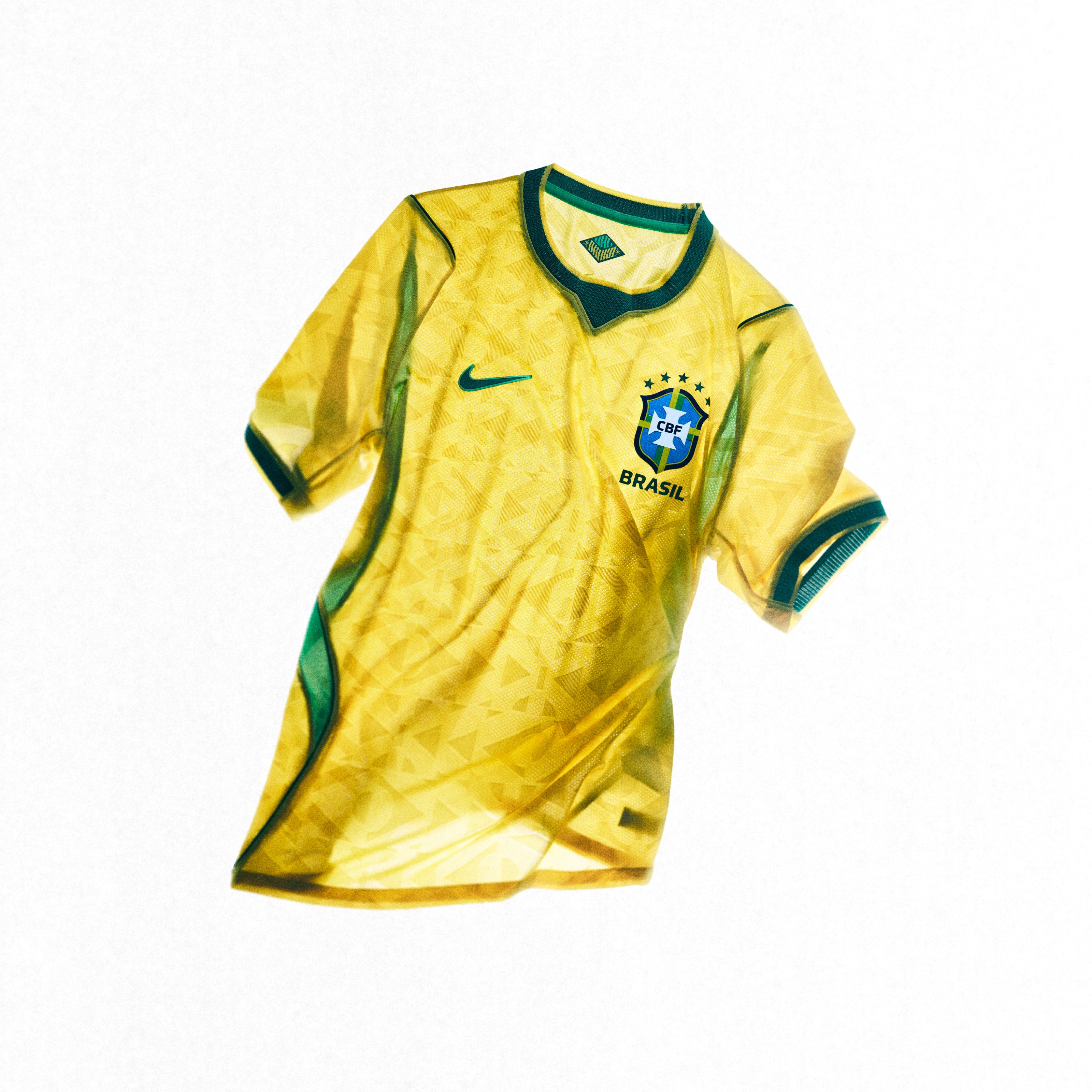
via Nike
Brazil just beat Japan 2-1 to advance at the 2026 World Cup, and the yellow shirt is back in front of the cameras again. It is one of the most recognizable uniforms in all of sport, but it was not always yellow. The famous Canarinho jersey was born out of a national disaster, and the story runs through a newspaper contest, a teenager from the Uruguay border, and decades of Brazilian football history. Here is how the yellow World Cup kit came to be.
The 1950 White Kit and the Maracanazo
Before 1950, Brazil played in a plain white jersey with a blue collar. That changed at the 1950 World Cup, which Brazil hosted. In the deciding match at the Maracanã, Uruguay beat the hosts 2-1 in front of a crowd of nearly 200,000, a result Brazilians still call the Maracanazo. The defeat was treated as a national tragedy, and much of the blame landed on the white uniform, which was branded as lacking patriotism and identity. The white kit was effectively retired.
The 1953 Newspaper Contest and the Birth of the Yellow Shirt
To replace the white kit, the newspaper Correio da Manhã ran a design contest in 1953. The rule was simple. The new jersey had to use the four colors of the Brazilian flag: yellow, green, blue, and white. A nineteen-year-old illustrator named Aldyr Garcia Schlee, from Pelotas in the far south near the Uruguayan border, entered with roughly a hundred sketches before settling on his winner: a yellow shirt with a green collar and trim, blue shorts, and white socks. That combination became the template Brazil has worn ever since.
The colors trace back to the national flag. Yellow and green are the dominant tones of the Brazilian standard, blue represents the night sky on the flag's globe, and white rounds out the set. The bright yellow earned the team its nickname, the Canarinho, or "little canary," and the squad as a whole is known as the Seleção.
The Pelé Golden Era: 1958 and 1970
The new yellow jersey debuted in the mid 1950s, and the legend grew quickly. Pelé broke through as a 17-year-old at the 1958 World Cup, where Brazil won its first title. One quirk of that final: Brazil played the championship match in their blue change kit because of a color clash, with the blue tied to the mantle of Our Lady of Aparecida, the country's patron saint.
The yellow uniform reached its peak at the 1970 World Cup in Mexico, where a Brazil side featuring Pelé, Carlos Alberto, Jairzinho, and Tostão is still regarded as one of the greatest teams ever assembled. Beamed around the world in color television for the first time, the yellow shirt and that team cemented the jersey as a global icon. Brazil would go on to win a record five World Cups in the yellow shirt, in 1958, 1962, 1970, 1994, and 2002, more than any other nation.
Collectors still chase those early yellow shirts, and the 1958 and 1970 designs remain the holy grail of the Brazil closet.
The Nike Era: 1996 to Today
Brazil's kit was made by domestic brand Topper and then English brand Umbro through the early 1990s. Nike took over in late 1996, in time for the 1998 World Cup, and the partnership has run ever since.
The Nike era produced some of the most beloved Brazil shirts ever made. Ronaldo, the original phenomenon, tore through the late 1990s and early 2000s in the yellow, and the 2002 side of Ronaldo, Ronaldinho, and Rivaldo won the nation's fifth World Cup in a jersey and uniform fans still rank among the best the team has ever worn.
The golden generation carried the formula into the mid 2000s, with the 2006 shirt heading to the World Cup in Germany.
Not every modern shirt has landed. The 2018 yellow worn by Roberto Firmino and that World Cup squad is, for our money, the most forgettable of the Nike run, a safe jersey and uniform that does little to separate itself from the rest.
Our favorite of the recent run is the 2022 home kit. Nike pushed the yellow toward a brighter, almost neon tone that pops harder on camera than any Brazil shirt in years, and it is the one we would hang on the wall.
If you want to see how this year's shirt stacks up against the rest of the field, our 2026 World Cup jersey tracker grades every kit as it appears on the pitch.
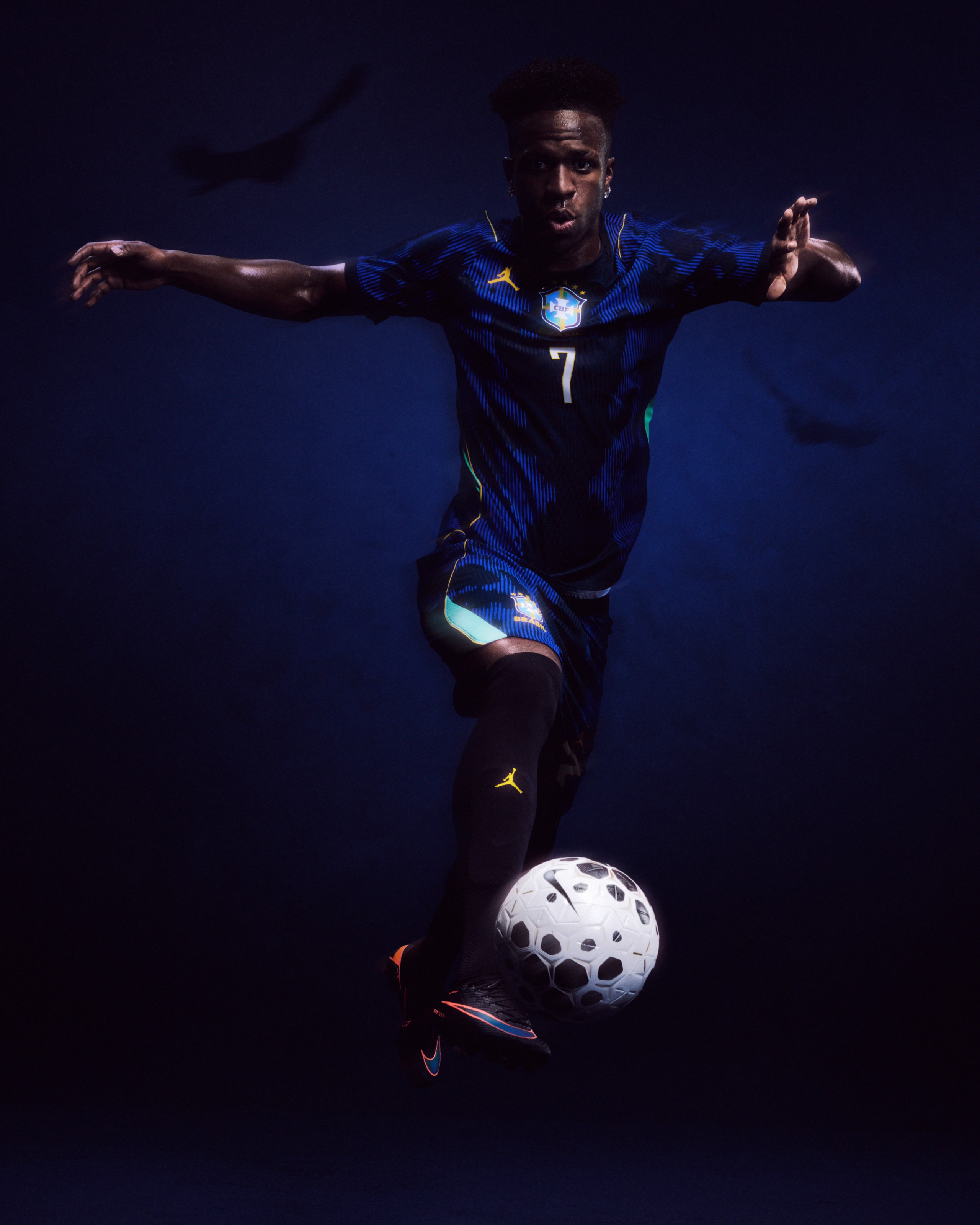
Brazil also keeps a blue change kit in the rotation, a modern nod to the same blue the team wore in the 1958 final. Vinícius Júnior models the deep blue version for the current cycle.
via Nike
The 2026 World Cup Kit
For 2026, Nike leaned into heritage. Brazil's home kit, released March 23, 2026, keeps the classic yellow Canarinho base with two shades of blue for the detailing, blue shorts, and white socks. A geometric pattern based on the Brazilian flag is knitted into the fabric, and a new rounded collar with a small downward notch finishes the look. Nike says the design is inspired by the legendary 1970 shirt, and the collection's theme is "Alegria Que Apavora," translated as "the Joy That Threatens." It is a modern jersey that still reads, instantly, as Brazil.
Picking Brazil to go deep this summer? You can map out the full knockout path in our interactive World Cup rooting guide, or build a squad around their stars in Draft Your XI.
Frequently Asked Questions
Why is Brazil's World Cup jersey yellow?
Brazil switched to yellow after losing the 1950 World Cup final at home in the Maracanazo, when the white uniform was blamed for the defeat. A 1953 newspaper contest required a new kit using the four flag colors, and the winning yellow jersey has been worn ever since.
Who designed Brazil's yellow shirt?
Aldyr Garcia Schlee, a teenage illustrator from Pelotas near the Uruguayan border, won the 1953 Correio da Manhã contest with a yellow shirt, green trim, blue shorts, and white socks.
What color is Brazil's 2026 World Cup kit?
Brazil's 2026 home kit is the traditional yellow Canarinho base with blue detailing, blue shorts, and white socks, featuring a flag-inspired geometric pattern. The uniform was released by Nike on March 23, 2026.
What does Canarinho mean?
Canarinho means "little canary" and refers to the bright yellow and green of Brazil's jersey. The national team as a whole is nicknamed the Seleção.
What is the best Brazil World Cup kit?
It comes down to taste. The 1970 shirt worn by Pelé's side is the consensus all-time classic, while our favorite of the modern era is the brighter, almost neon 2022 home kit. The 2002 title-winning shirt of Ronaldo and Ronaldinho is another fan favorite, and the 2018 yellow is, for us, the most forgettable of the recent run.
Why did Brazil play in blue in 1958?
In the 1958 World Cup final Brazil wore their blue change kit because of a color clash. The blue is also linked to the mantle of Our Lady of Aparecida, Brazil's patron saint.
Who makes Brazil's World Cup kit?
Nike has manufactured Brazil's kit since late 1996, taking over from Umbro and, before that, Brazilian brand Topper.
The Bottom Line on Brazil's World Cup Kit
The yellow Brazil jersey is one of the most iconic uniforms in world sport, and it exists because of a loss. A national heartbreak in 1950 ended the white kit, a newspaper contest in 1953 created the Canarinho, and the Pelé teams of 1958 and 1970 turned it into a global symbol. The 2026 version honors that history while updating it for a new generation, which is exactly why the yellow shirt still feels timeless every World Cup.