 NFL Stories
 Arizona Cardinals
 Atlanta Falcons
 Baltimore Ravens
 Buffalo Bills
 Carolina Panthers
 Chicago Bears
 Cincinnati Bengals
 Cleveland Browns
 Dallas Cowboys
 Denver Broncos
 Detroit Lions
 Green Bay Packers
 Houston Texans
 Indianapolis Colts
 Jacksonville Jaguars
 Kansas City Chiefs
 Las Vegas Raiders
 Los Angeles Chargers
 Los Angeles Rams
 Miami Dolphins
 Minnesota Vikings
 New England Patriots
 New Orleans Saints
 New York Giants
 New York Jets
 Philadelphia Eagles
 Pittsburgh Steelers
 San Francisco 49ers
 Seattle Seahawks
 Tampa Bay Buccaneers
 Tennessee Titans
 Washington Commanders
 College Football Stories
 SEC
SEC Big Ten
 ACC
ACC Big 12
 Pac-12
 American Conference
 Mountain West
 Sun Belt
 MAC
MAC Conference USA
 FBS Independents
 NBA Stories
 Atlanta Hawks
 Boston Celtics
 Brooklyn Nets
 Charlotte Hornets
 Chicago Bulls
 Cleveland Cavaliers
 Dallas Mavericks
 Denver Nuggets
 Detroit Pistons
 Golden State Warriors
 Houston Rockets
 Indiana Pacers
 LA Clippers
 Los Angeles Lakers
 Memphis Grizzlies
 Miami Heat
 Milwaukee Bucks
 Minnesota Timberwolves
 New Orleans Pelicans
 New York Knicks
 Oklahoma City Thunder
 Orlando Magic
 Philadelphia 76ers
 Phoenix Suns
 Portland Trail Blazers
 Sacramento Kings
 San Antonio Spurs
 Toronto Raptors
 Utah Jazz
 Washington Wizards
 MLB Stories
 Arizona Diamondbacks
 Atlanta Braves
 Baltimore Orioles
 Boston Red Sox
 Chicago Cubs
 Chicago White Sox
 Cincinnati Reds
 Cleveland Guardians
 Colorado Rockies
 Detroit Tigers
 Houston Astros
 Kansas City Royals
 Los Angeles Angels
 Los Angeles Dodgers
 Miami Marlins
 Milwaukee Brewers
 Minnesota Twins
 New York Mets
 New York Yankees
 Philadelphia Phillies
 Pittsburgh Pirates
 San Diego Padres
 San Francisco Giants
 Seattle Mariners
 St. Louis Cardinals
 Tampa Bay Rays
 Texas Rangers
 Toronto Blue Jays
 Washington Nationals
 NHL Stories
 Anaheim Ducks
 Boston Bruins
 Buffalo Sabres
 Calgary Flames
 Carolina Hurricanes
 Chicago Blackhawks
 Colorado Avalanche
 Columbus Blue Jackets
 Dallas Stars
 Detroit Red Wings
 Edmonton Oilers
 Florida Panthers
 Los Angeles Kings
 Minnesota Wild
 Montreal Canadiens
 Nashville Predators
 New Jersey Devils
 New York Islanders
 New York Rangers
 Ottawa Senators
 Philadelphia Flyers
 Pittsburgh Penguins
 San Jose Sharks
 Seattle Kraken
 St. Louis Blues
 Tampa Bay Lightning
 Toronto Maple Leafs
 Utah Mammoth
 Vancouver Canucks
 Vegas Golden Knights
 Washington Capitals
 Winnipeg Jets
 All Soccer Stories
 International Competitions
 UEFA Champions League
 Premier League
 La Liga
 Serie A
 Bundesliga
 Ligue 1
 MLS
MLS College Basketball Stories
 All F1 Stories
 Alpine
 Aston Martin
 Audi
Audi Cadillac
 Ferrari
 Haas
Haas McLaren
 Mercedes
 Racing Bulls
 Red Bull Racing
 Williams
 NASCAR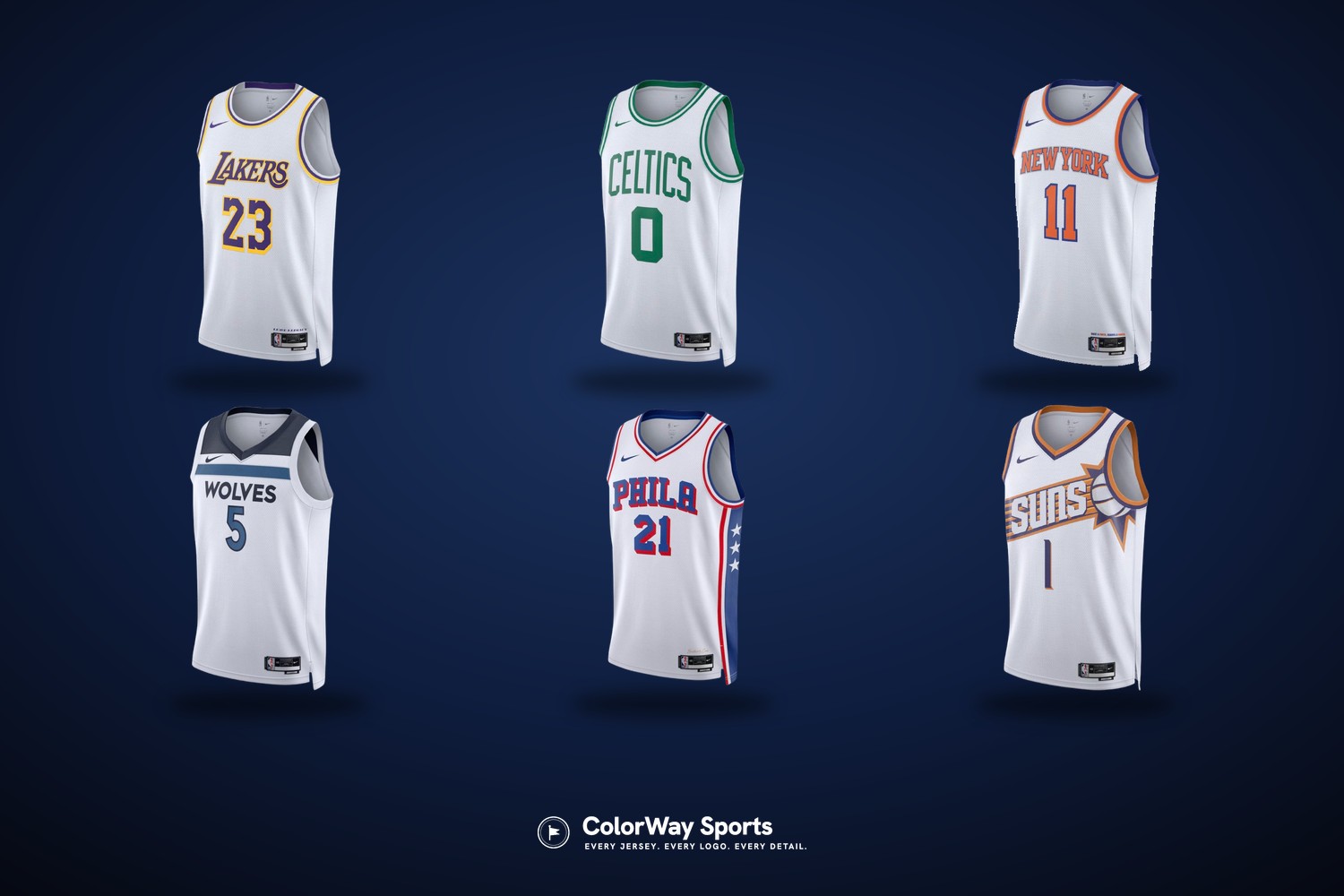
The white Association uniform, once the automatic home look, is now just one of four or five · ColorWay Sports
If you grew up on basketball, one rule felt permanent: the home team wears white. Walk into any arena and the guys in white were the hosts. That rule is basically gone. Watch a full week of NBA games now and the home team is just as likely to be in color, and if you have been annoyed by it, you are not alone. We track this stuff, and our own playoff tracker found the home team wore white only about a third of the time. So we asked someone who actually makes the call why it changed, and the answer has nothing to do with tradition. It is about money.
We put the question to Shelly Wilkes, the Orlando Magic's Chief Marketing Officer, as part of our full interview on how NBA uniforms actually get made. Her answer reframed the whole thing.
A Modern Uniform Program Is Four to Five Jerseys
The core reason is simple once you hear it. An NBA team does not sell one jersey anymore. It sells a program.
"If our team is only wearing white at home, where our core fans are coming to the games, how are we really selling and marketing our other four jerseys?" Wilkes told us. A modern uniform program is four to five jerseys a year, the white Association, the colored Icon, the Statement, a City Edition, and often more. Those are the jerseys and uniforms the team needs fans to see, want, and buy. Locking white to home games, in front of the exact crowd most likely to purchase, would bury most of the closet. So the schedule spreads the looks around on purpose.
That is the whole trick. The games are the runway. Home dates are the most valuable slots on that runway because that is where your buyers are sitting.
The Second Reason: Denying the Visiting Fans Their Moment
There is a sharper, less obvious reason too, and it is specific to markets like Orlando. Some cities are transient, packed with transplants and travelers, which means visiting fan bases show up in force.
"If we play Boston and we're in whites, they get to wear green, their fans show up in green, and it looks like we're helping them tell their story," Wilkes said. Wearing color at home denies the visitors that moment. If the Magic are in blue, the building reads as Magic blue, not Celtics green. For a team fighting for its own identity in a tourist-heavy market, that visual ownership of the arena is worth giving up an old tradition.
So Who Actually Picks the Jersey?
This part surprises people: the league does not assign it, and the matchup does not dictate it. The home team picks its jersey schedule after the full season schedule is released in August, and the road team's uniforms are then mostly determined by those home choices. At the Magic, Wilkes runs that selection herself, working with her VP over creative and game entertainment, and theme nights factor in too. For more on that, see our breakdown of who decides which uniform a team wears each game.
It Was Not Always Like This
The white-at-home rule was real, it just was not sacred. For decades a team essentially owned two looks, a home white and a road color, and the schedule wrote itself. The shift came when the league and its teams turned uniforms into a year-round retail business. Once you have four or five jerseys to move, the old one-white-one-color logic stops making financial sense, and the calendar becomes a marketing tool. The tradition did not die by accident. It got outvoted by the merch table.
The Bottom Line on NBA Home Whites
The home team stopped reliably wearing white because a modern uniform program is four to five jerseys and every home date is a selling opportunity a team cannot afford to waste on the one look fans already own. In transient markets there is a bonus reason: wear color and you keep the building visually yours instead of handing the room to the visitors. It is a revenue decision dressed up as a wardrobe choice, made by the home team's marketing staff every August. Annoying if you love the old rule. Completely rational if you run the business.
Frequently Asked Questions
Why don't NBA teams wear white at home anymore? It is a business decision. A modern uniform program is four to five jerseys a year, and restricting white to home games would limit a team's ability to sell and market the rest of the program to the core fans who attend games. As Orlando Magic CMO Shelly Wilkes put it, if a team only wears white at home, it is not really selling its other four jerseys. In transient markets there is a second reason: wearing color at home keeps the visiting fan base from visually taking over the arena.
How often does the NBA home team wear white now? Not consistently. Our own playoff tracking found the home team wore white only about a third of the time. The old "home team wears white" rule is no longer a rule, just one option among four or five.
Who decides which jersey an NBA team wears? The home team. After the season schedule is released in August, the home team selects its jersey schedule for the year, and the road team's uniforms are mostly determined by those choices. At the Orlando Magic, the CMO runs that selection with the creative and game-entertainment staff, factoring in theme nights.
Does the NBA or Nike decide home and away uniforms? No. Neither the league nor Nike assigns game-by-game uniforms. Teams design their own uniforms and pick their own game-day schedule. Nike manufactures the jerseys and the NBA owns the marks, but the wardrobe calendar is the team's call.
More on NBA Design
- Who Really Designs NBA Uniforms? It's Not Nike (Inside the Orlando Magic Rebrand) — the full interview this story comes from
- Who Decides Which Uniform a Team Wears Each Game
- Who Picks NBA Playoff Jerseys