 NFL Stories
 Arizona Cardinals
 Atlanta Falcons
 Baltimore Ravens
 Buffalo Bills
 Carolina Panthers
 Chicago Bears
 Cincinnati Bengals
 Cleveland Browns
 Dallas Cowboys
 Denver Broncos
 Detroit Lions
 Green Bay Packers
 Houston Texans
 Indianapolis Colts
 Jacksonville Jaguars
 Kansas City Chiefs
 Las Vegas Raiders
 Los Angeles Chargers
 Los Angeles Rams
 Miami Dolphins
 Minnesota Vikings
 New England Patriots
 New Orleans Saints
 New York Giants
 New York Jets
 Philadelphia Eagles
 Pittsburgh Steelers
 San Francisco 49ers
 Seattle Seahawks
 Tampa Bay Buccaneers
 Tennessee Titans
 Washington Commanders
 College Football Stories
 SEC
SEC Big Ten
 ACC
ACC Big 12
 Pac-12
 American Conference
 Mountain West
 Sun Belt
 MAC
MAC Conference USA
 FBS Independents
 NBA Stories
 Atlanta Hawks
 Boston Celtics
 Brooklyn Nets
 Charlotte Hornets
 Chicago Bulls
 Cleveland Cavaliers
 Dallas Mavericks
 Denver Nuggets
 Detroit Pistons
 Golden State Warriors
 Houston Rockets
 Indiana Pacers
 LA Clippers
 Los Angeles Lakers
 Memphis Grizzlies
 Miami Heat
 Milwaukee Bucks
 Minnesota Timberwolves
 New Orleans Pelicans
 New York Knicks
 Oklahoma City Thunder
 Orlando Magic
 Philadelphia 76ers
 Phoenix Suns
 Portland Trail Blazers
 Sacramento Kings
 San Antonio Spurs
 Toronto Raptors
 Utah Jazz
 Washington Wizards
 MLB Stories
 Arizona Diamondbacks
 Atlanta Braves
 Baltimore Orioles
 Boston Red Sox
 Chicago Cubs
 Chicago White Sox
 Cincinnati Reds
 Cleveland Guardians
 Colorado Rockies
 Detroit Tigers
 Houston Astros
 Kansas City Royals
 Los Angeles Angels
 Los Angeles Dodgers
 Miami Marlins
 Milwaukee Brewers
 Minnesota Twins
 New York Mets
 New York Yankees
 Philadelphia Phillies
 Pittsburgh Pirates
 San Diego Padres
 San Francisco Giants
 Seattle Mariners
 St. Louis Cardinals
 Tampa Bay Rays
 Texas Rangers
 Toronto Blue Jays
 Washington Nationals
 NHL Stories
 Anaheim Ducks
 Boston Bruins
 Buffalo Sabres
 Calgary Flames
 Carolina Hurricanes
 Chicago Blackhawks
 Colorado Avalanche
 Columbus Blue Jackets
 Dallas Stars
 Detroit Red Wings
 Edmonton Oilers
 Florida Panthers
 Los Angeles Kings
 Minnesota Wild
 Montreal Canadiens
 Nashville Predators
 New Jersey Devils
 New York Islanders
 New York Rangers
 Ottawa Senators
 Philadelphia Flyers
 Pittsburgh Penguins
 San Jose Sharks
 Seattle Kraken
 St. Louis Blues
 Tampa Bay Lightning
 Toronto Maple Leafs
 Vancouver Canucks
 Vegas Golden Knights
 Washington Capitals
 Winnipeg Jets
 All Soccer Stories
 International Competitions
 UEFA Champions League
 Premier League
 La Liga
 Serie A
 Bundesliga
 Ligue 1
 MLS
MLS College Basketball Stories
 All F1 Stories
 Alpine
 Aston Martin
 Audi
Audi Cadillac
 Ferrari
 Haas
Haas McLaren
 Mercedes
 Racing Bulls
 Red Bull Racing
 Williams
 NASCAR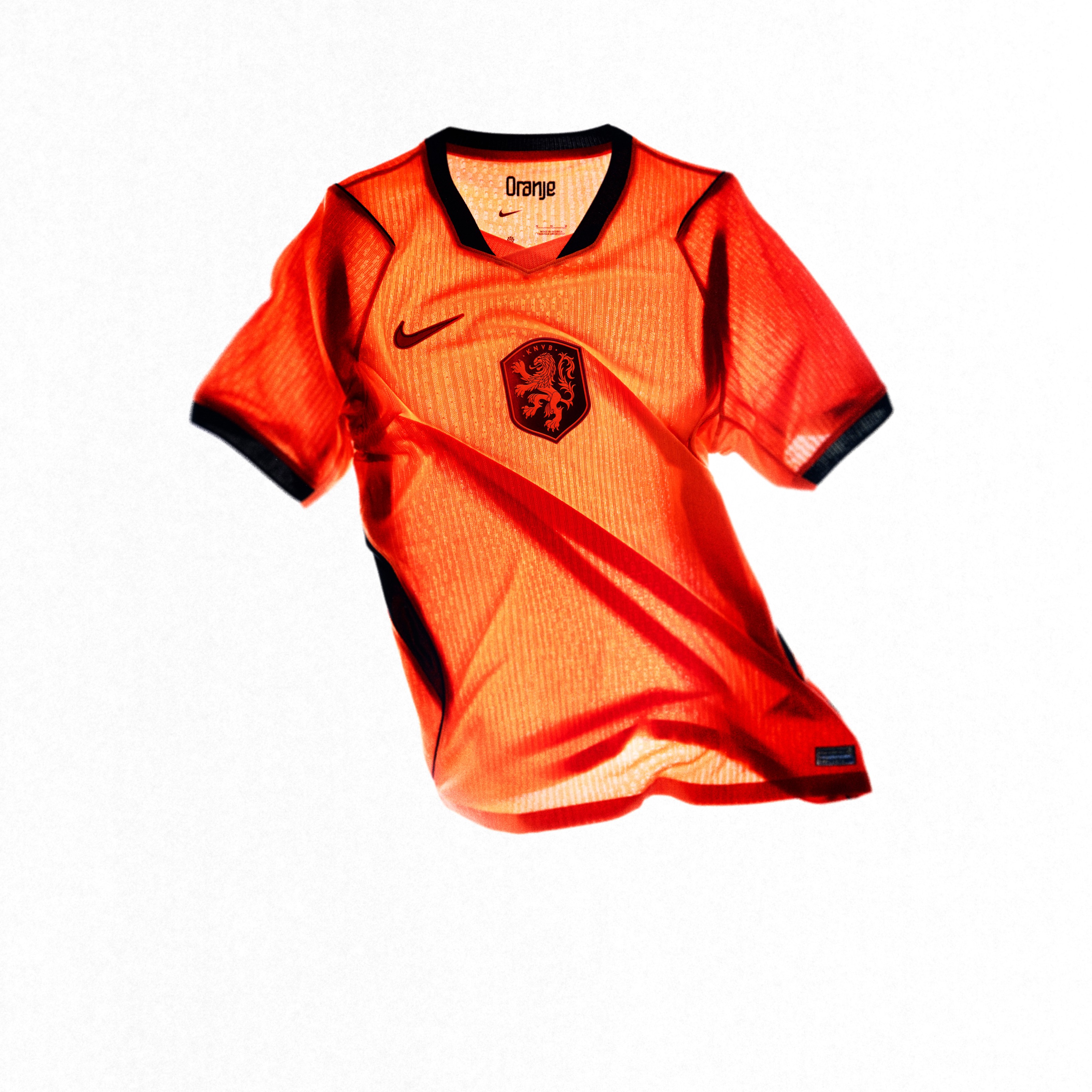
Orange, from a royal family name, not a flag. Image via Nike / KNVB
The Dutch flag is red, white, and blue. The team wears orange. Germany's flag is black, red, and gold. The team wears white. Brazil's most famous color was chosen in a newspaper contest after a national tragedy, and Japan plays in a blue that appears nowhere on its flag. Once you notice how many World Cup teams ignore their own flags, every jersey and uniform at the 2026 tournament turns into a history question. Here are the real stories behind eight of the most asked-about national team colors this summer.
Netherlands: Orange Is a Family Name
The Netherlands wears orange because of the royal House of Orange-Nassau, the family that led the Dutch revolt for independence in the 1500s and still sits on the throne today. Orange is the color of the nation's founding dynasty, so it became the color of nearly everything national, from the team's uniforms to the fan sections that turn entire stadiums orange. The flag itself once carried an orange band before the dye's instability at sea got it swapped for red in the 1600s. The shirt kept what the flag gave up, which is why the most recognizable color in international soccer belongs to a country whose flag does not contain it.
Germany: White From Prussia
Germany's white shirt with black trim predates the modern German flag's colors entirely. When the national team formed in the early 1900s, it adopted the white and black of Prussia, the kingdom that had led German unification. The look survived two world wars, reunification, and more than a century of kit design, and it is now simply what Germany looks like: white jersey, black shorts, four stars above the crest. For what those stars mean, see our guide to World Cup jersey stars.
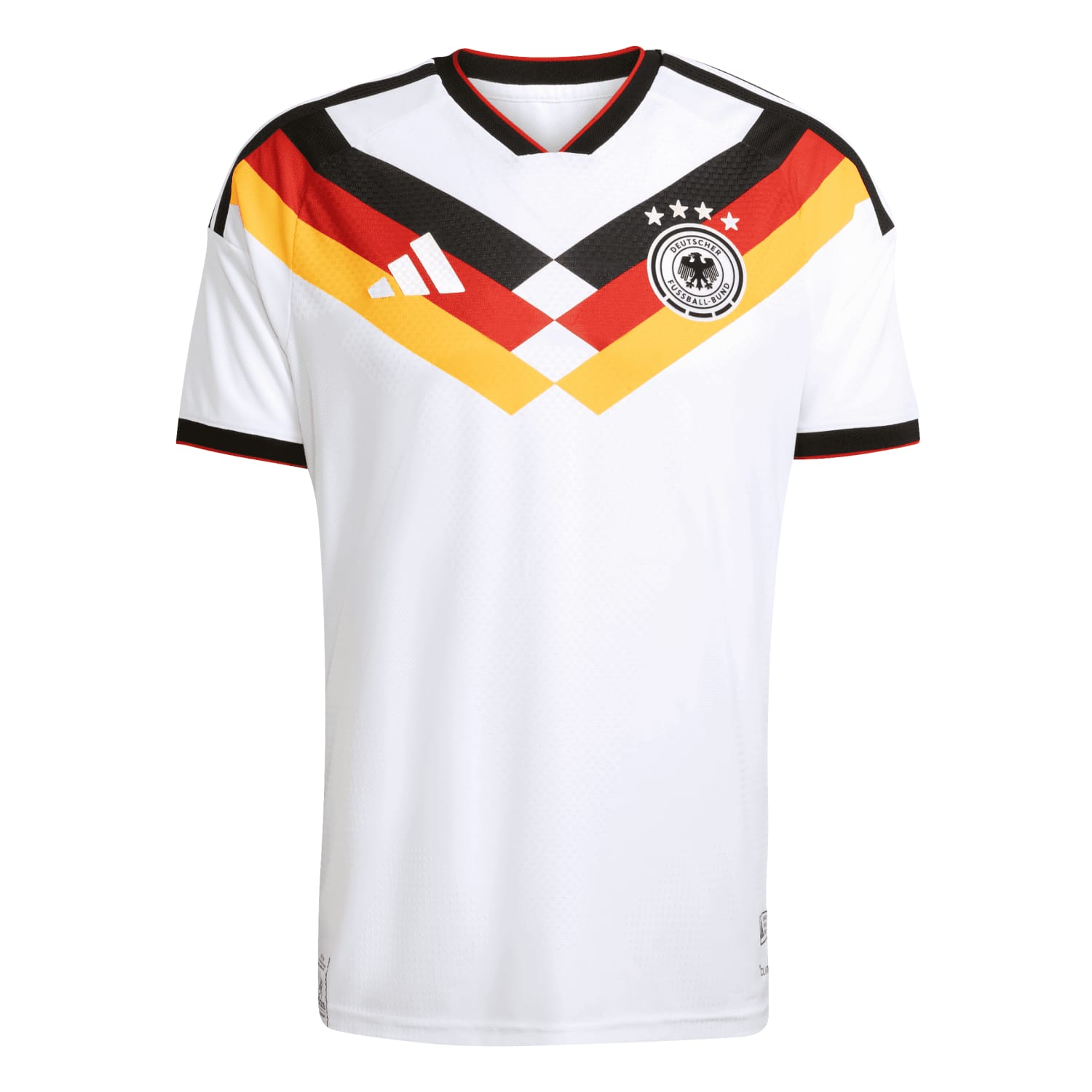
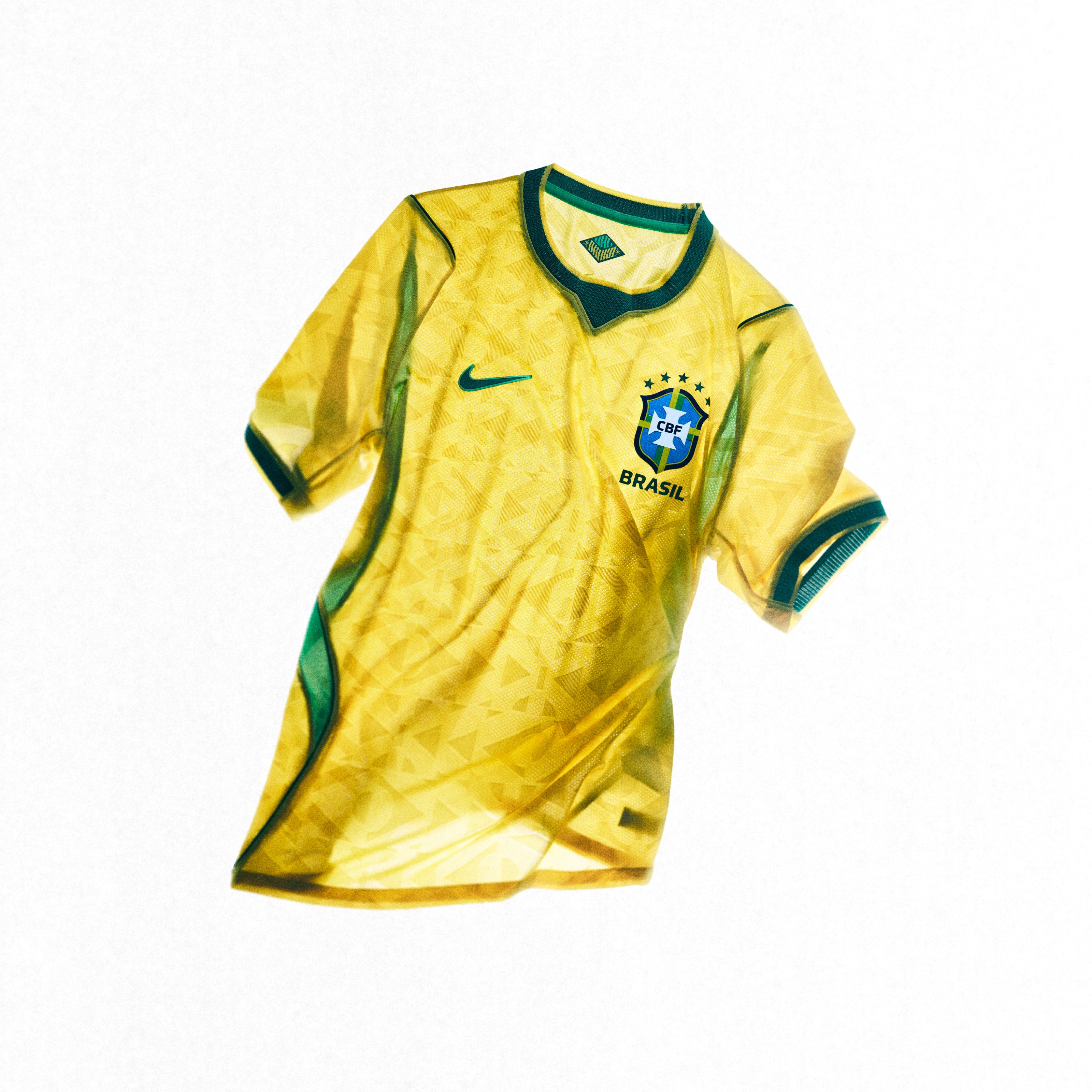
Prussian white and contest-winning yellow. Images via adidas, Nike / CBF
Brazil: Yellow Was Born From a National Tragedy
Brazil did not always wear yellow. At the 1950 World Cup on home soil, Brazil played the decisive final match in all white and lost to Uruguay in front of roughly 200,000 people at the Maracanã. The defeat, remembered as the Maracanazo, hit so hard that the white uniform was effectively blamed for it and abandoned. A national newspaper ran a contest to design a new kit using the colors of the Brazilian flag, and a nineteen-year-old illustrator named Aldyr García Schlee won it with the combination the world now knows by heart: yellow shirt with green trim, blue shorts, white socks. Brazil has worn the contest winner ever since and turned it into the most famous uniform in the sport. We told the full story, including the 1950 white kit, in our complete Brazil World Cup kit history.
Italy: Blue From a Royal House (Sitting Out 2026)
Italy's flag is green, white, and red, and the team has worn none of them as its primary since 1911. The Azzurri's blue honors the House of Savoy, the royal family that unified Italy, whose heraldic color was worn as a national symbol long after the monarchy itself ended. Italy did not qualify for the 2026 World Cup, so the most famous royal blue in soccer is absent this summer, but the question keeps getting asked every time an old highlight airs.
Japan: Samurai Blue, Not Flag Red
Japan's flag is a red circle on white. The team wears deep blue, a choice that traces back to the blue kits of the university sides that represented Japan in its early international matches, and the color stuck through a century of redesigns. The federation leans into it with the team's nickname, the Samurai Blue. Japan's 2026 blue was involved in some of the group stage's best-looking matchups in our live World Cup jersey tracker, where we grade every kit pairing of the tournament.
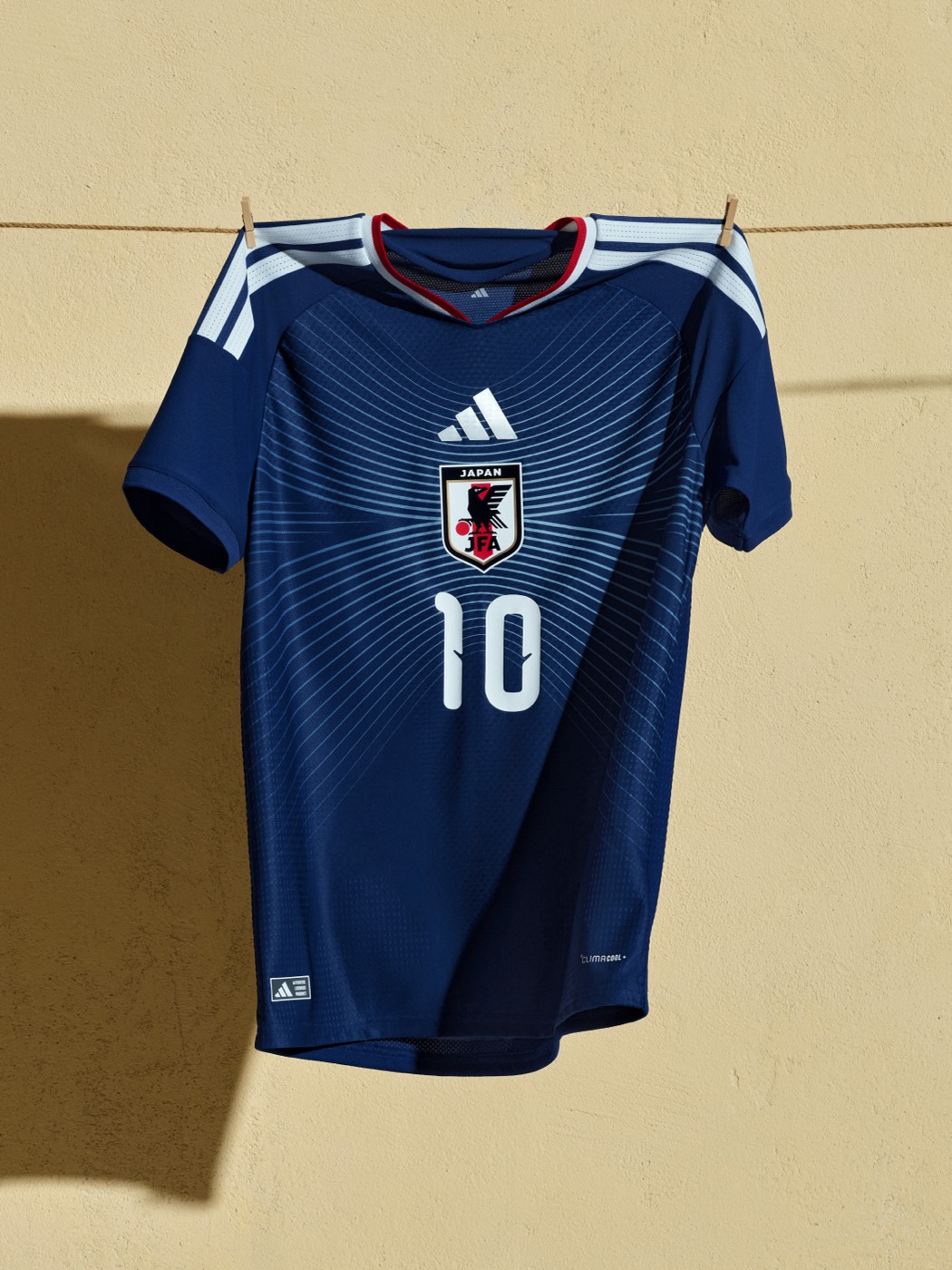
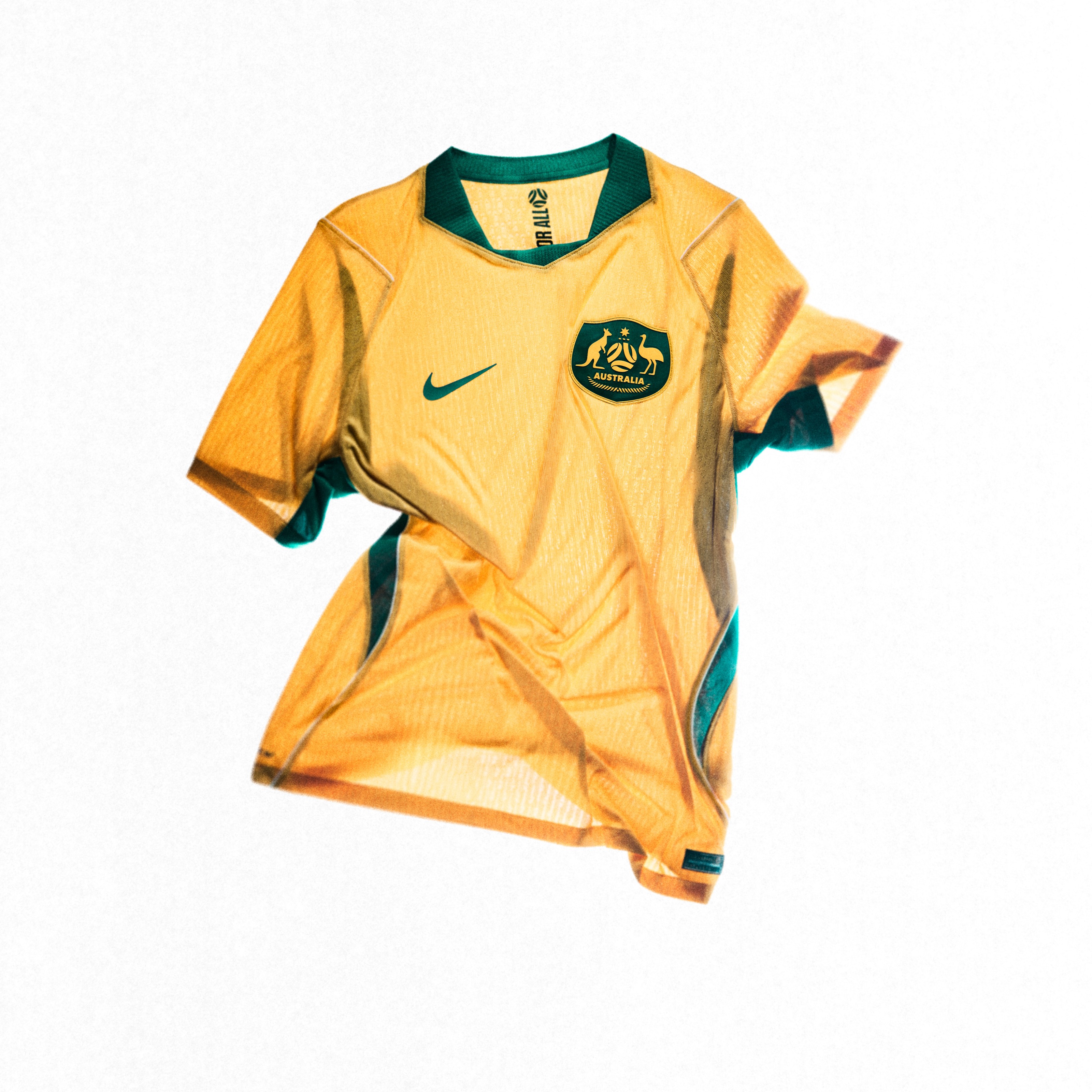
Two flags, zero of these colors on them. Images via adidas, Nike / Football Australia
Australia: Green and Gold From a Flower
Australia's flag is blue, white, and red. The Socceroos wear green and gold because those are the country's official national colors, drawn from the golden wattle, Australia's national flower. The green-and-gold combination covers nearly every Australian national team in every sport, which is why the soccer team's uniform matches the cricket and rugby sides rather than the flag flying above the stadium.
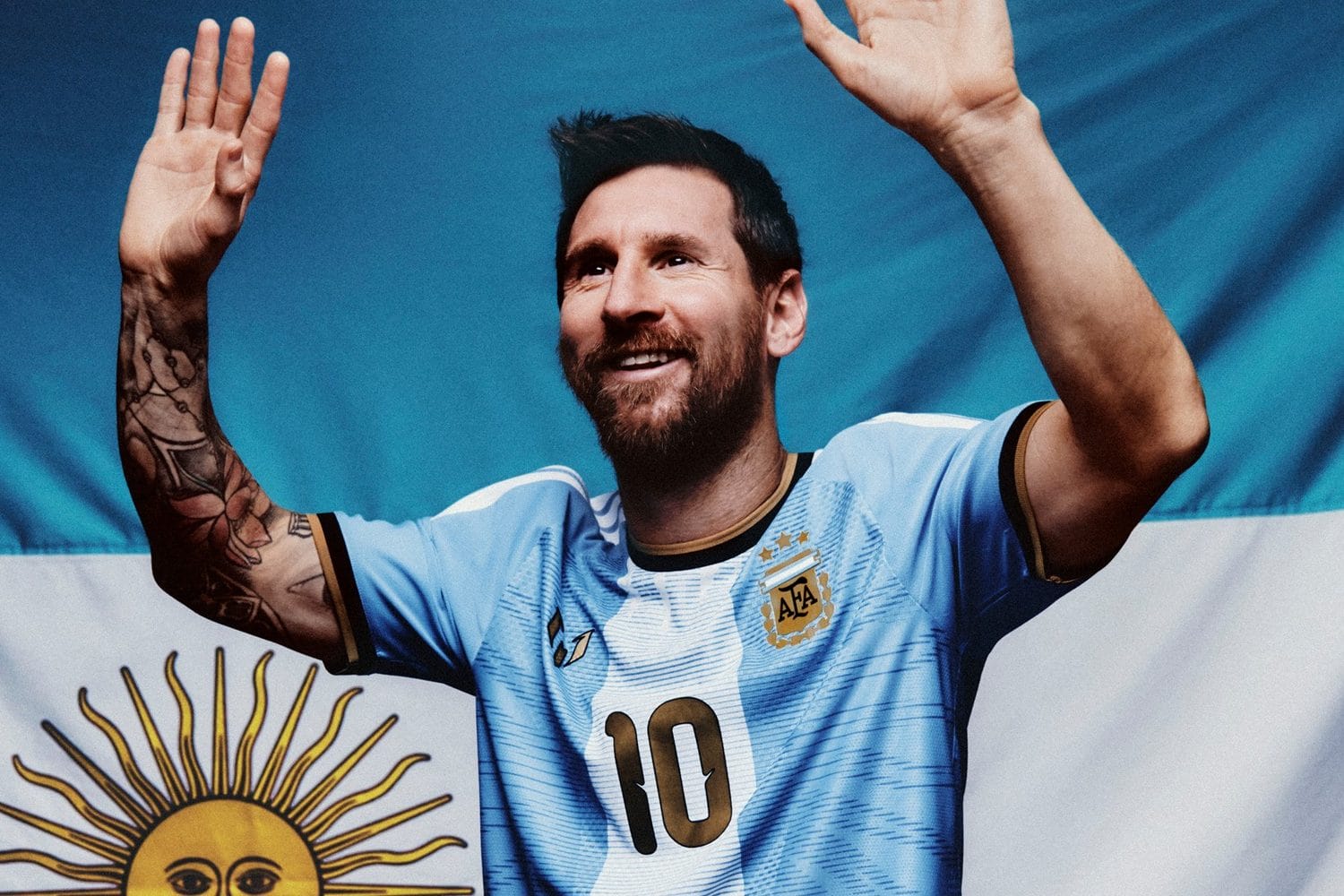
Argentina: The Sky Blue That Is Actually on the Flag
Argentina is the counterexample. The albiceleste stripes are a straight lift from the national flag's sky blue and white, worn since the early 1900s, and they have barely changed in a century. When a team's colors do match its flag, the shirt tends to stay frozen. Argentina's three stars and gold champions badge sit on top of the same stripes their great-grandparents watched.
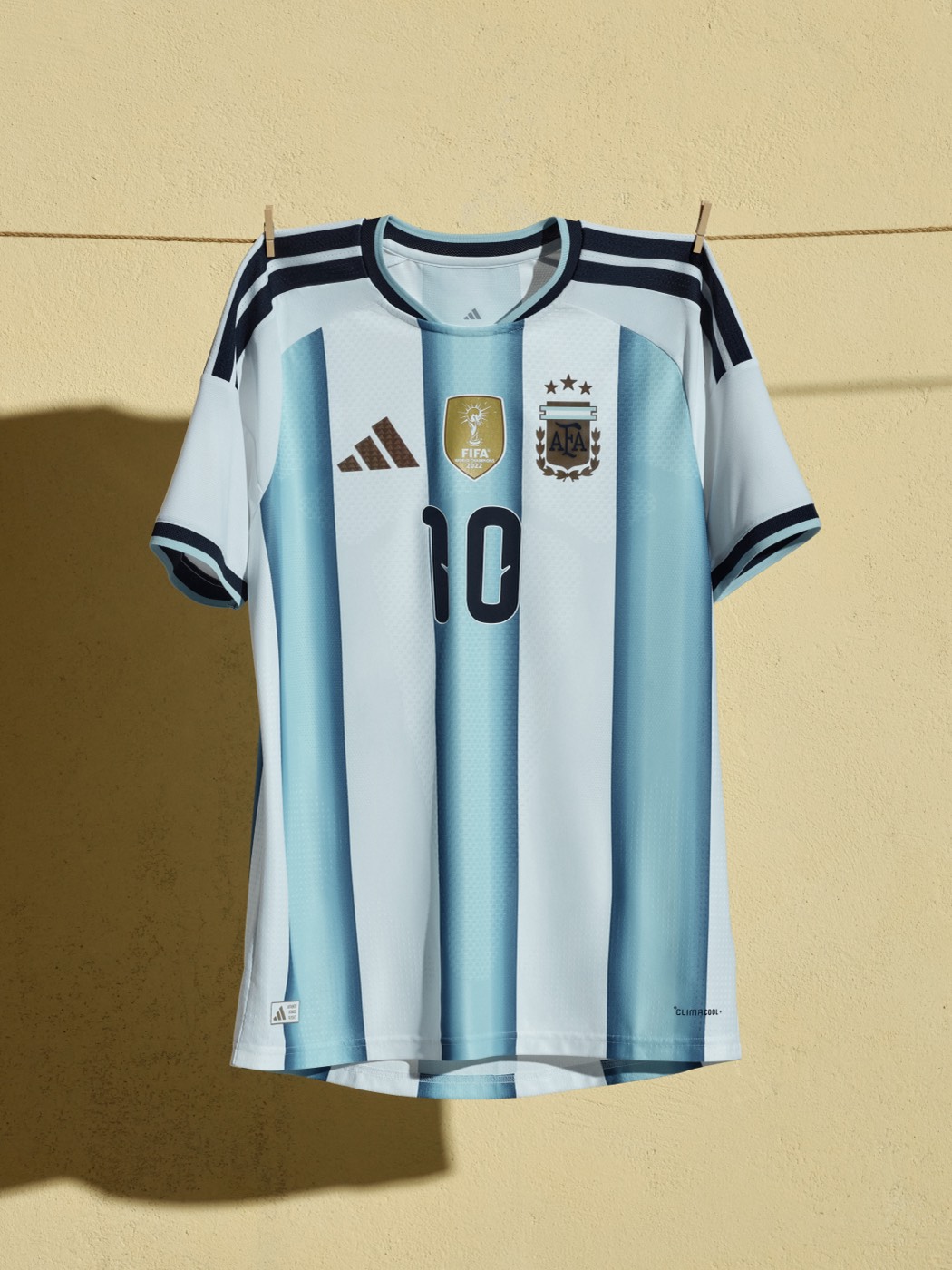
The flag, worn as stripes. Image via adidas
Mexico and the United States: Flag Colors, Host Edition
The 2026 co-hosts both play it straight. Mexico's green traces to its flag's green band, and even as its kits experiment with black alternates, green remains the identity the team returns to. The United States wears its flag directly: the 2026 home shirt turns the stars and stripes into wavy red lines over white beneath the starless US Soccer shield, a crest we unpacked separately in our USMNT badge explainer.
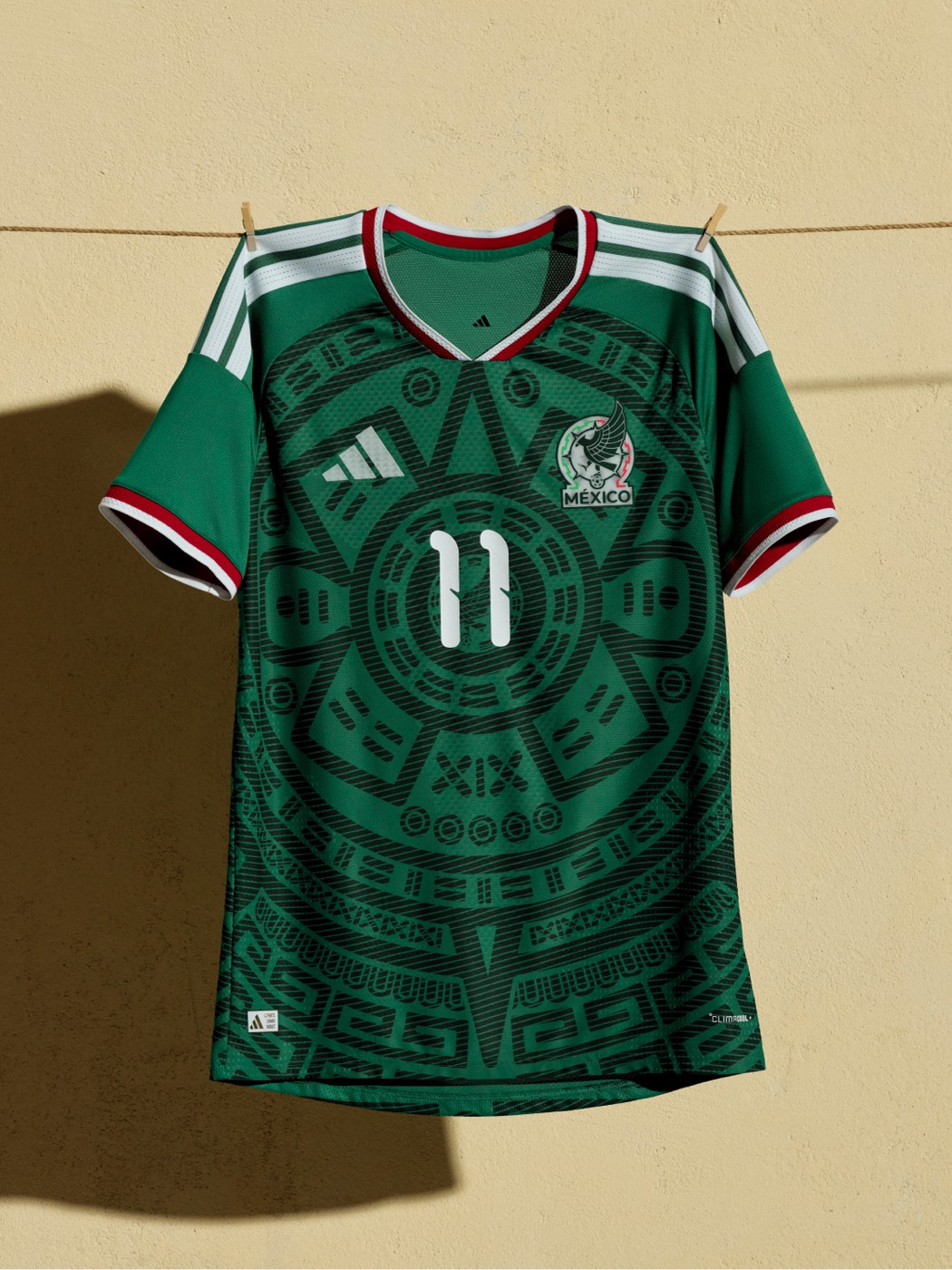
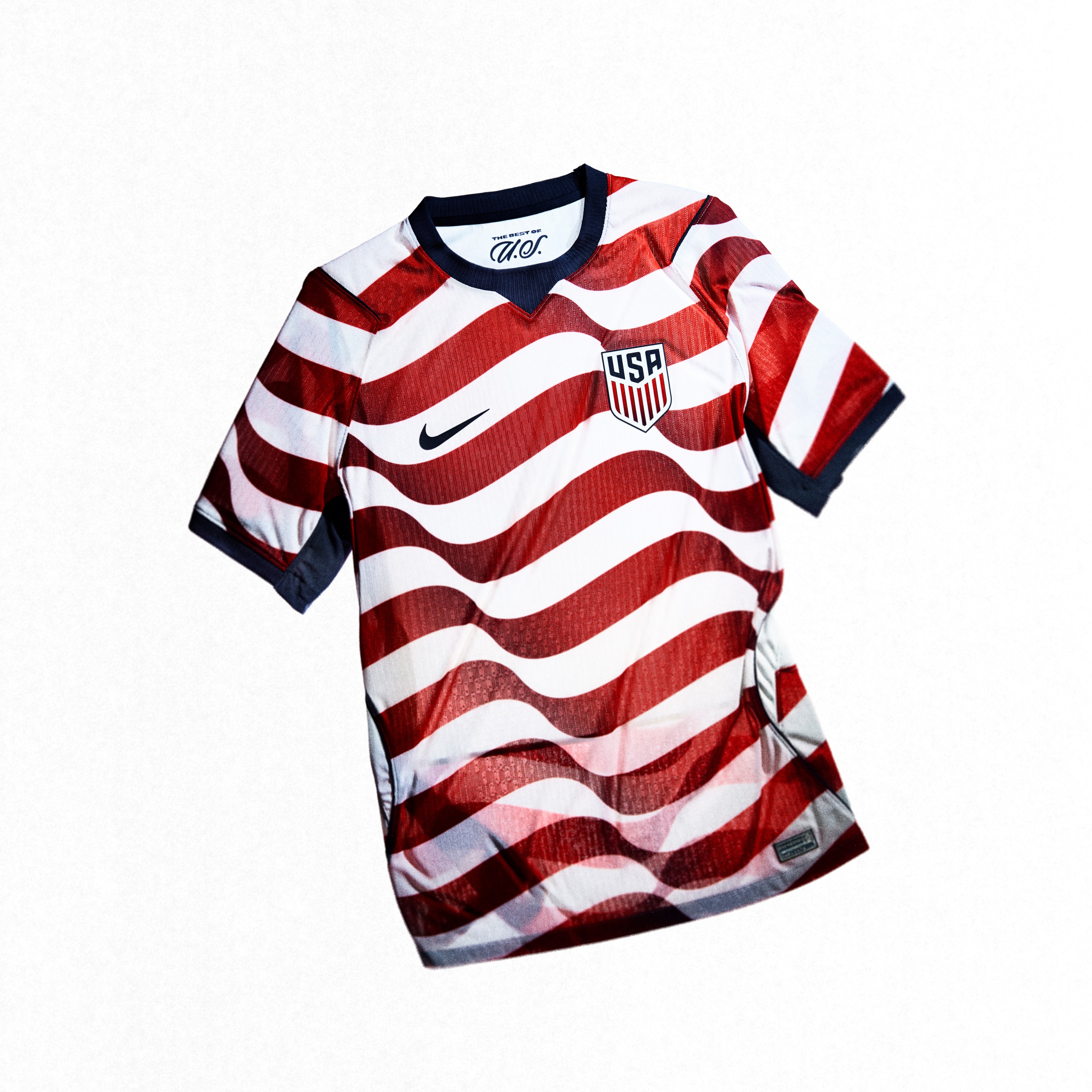
The hosts wear their flags. Images via adidas, Nike / U.S. Soccer
Frequently Asked Questions
Why does the Netherlands wear orange?
Orange honors the House of Orange-Nassau, the Dutch royal family that led the country's fight for independence in the 1500s. The Dutch flag no longer contains orange, but the national teams have worn the dynasty's color for more than a century.
Why does Germany wear white and not the flag colors?
Germany's white and black come from Prussia, the kingdom that led German unification, and the national team adopted them when it formed in the early 1900s. The look predates the modern black, red, and gold flag as a sporting identity and has never been replaced.
Why does Brazil wear yellow?
Brazil switched to yellow after losing the 1950 World Cup final match at home in white, a defeat known as the Maracanazo. A newspaper contest to redesign the kit in flag colors was won by nineteen-year-old Aldyr García Schlee, whose yellow, green, blue, and white design debuted in 1954 and has been Brazil's uniform ever since.
Why does Italy wear blue?
Italy's blue honors the House of Savoy, the royal family that unified the country. The Azzurri have worn Savoy blue since 1911 even though the Italian flag is green, white, and red. Italy did not qualify for the 2026 World Cup.
Why does Japan wear blue instead of red?
Japan's blue traces to the university teams that first represented the country internationally, and the color became permanent through the twentieth century. The team is nicknamed the Samurai Blue even though the flag is a red sun on white.
Why does Australia wear green and gold?
Green and gold are Australia's official national colors, taken from the golden wattle, the national flower. Nearly all Australian national teams wear them instead of the flag's blue, white, and red.
The Bottom Line on National Team Colors
Flags explain fewer World Cup jerseys than royal families, flowers, universities, and one catastrophic afternoon at the Maracanã. The Netherlands wears a dynasty, Germany wears a kingdom, Brazil wears a contest entry born from heartbreak, Japan wears its first teams, and Australia wears a flower. At the 2026 World Cup, the shirts that ignore their flags are carrying the better stories, and once you know them, you never watch a kit matchup quite the same way. For how all of these shirts actually rank this summer, start with our ranking of every 2026 World Cup jersey.