via Fanatics
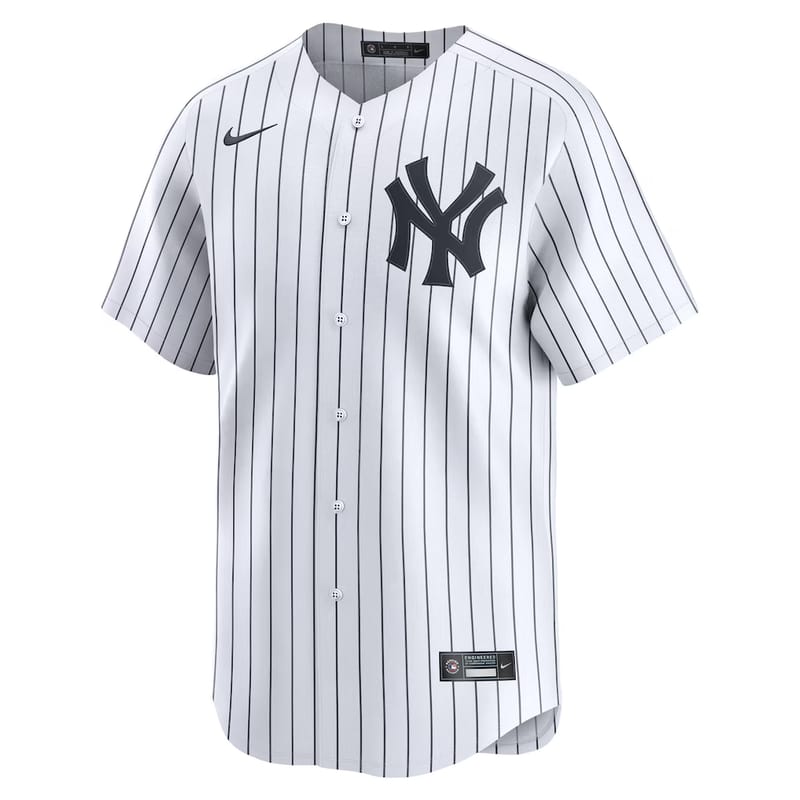
Turn a Yankees jersey around and there is nothing there. No last name, no nickname, just a number. New York has done this for nearly a hundred years, at home and on the road, while almost the entire rest of baseball added names decades ago. It is the most famous blank back in sports, and it is completely on purpose.
The Short Answer
The Yankees do not put names on their jerseys because they believe the name that matters is already on the front. The interlocking NY, and everything it represents, is the point. A player earns the pinstripes, and the pinstripes do not need to introduce him. That is the whole philosophy, and everything below is just the history of how it hardened into tradition.
A Century of Saying No
The Yankees were actually early adopters of the thing that made names unnecessary. In 1929, under owner Jacob Ruppert, they became one of the first teams to put numbers on the backs of jerseys, and those numbers originally matched the batting order, which is why Babe Ruth wore 3 and Lou Gehrig wore 4. The number was the identifier, and for the Yankees it stayed that way.
Names arrived later. The Chicago White Sox became the first team to add player names to the backs of their jerseys in 1960, and over the following decade most of the league followed as television turned baseball into a national broadcast product and teams wanted casual viewers to identify players quickly. The Yankees looked at the trend and simply declined. They had already won more than everyone else without names, and they saw no reason to change what was working.
More than sixty years later, they still have not.
The Philosophy: Team Over Name
The reasoning has stayed remarkably consistent across ownership groups. The Yankees frame the blank back as a statement that the team is bigger than any individual on it. You do not play for the name on your back, you play for the one on your chest, and the uniform is built to make that unavoidable. A rookie and a future Hall of Famer wear the exact same nameless pinstripes, which flattens the roster into a single unit rather than a collection of stars.
There is a legacy argument layered on top of it. Leaving the names off is a nod to every great who has worn the pinstripes before, a way of saying the uniform belongs to the franchise and its history rather than to whoever is renting it this season. And there is a confidence to it that fits the brand: the most successful team in the sport is betting that its players are recognizable enough without a label.
Have They Ever Broken It?
Barely, and never by choice. The only time names have appeared on a Yankees uniform came from a league-wide MLB promotion rather than a team decision, the kind of one-off event where every club in baseball was required to participate. Left to their own preferences, the Yankees have kept every regular season jersey, home pinstripes and road grays alike, completely nameless.
That is also why their 2026 news mattered so much to uniform watchers. The team designated a navy alternate for the first time in franchise history, and even that jersey carries no name on the back. When the most tradition-bound team in sports finally adds something new, the one rule it will not touch is this one.
Is Any Other Team Nameless?
A few clubs still leave names off their home whites, the San Francisco Giants and the Boston Red Sox among them, but they wear names on the road. The Yankees are the last team in baseball that refuses names on every uniform, home and away. What used to be a leaguewide default is now, essentially, a Yankees-only trait, which is exactly the kind of distinction the franchise likes to own.
The Bottom Line
The blank back is not laziness or cost-cutting. It is the single clearest expression of how the Yankees see themselves: a franchise where the crest outranks the individual and the history outranks the moment. Names on jerseys make a team easier to read. The Yankees decided a century ago that being instantly recognizable without them was the more powerful flex, and nothing about the last hundred years has proven them wrong.
Frequently Asked Questions
Why don't the Yankees have names on their jerseys?
The Yankees believe the name that matters is on the front of the uniform, not the back. The blank back is a statement that the team and its history outrank any individual player, a tradition they have kept since names became common in the 1960s.
Have the Yankees ever worn names on their jerseys?
Only as part of a league-wide MLB promotion that required every team to participate, never by their own choice. Every Yankees regular season uniform, home and road, is otherwise nameless.
When did other teams start putting names on jerseys?
The Chicago White Sox added player names to the backs of their jerseys in 1960, and most of the league followed over the next decade as national television grew. The Yankees declined and never adopted the practice.
Do the Yankees wear numbers?
Yes. The Yankees were among the first teams to add uniform numbers, in 1929, when the numbers matched the batting order. That is why Babe Ruth wore 3 and Lou Gehrig wore 4. The number, not a name, has always been the identifier.
Are the Yankees the only team without names?
They are the only team that goes nameless on every uniform, home and road. A few teams, including the Giants and Red Sox, still skip names on their home whites but wear them on the road.
More Yankees and Uniform Coverage
- Every Yankees Jersey in 2026, Ranked — the pinstripes, the road grays, and the alternate they refuse to wear
- The Yankees Designated Their First Alternate Uniform in Franchise History — and why we hope they never wear it
- Yankees Uniform Schedule 2026 — what New York wears and when, plus the daily tracker