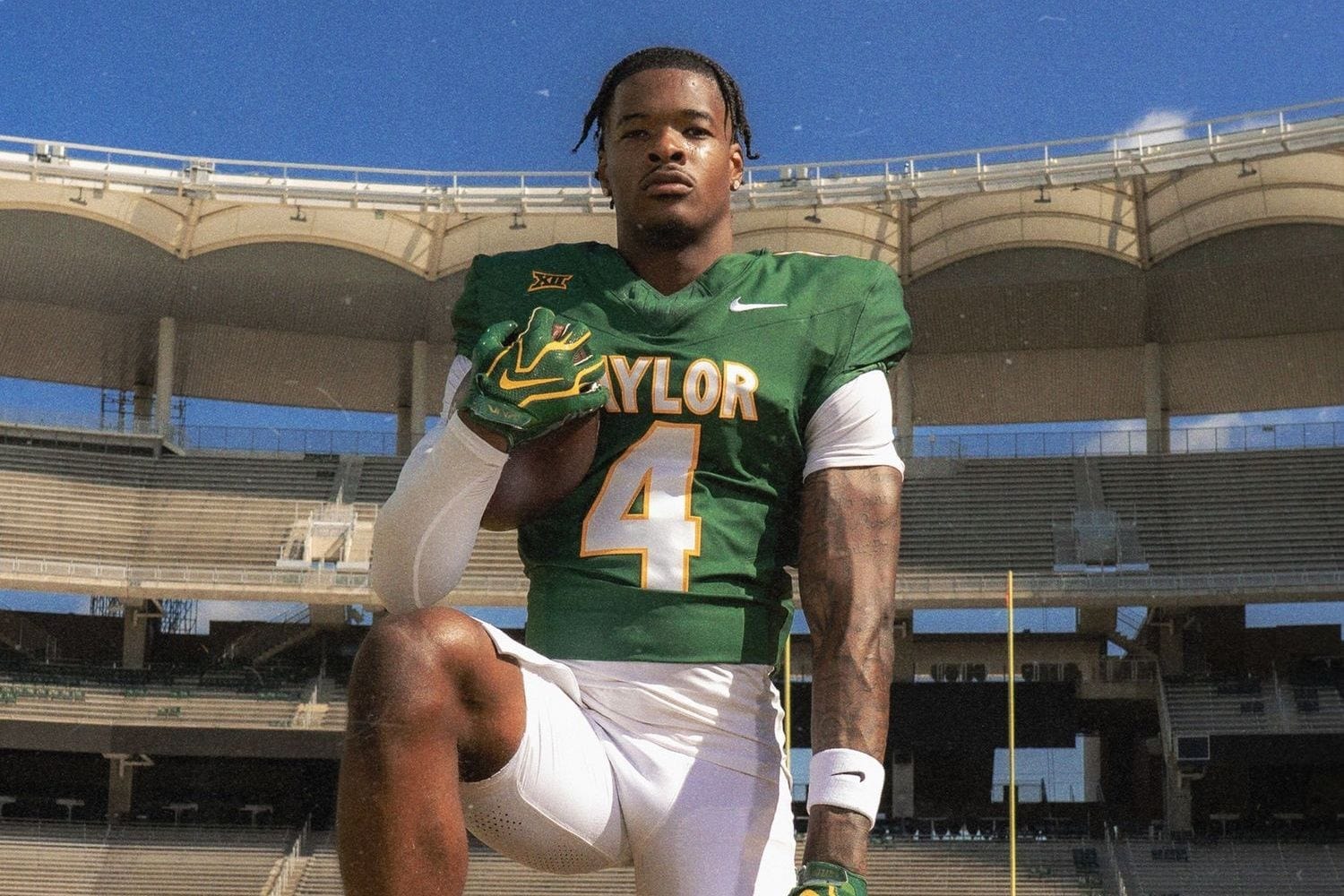
College nicknames are weirder than the pros', mostly because nobody planned them. They came from student editors, sportswriters on deadline, a coach talking to a crowd at a train depot and, more than once, an insult that a school decided to keep. Oklahoma is named after people who cheated in a land race. Purdue is named after a rival's put-down. Virginia Tech's name is a word a student made up to win five dollars. And Indiana's name is a word nobody, including the state of Indiana, can define.
So we went back to the start for all 68 Power 4 programs, the SEC, Big Ten, Big 12 and ACC, plus Notre Dame. We used each school's own athletics history, university archives and libraries, state historical societies and encyclopedias, and newspaper research. Where the famous story is shaky or the record disagrees with it, we say so.
This is part five of our team-name series, after How Every NFL Team Got Its Name, MLB, NBA and NHL.
Quick Facts: College Football Team Names
- Among the oldest: Purdue's Boilermakers (1891), Auburn's Tigers (1892), Cal's Golden Bears and Iowa State's Cyclones (both 1895), and LSU and Clemson (both 1896).
- Most recent big change: the Syracuse Orange, which became the name for every Syracuse team in 2004. Stanford became the singular "Cardinal" in 1981.
- Named by a newspaper: Iowa State (a Chicago Tribune headline), USC (an LA Times sports editor), Arizona (an LA Times game story), Northwestern (a Chicago Tribune reporter), Nebraska (a Lincoln sportswriter), Michigan State (a Lansing sports editor), Georgia (two Atlanta columnists) and Tennessee (an unsigned Atlanta Constitution story).
- Named by students: Texas, Duke and Wake Forest (student editors), Baylor, Colorado, SMU, UCF, Florida State and Arizona State (student contests or votes).
- Started as an insult: Sooners (land-rush cheats), Boilermakers (a rival's jab), Badgers (miners living in holes) and, most likely, Tar Heels.
- Named after a color: the Stanford Cardinal and the Syracuse Orange. Not the bird, not the fruit.
- The $5 club: Virginia Tech's "Hokie" won a $5 cheer prize, Baylor's bear won a $5 gold piece and Colorado's "Buffaloes" won a $5 contest.
- One coach, two names: John Bender named the Kansas State Wildcats in 1915 and the Houston Cougars in 1927.
- Nobody knows for sure: Hoosier, Wolverine and the exact start of the Fighting Irish.
SEC
Alabama Crimson Tide
Before "Crimson Tide," Alabama's teams were the Varsity, the Crimson White and, most popularly, the Thin Red Line. The university credits Hugh Roberts, a former sports editor of the Birmingham Age-Herald, with coining "Crimson Tide" for the 1907 Alabama-Auburn game in Birmingham, a muddy 6-6 tie in which Alabama was the big underdog. Zipp Newman of the Birmingham News did the most to popularize it after 1919. The Roberts story is shakier than it sounds, though. Alabama's own history hedges, and when NCAA.com tracked down part of Roberts' 1907 recap in 2022, neither "crimson" nor "tide" was in it. The earliest "Crimson Tide" NCAA.com found in print was from 1914. One more footnote: that 1907 game was the last Alabama-Auburn meeting until 1948. Alabama uniform schedule 2026
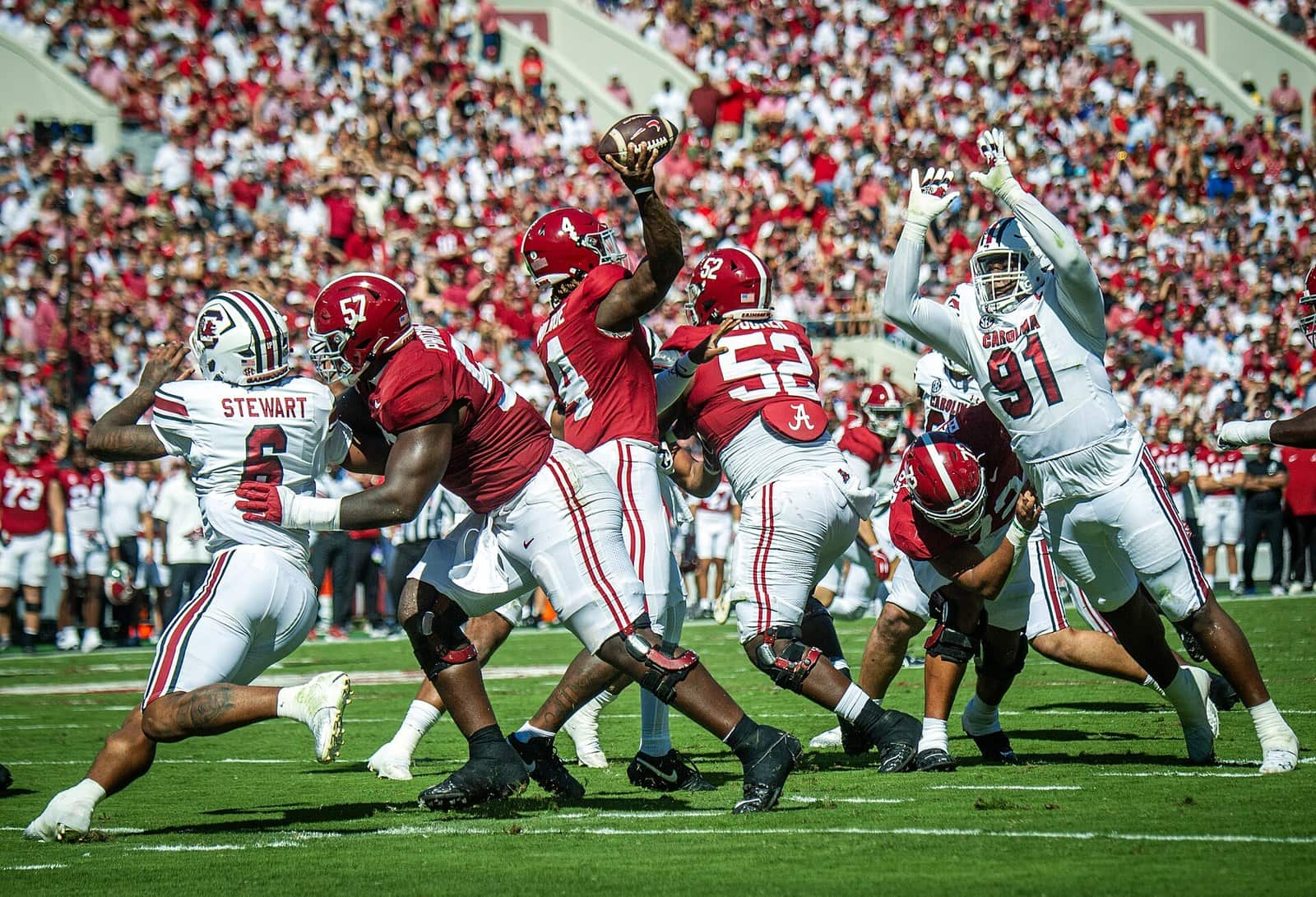
Photo: South Carolina National Guard / Public domain
Arkansas Razorbacks
Arkansas teams were the Cardinals until 1909. That November, coach Hugo Bezdek's team beat LSU 16-0 in Memphis to finish 7-0. When the train got back to Fayetteville, Bezdek told the crowd at the depot that his players had played "like a wild band of Razorback hogs." Students voted to change the mascot from Cardinals to Razorbacks starting the next school term, and Arkansas has played as the Razorbacks since 1910. Arkansas uniform schedule 2026
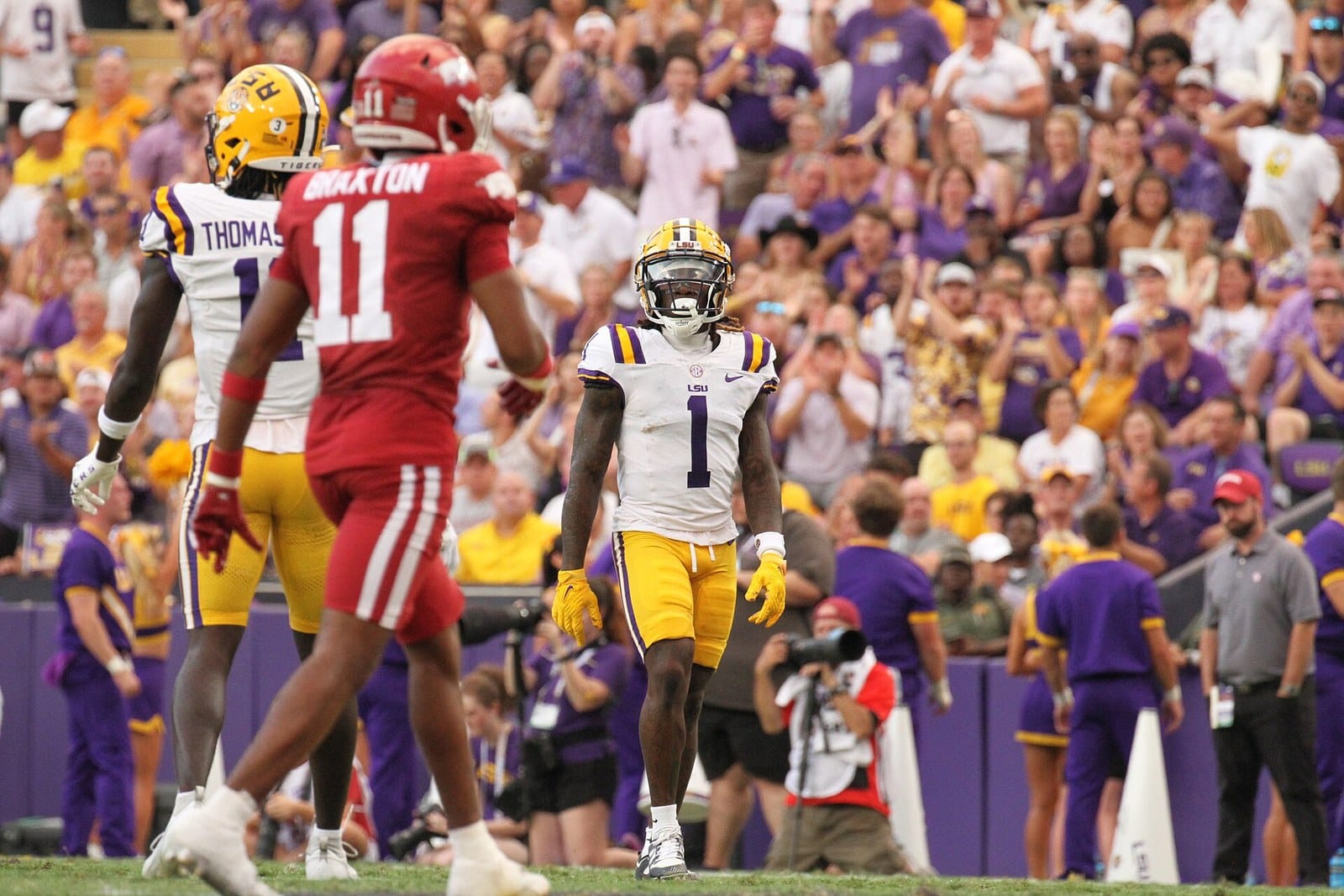
Photo: Tammy Anthony Baker / CC BY 2.0
Auburn Tigers
Auburn says its teams have been the Tigers since the very first game, against Georgia in Atlanta in 1892. The name comes from a poem. Oliver Goldsmith's "The Deserted Village" (1770) has a line about crouching tigers waiting for their prey, and the town itself took its name from the same poem, which opens "Sweet Auburn, loveliest village of the plain." That line also gave Auburn its old "Plainsmen" label. To settle the bar argument: "War Eagle" is the battle cry, not the nickname. Auburn says it has only one nickname, the Tigers, and has never called its teams the Eagles. Auburn uniform schedule 2026
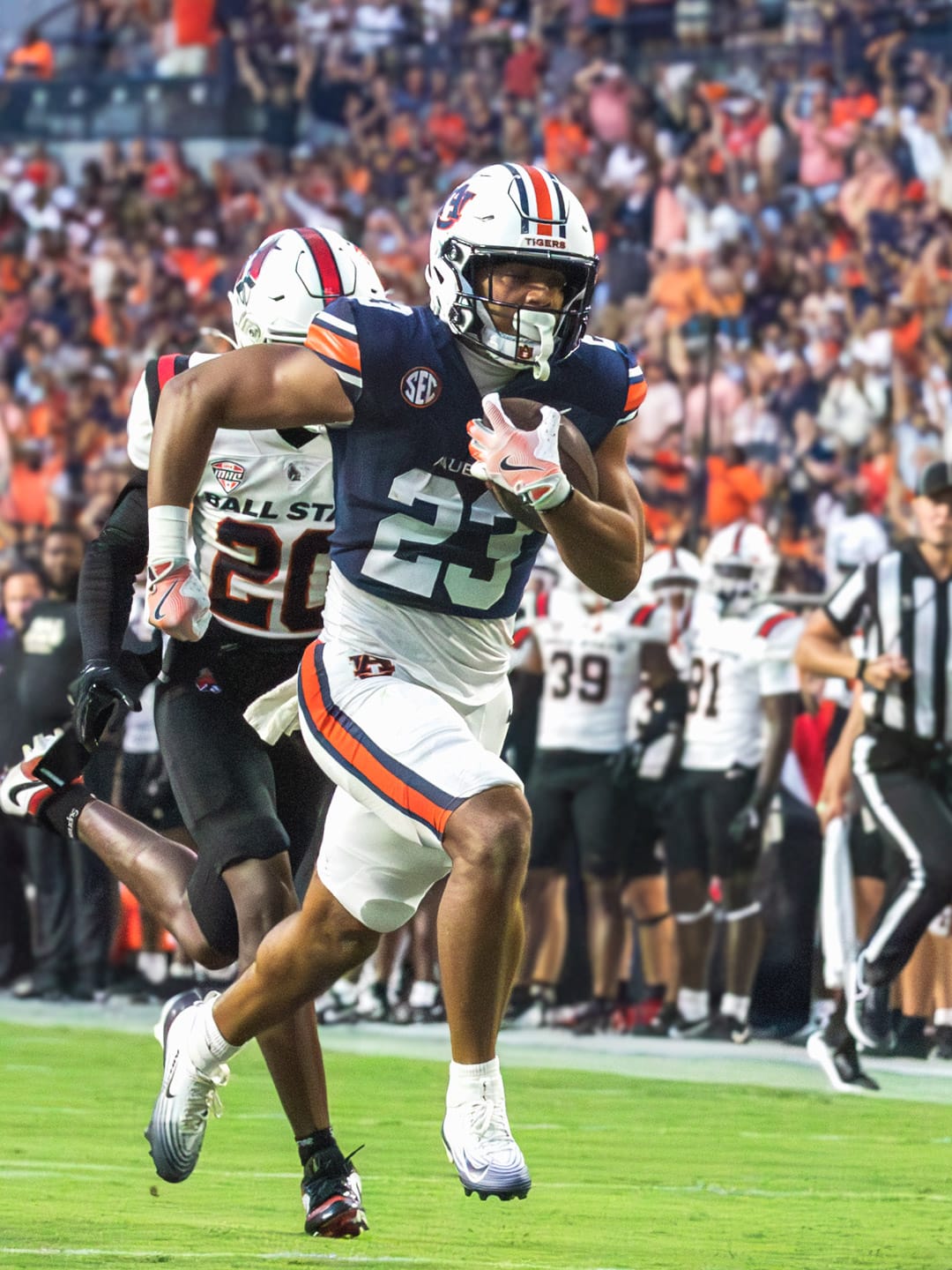
Photo: Michael Cohn Photo / CC BY-SA 4.0
Florida Gators
Florida's name came from a pennant order. Austin Miller told the story in a 1948 interview that UF Athletics still reprints. In 1907 he was a law student at Virginia, and his father Phillip, who ran a drug and stationery store in Gainesville, visited and ordered University of Florida pennants from a Charlottesville company. The manager asked what Florida's emblem was. There wasn't one. Austin suggested the alligator, because it was native to Florida and no other school used it. The manager had never seen an alligator, so Miller found a picture in the UVA library for the designers. The blue pennants with an orange gator went up in the Millers' store in 1908, and the name caught on. Many retellings say the trip was in 1908; Miller said 1907. Florida uniform schedule 2026
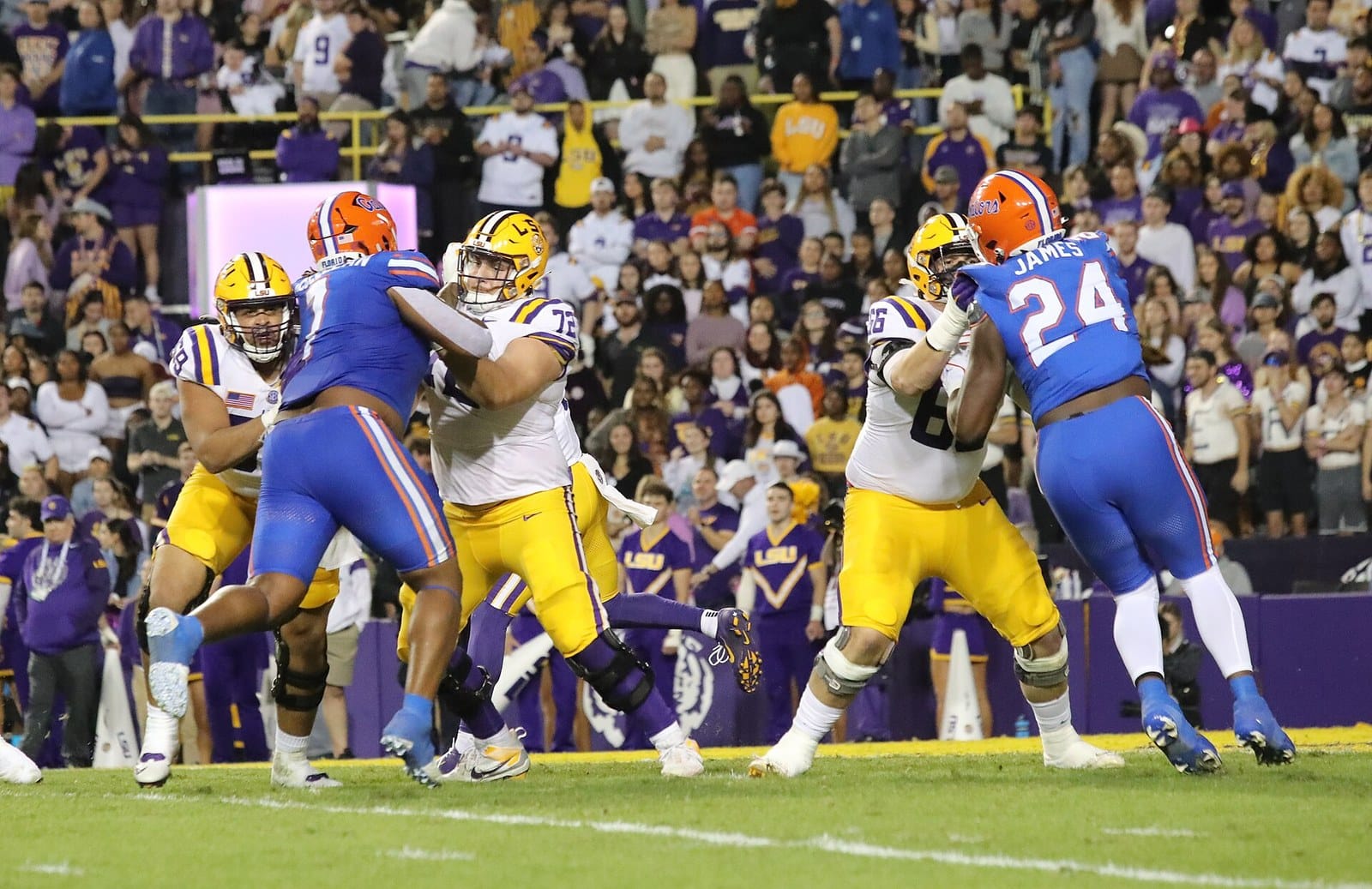
Photo: Tammy Anthony Baker / CC BY 2.0
Georgia Bulldogs
Old-timers credit Yale, the original Bulldogs. Georgia's first president, Abraham Baldwin, was a Yale man, and early campus buildings were modeled on Yale's. But that is tradition. The paper trail starts in 1920, when the team was mostly called the Red and Black. On Nov. 3, 1920, Morgan Blake of the Atlanta Journal pitched "The Georgia Bulldogs," writing that "there is a certain dignity about a bulldog, as well as ferocity." After a 0-0 tie at Virginia three days later, Cliff Wheatley of the Atlanta Constitution used "Bulldogs" five times in his game story, and it stuck. Georgia uniform schedule 2026
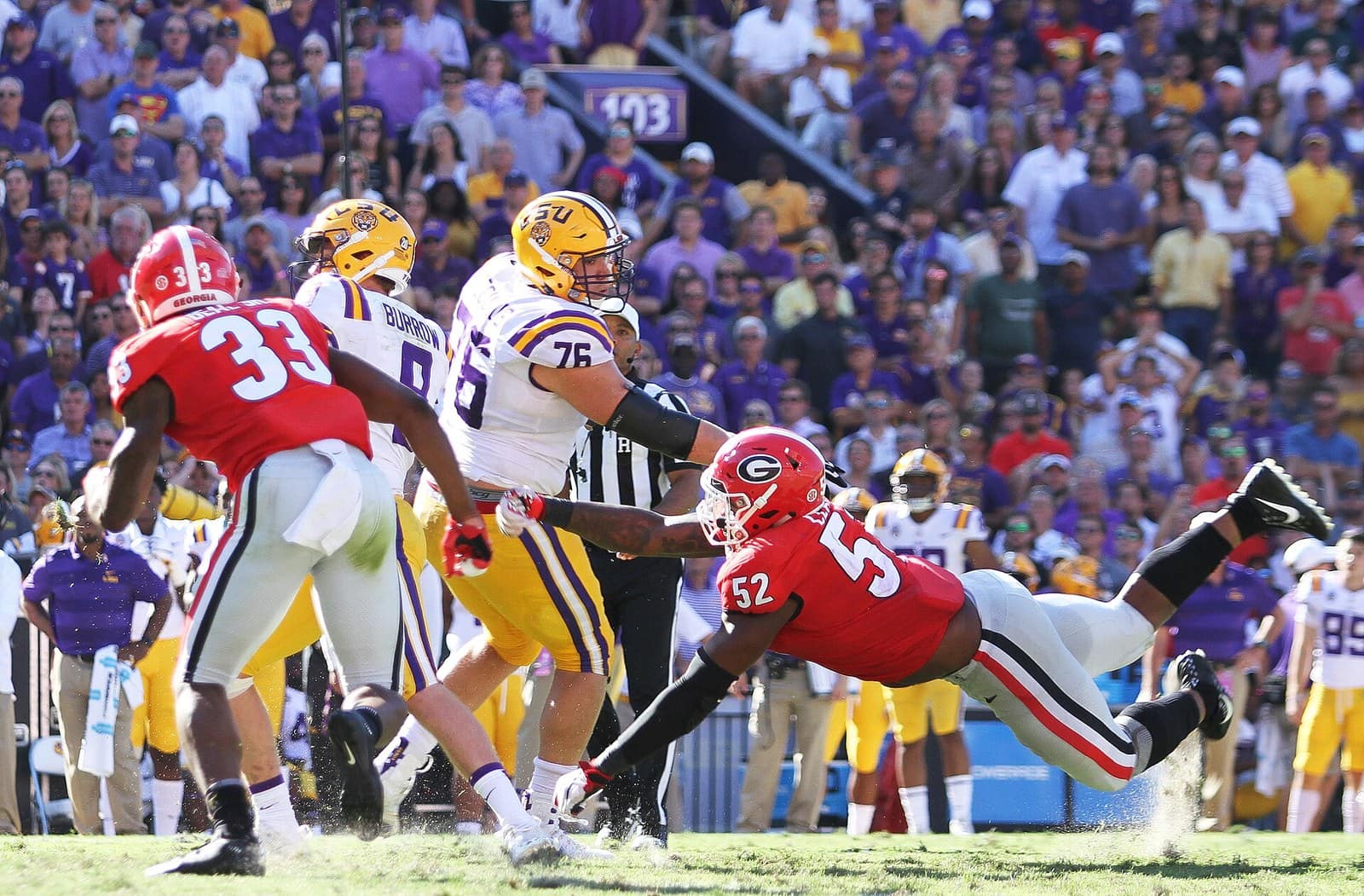
Photo: Tammy Anthony Baker / CC BY-SA 4.0
Kentucky Wildcats
On Oct. 9, 1909, Kentucky, then called State University, won 6-2 at Illinois. Back on campus, Commandant Carbusier, head of the school's military department, told students at a chapel service that the team had "fought like Wildcats." Fans and newspapers ran with it, and the university adopted it. The costumed Wildcat mascot is much younger than the name: UK dates it to the 1976-77 season. Kentucky uniform schedule 2026
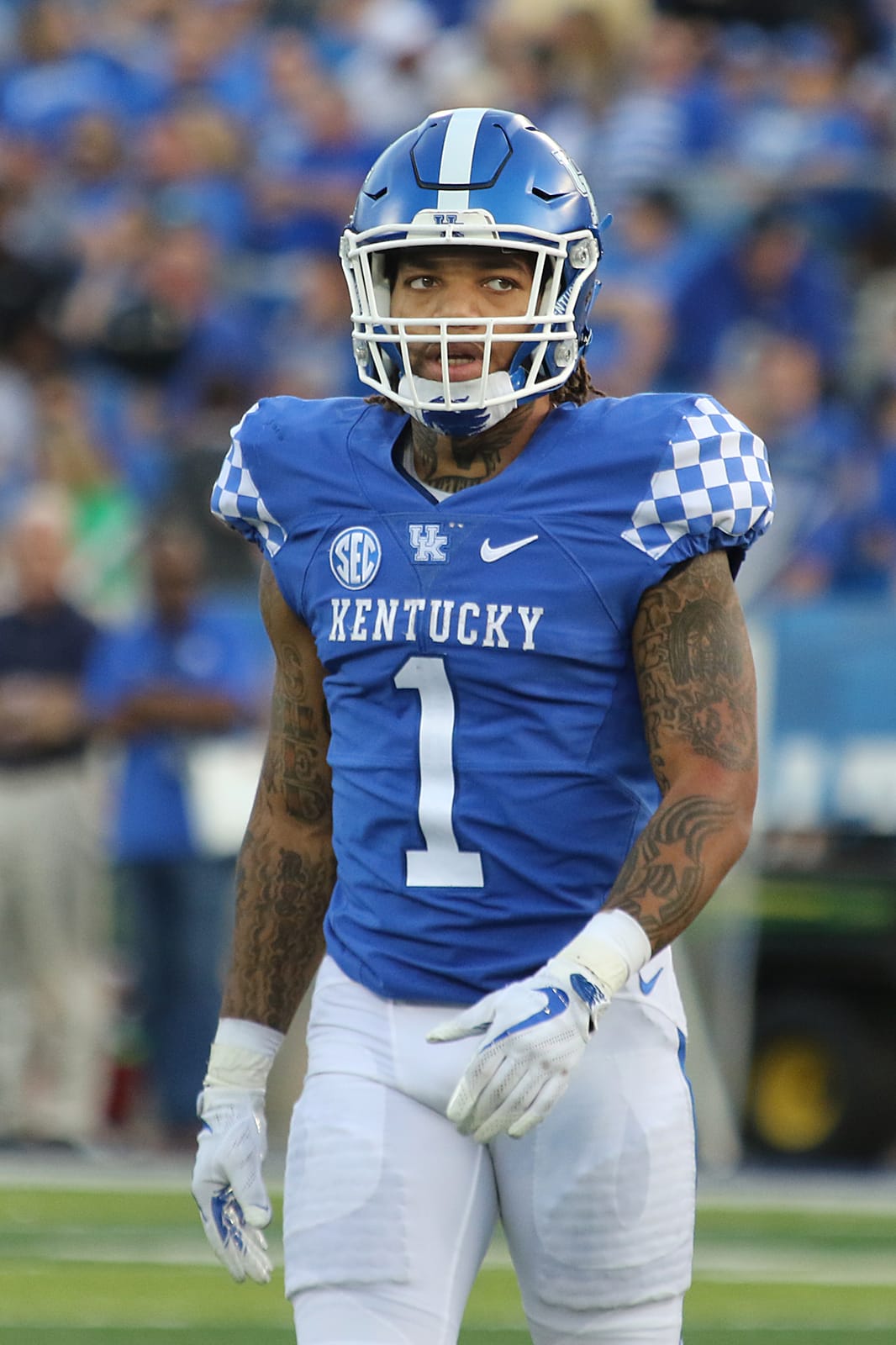
Photo: Regina Rickert / ACRPhoto / CC BY-SA 2.0
LSU Tigers
LSU took the name in the fall of 1896, when coach A.W. Jeardeau's team went 6-0. LSU says the name goes back to the Civil War "Louisiana Tigers." That nickname started with the Tiger Rifles, a New Orleans volunteer company in Zouave uniforms, then spread to its battalion and eventually to all Louisiana troops in Lee's Army of Northern Virginia. LSU's first postwar president, David French Boyd, had served with those troops, and in the program's fourth season the teams took the name for themselves. LSU uniform schedule 2026
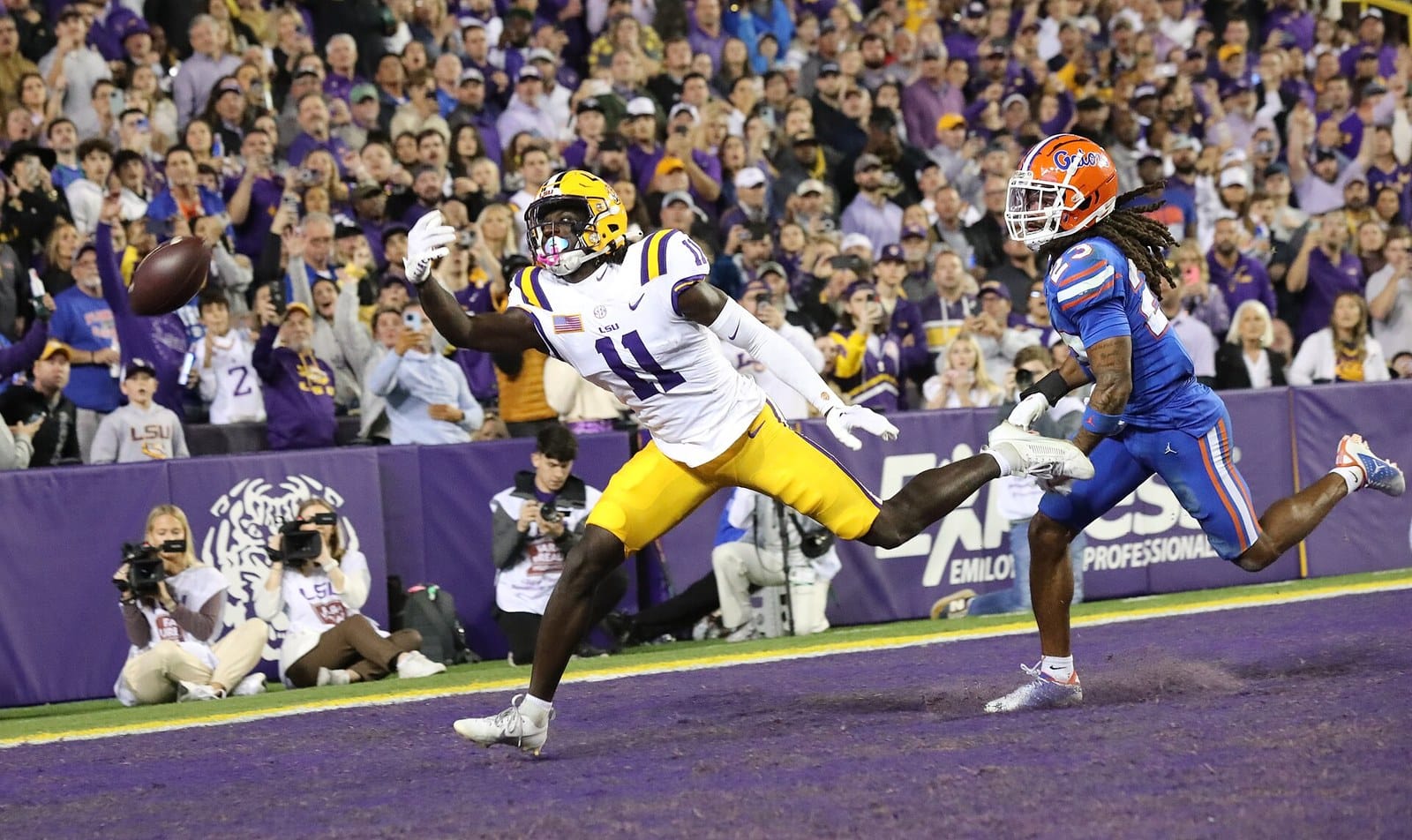
Photo: Tammy Anthony Baker / CC BY 2.0
Ole Miss Rebels
"Ole Miss" came first, from an 1896 contest to name the new yearbook, won by Elma Meek of Oxford. The teams went through several names, including a stretch as "the Flood" before 1936. That year the student paper ran a new contest that drew more than 200 entries. Five finalists went to Southern sportswriters, and 18 of the 21 who answered picked "Rebels," which had been suggested by Judge Ben Guider of Vicksburg. The athletic committee chairman, Judge William Hemingway, signed off with a line Ole Miss still quotes: "If 18 sports writers wish to use 'Rebels,' I shall not rebel." Ole Miss uniform schedule 2026
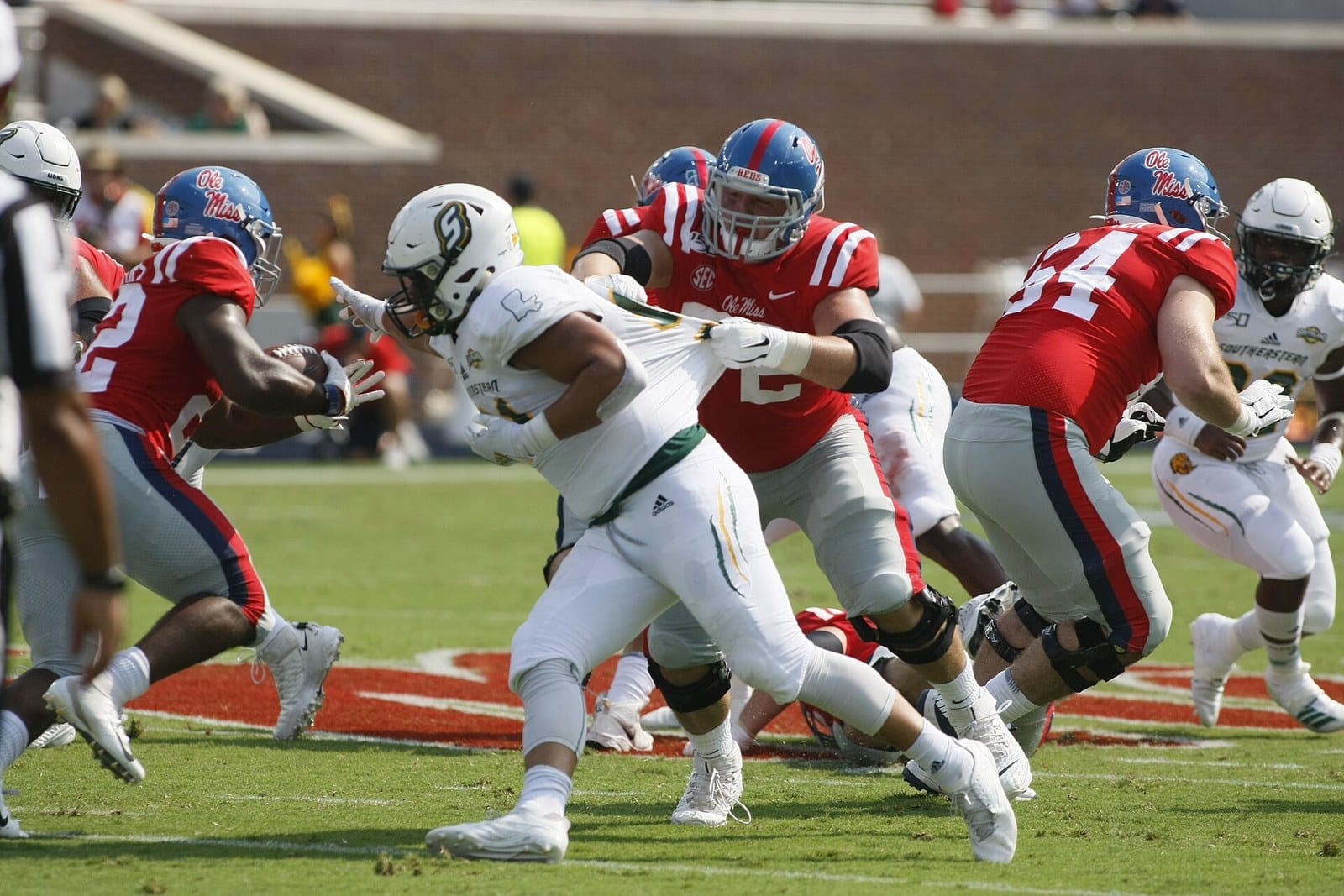
Photo: Barrybauns / CC BY-SA 4.0
Mississippi State Bulldogs
The first Mississippi A&M teams were the Aggies. After the school became Mississippi State College in 1932, they were mostly the Maroons, for the uniform color. "Bulldogs" only became official in 1961, but MSU says the name had been used almost interchangeably since at least 1905. That year cadets celebrated an 11-0 win over Ole Miss in Jackson with a mock funeral down Capitol Street, a bulldog pup riding on a coffin draped in Ole Miss colors. The first live Bully was killed by a campus bus in 1939 and buried under the bench at the 50-yard line. Mississippi State uniform schedule 2026
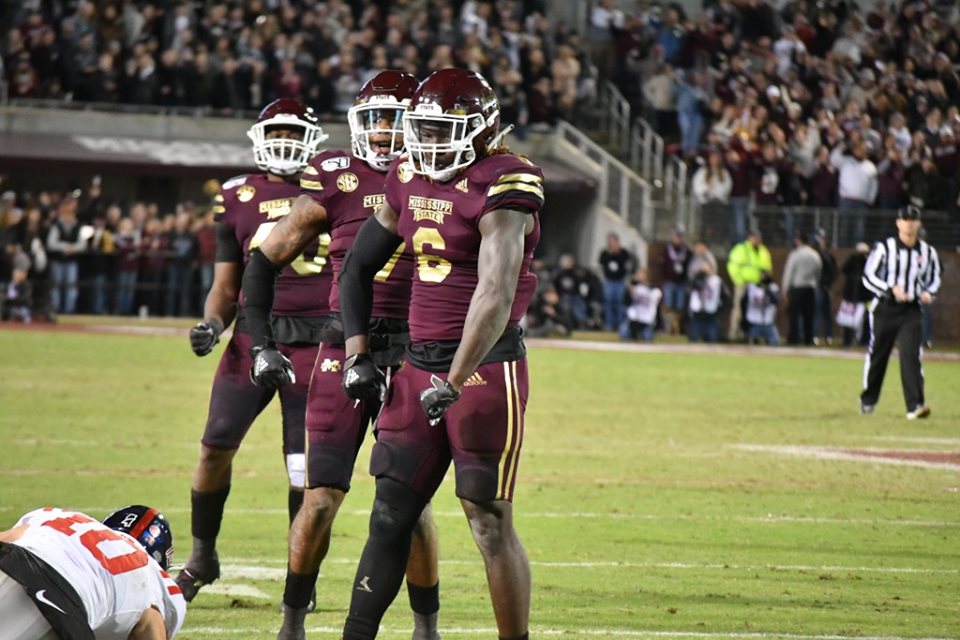
Photo: Jon Ross Myers / CC BY-SA 4.0
Missouri Tigers
Mizzou ties its name to the Civil War. When a rumor spread that Bill Anderson's guerrilla band was coming to sack Columbia, townspeople formed an armed guard, built a blockhouse and fortified the old courthouse. The company was called the "Missouri Tigers." The raiders never came. Soon after Missouri fielded its first football team in 1890, the athletic committee adopted "Tigers" in honor of those defenders. The mascot got his own name, Truman, after Harry S. Truman, in 1984. Missouri uniform schedule 2026
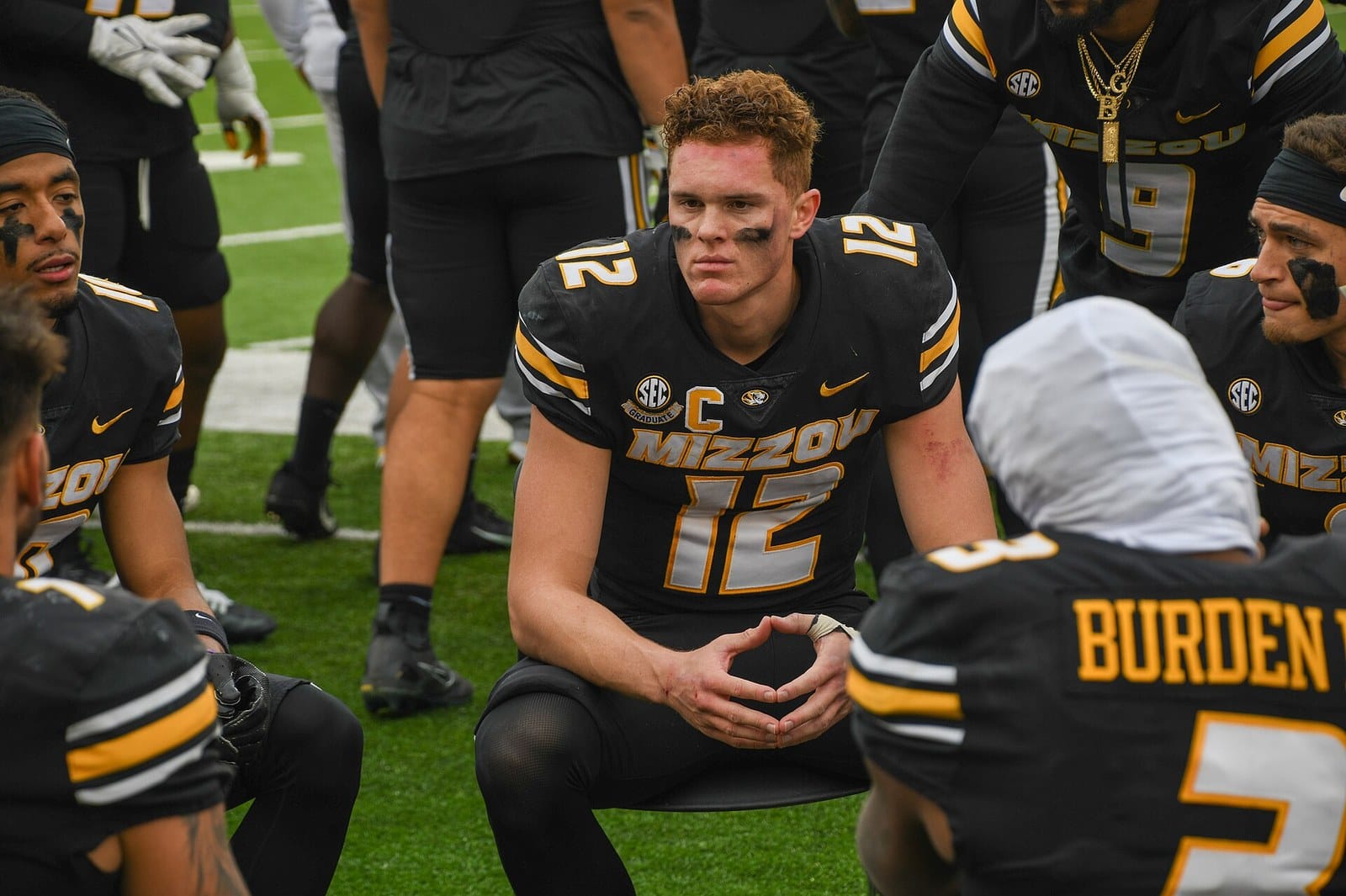
Photo: Tech. Sgt. Stephanie Mundwiller, U.S. Air National Guard / Public domain
Oklahoma Sooners
Here is the land grab. A "Sooner" was someone who slipped into the Unassigned Lands before the official start of the 1889 Land Run to grab the best claims early. The law that opened the land, passed March 2, 1889, specifically denied land to anyone who entered too soon, and settlers thought very little of sooners. OU's teams were the Rough Riders or the Boomers before "Sooners" took over in 1908. The Encyclopedia of Oklahoma History says the word was already losing its sting by then, and by the 1920s it was a badge of pride. One more twist: the "Sooner State" nickname apparently was never made official by the state. Oklahoma uniform schedule 2026
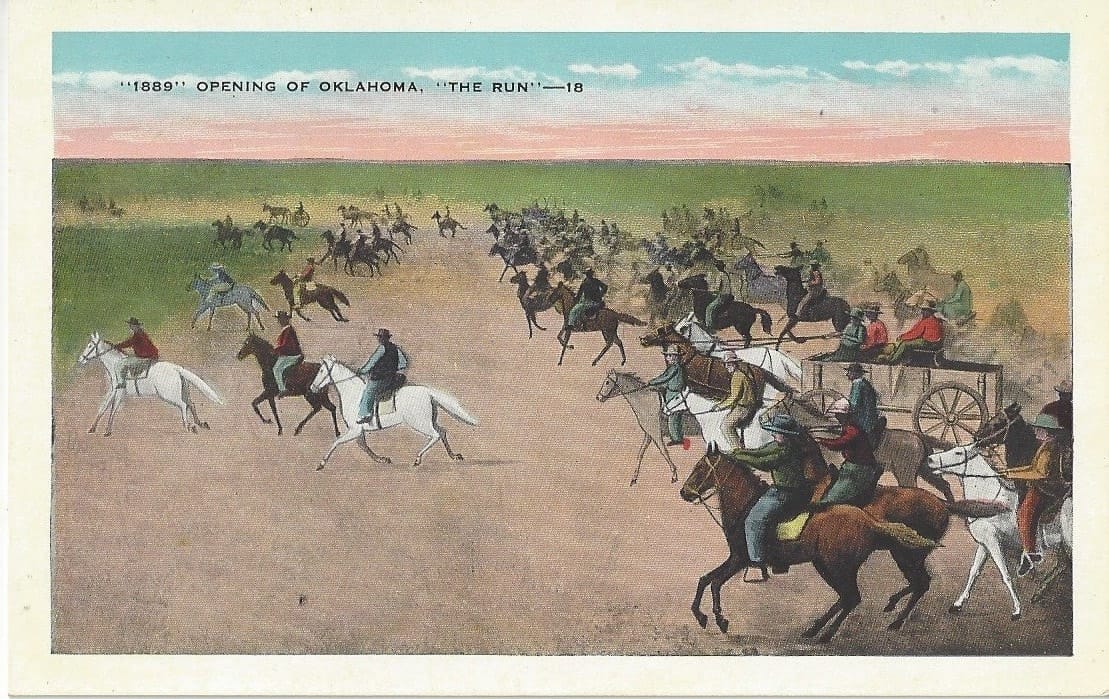
An illustration of the 1889 Oklahoma land rush, when the first "sooners" jumped the start. Norman Museum. Public domain.
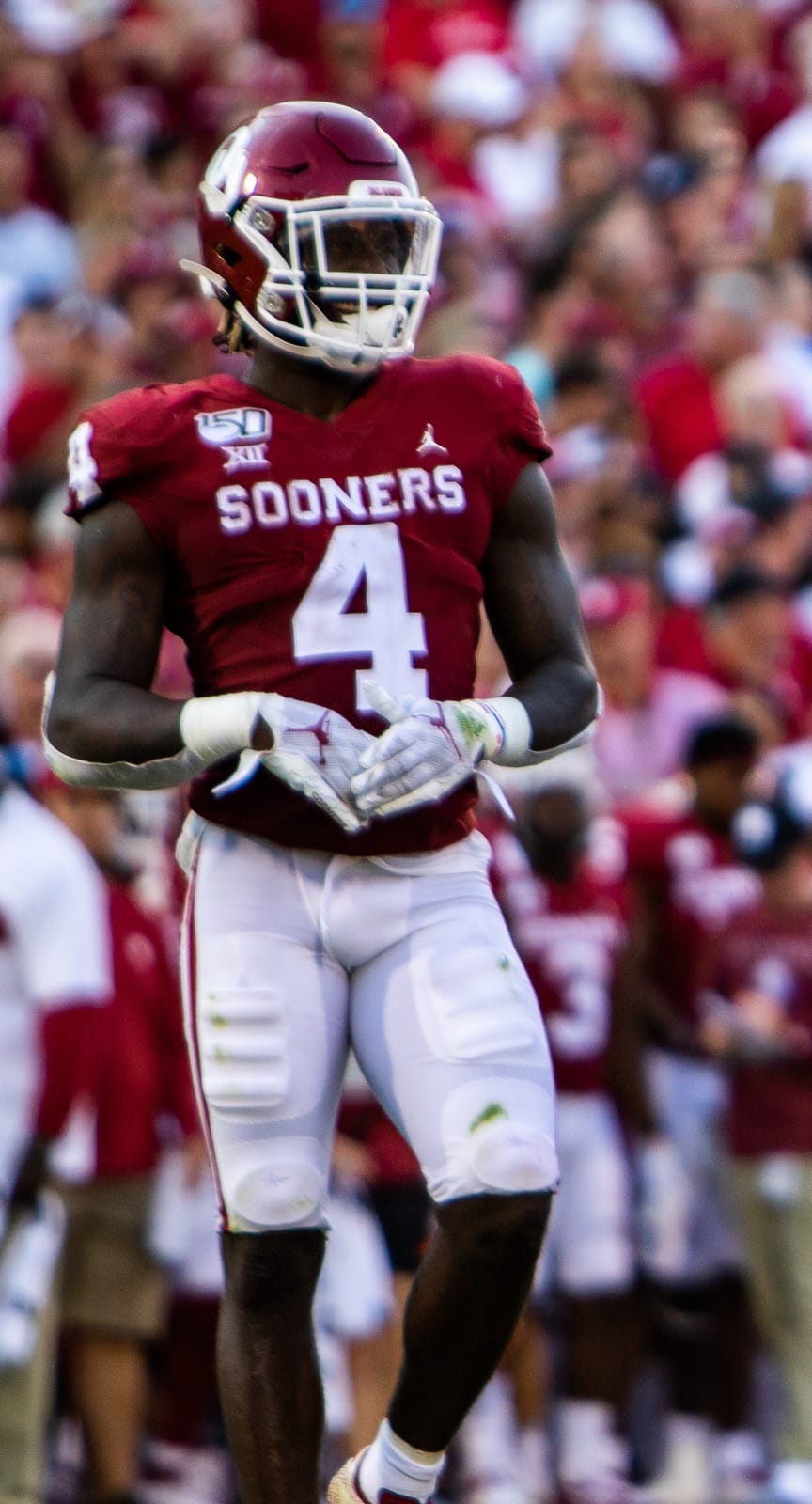
Photo: Jake Lindenberg / The Volante / CC BY 2.0
South Carolina Gamecocks
South Carolina's archivist traces the name to a near-riot. In 1902, after Carolina upset Clemson during State Fair week, students paraded a drawing of a gamecock crowing over a beaten tiger. Clemson cadets marched on campus to take it, about 40 armed Carolina students met them, and police and professors talked both sides into burning the drawing together. The schools stopped playing for six years, and newspapers started calling Carolina the Gamecocks. Why a gamecock: Revolutionary War general Thomas Sumter was nicknamed "the Gamecock." Who printed the name first is disputed. Some credit The State newspaper in 1903, others the student paper. South Carolina uniform schedule 2026
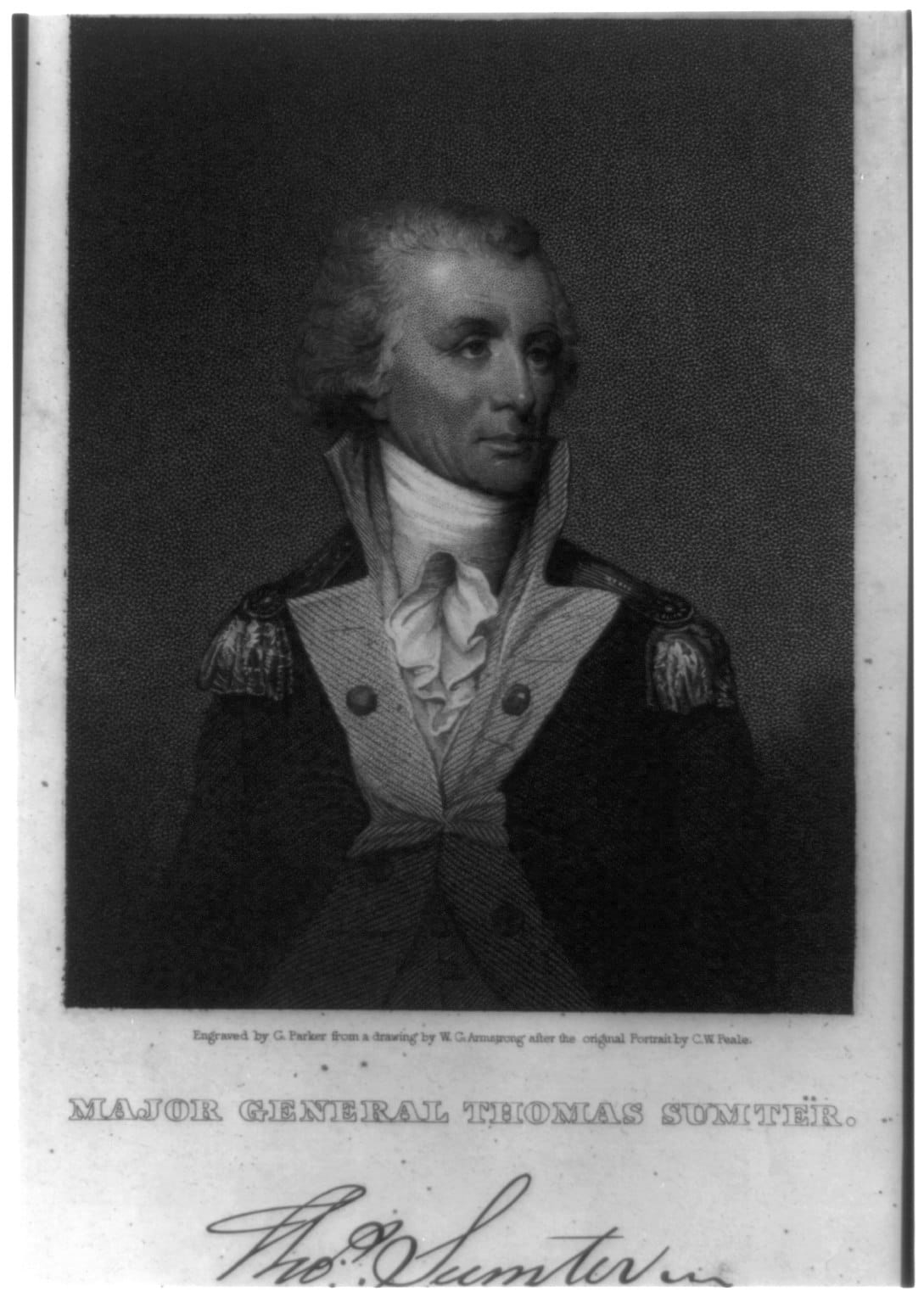
Gen. Thomas Sumter, the Revolutionary War hero nicknamed "the Gamecock." Library of Congress. Public domain.
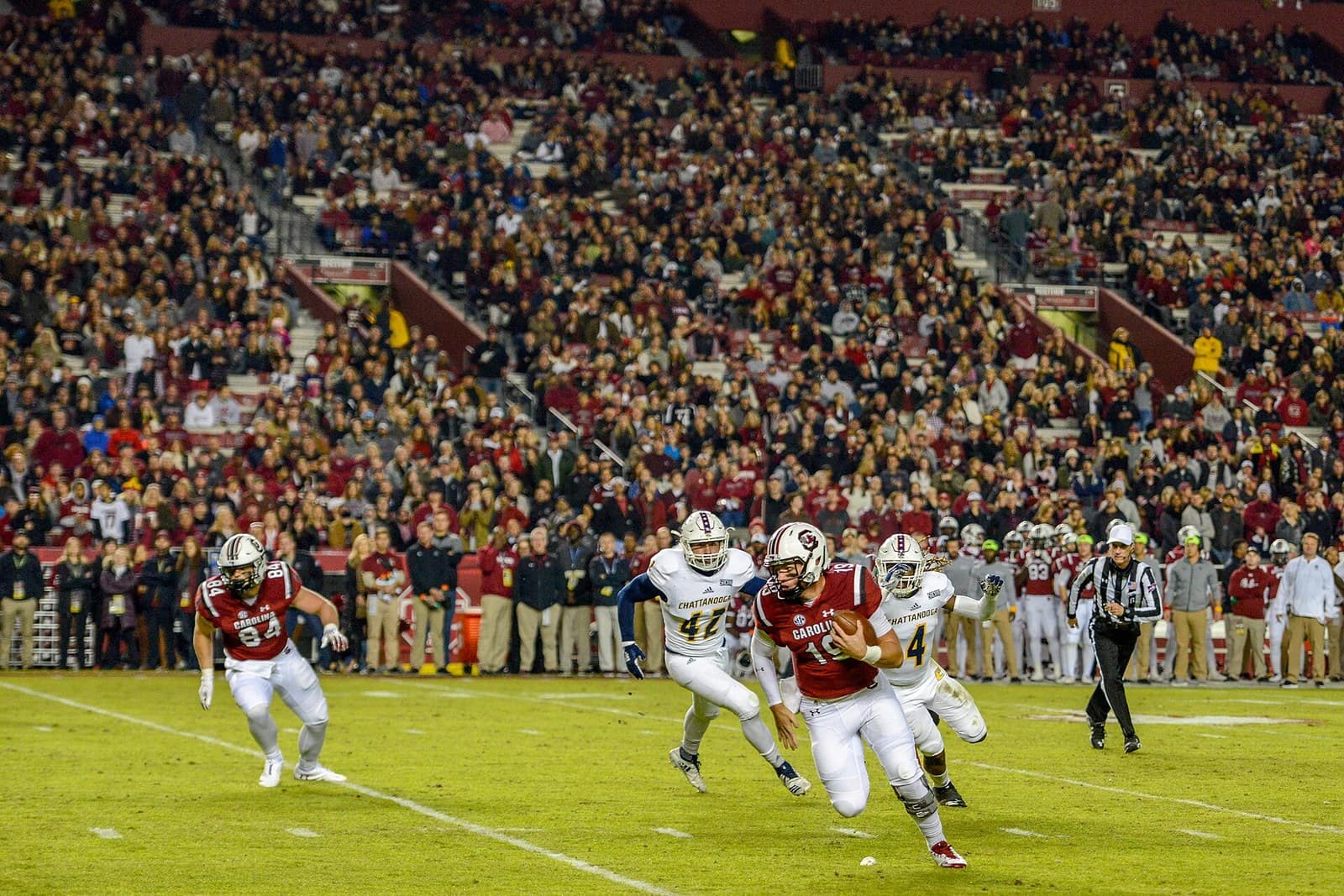
Photo: 2nd Lt. Jorge Intriago, South Carolina National Guard / Public domain
Tennessee Volunteers
Tennessee was the Volunteer State long before it had a football team. The name came out of the War of 1812 and stuck during the Mexican-American War, when the governor asked for 2,600 volunteers and more than 30,000 answered. UT's teams were mostly "the Tennesseans" or "the Varsity" until 1902, when they beat Georgia Tech 10-6 on a late touchdown and the next morning's Atlanta Constitution called them the "Volunteers." The story had no byline, so nobody knows who wrote it. Knoxville's papers used the name regularly from 1905. Tennessee uniform schedule 2026
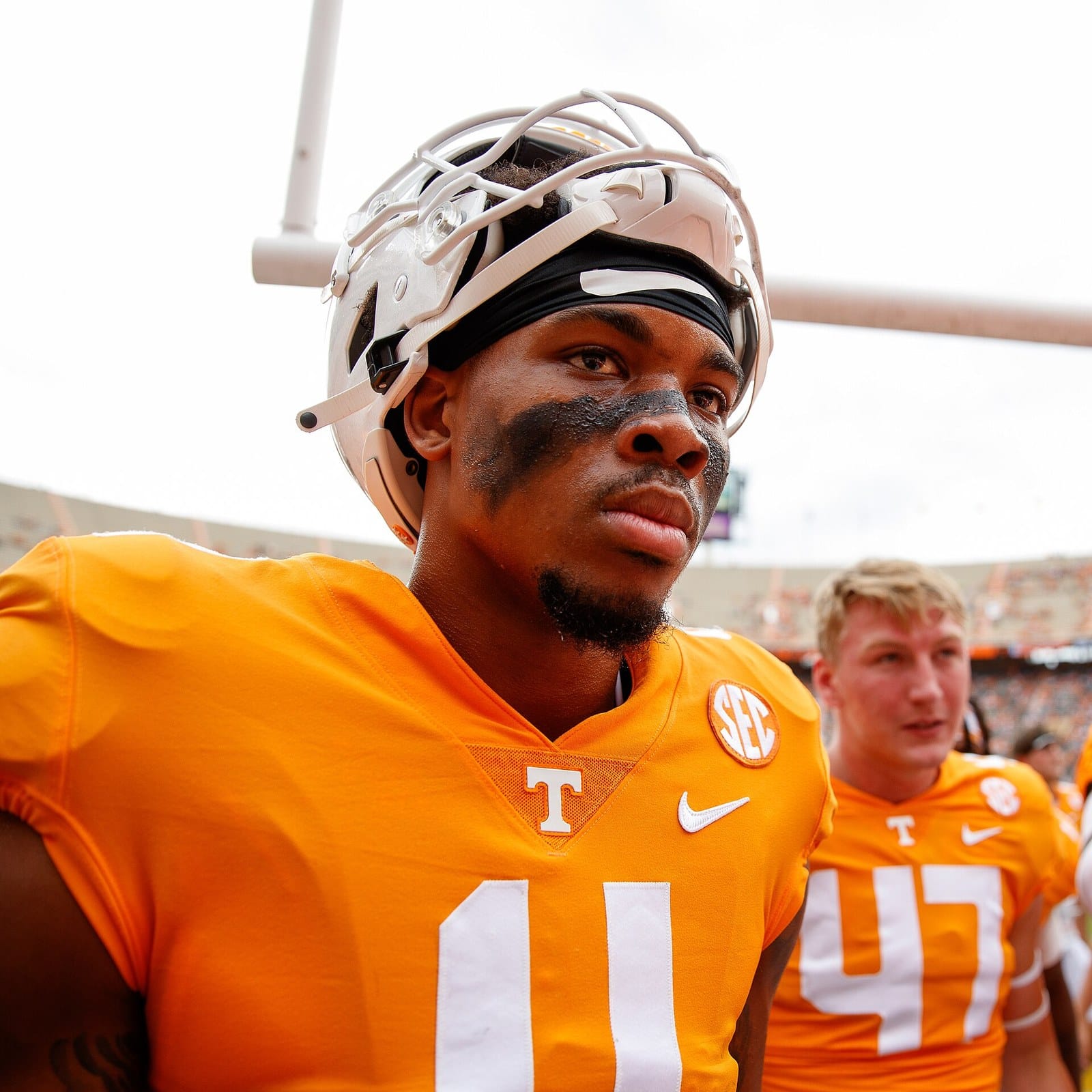
Photo: Lswineha / CC BY-SA 4.0
Texas Longhorns
Student editors willed this one into existence. A month into the 1903 fall term, Alex Weisberg, editor of the student paper The Texan, told sports reporter D.A. Frank to call UT's teams "Longhorns" in every story, "and we'll soon have a name." It worked. UT historian Jim Nicar says that by 1907 the name was in campus-wide use and the Athletic Council recognized the Longhorn as the mascot. Texas students did not invent the term, though: researcher Barry Popik found "long horns" used for Texas in Galveston and San Antonio papers in 1900. And after Texas won at Oklahoma in November 1903, the Daily Oklahoman tried to call them the "Texas Rangers." Texas uniform schedule 2026
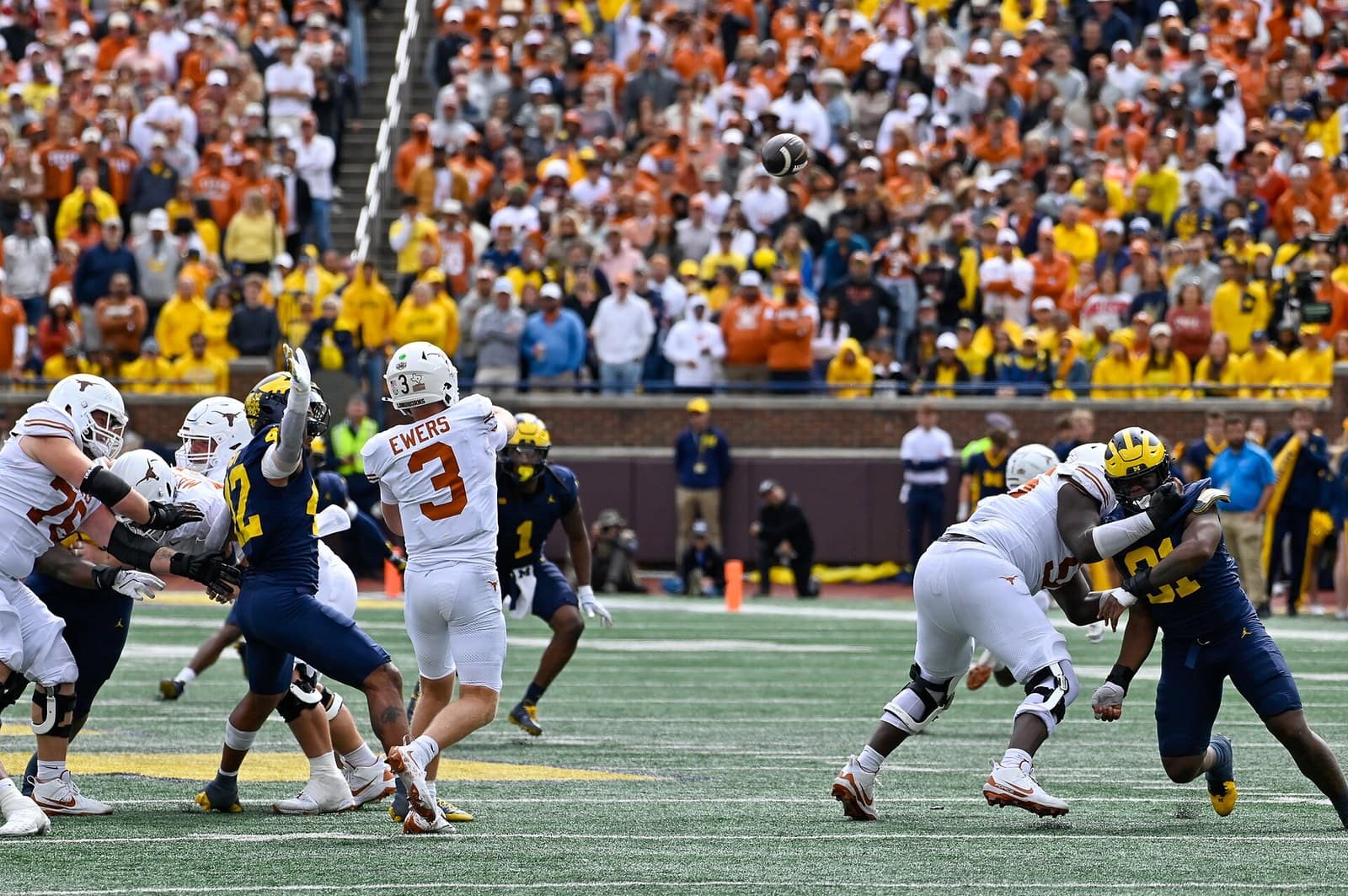
Photo: Maize & Blue Nation / CC BY 2.0
Texas A&M Aggies
The school opened in 1876 as the Agricultural and Mechanical College of Texas, and in the early 1900s its students were called "Farmers." Texas A&M says "Aggie" first came along in the 1920s, and it became the official student-body nickname in 1949, when the yearbook changed its name to "Aggieland." The yearbook's old name is the best part: until 1949 it was called "The Longhorn." Texas A&M uniform schedule 2026
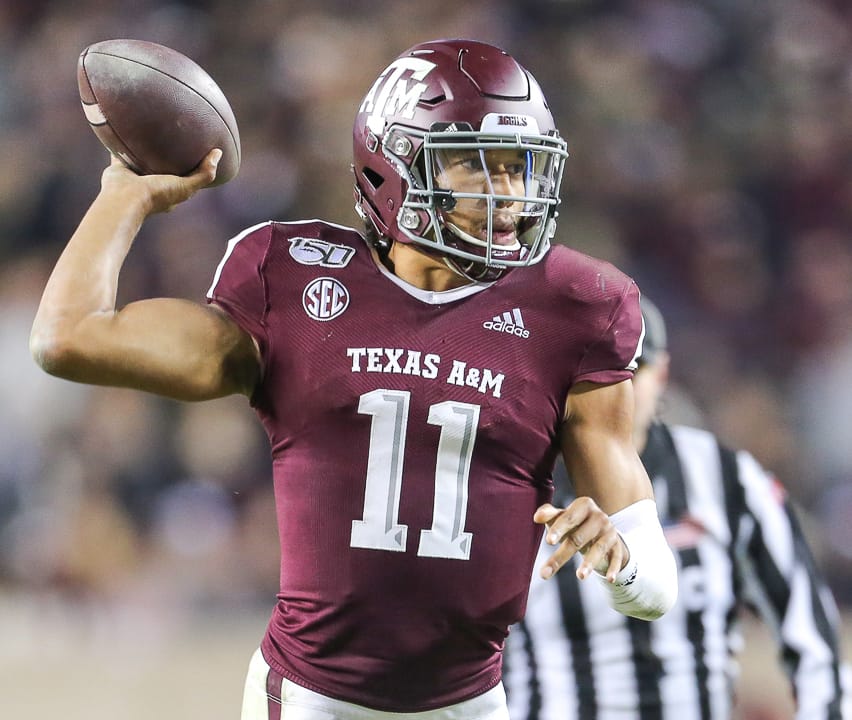
Photo: Gamecock Central / CC BY 2.0
Vanderbilt Commodores
The school is named for Cornelius Vanderbilt, whose $1 million gift founded it in 1873, and the teams are named for his nickname. Vanderbilt was "the Commodore" because of his shipping empire. Vanderbilt Athletics says he got the title commanding the largest schooner on the Hudson River, not from any navy. The school credits William E. Beard, who played for Vanderbilt in 1892 and became a Nashville newspaperman, with first calling the teams the Commodores, as early as 1898. Vanderbilt uniform schedule 2026
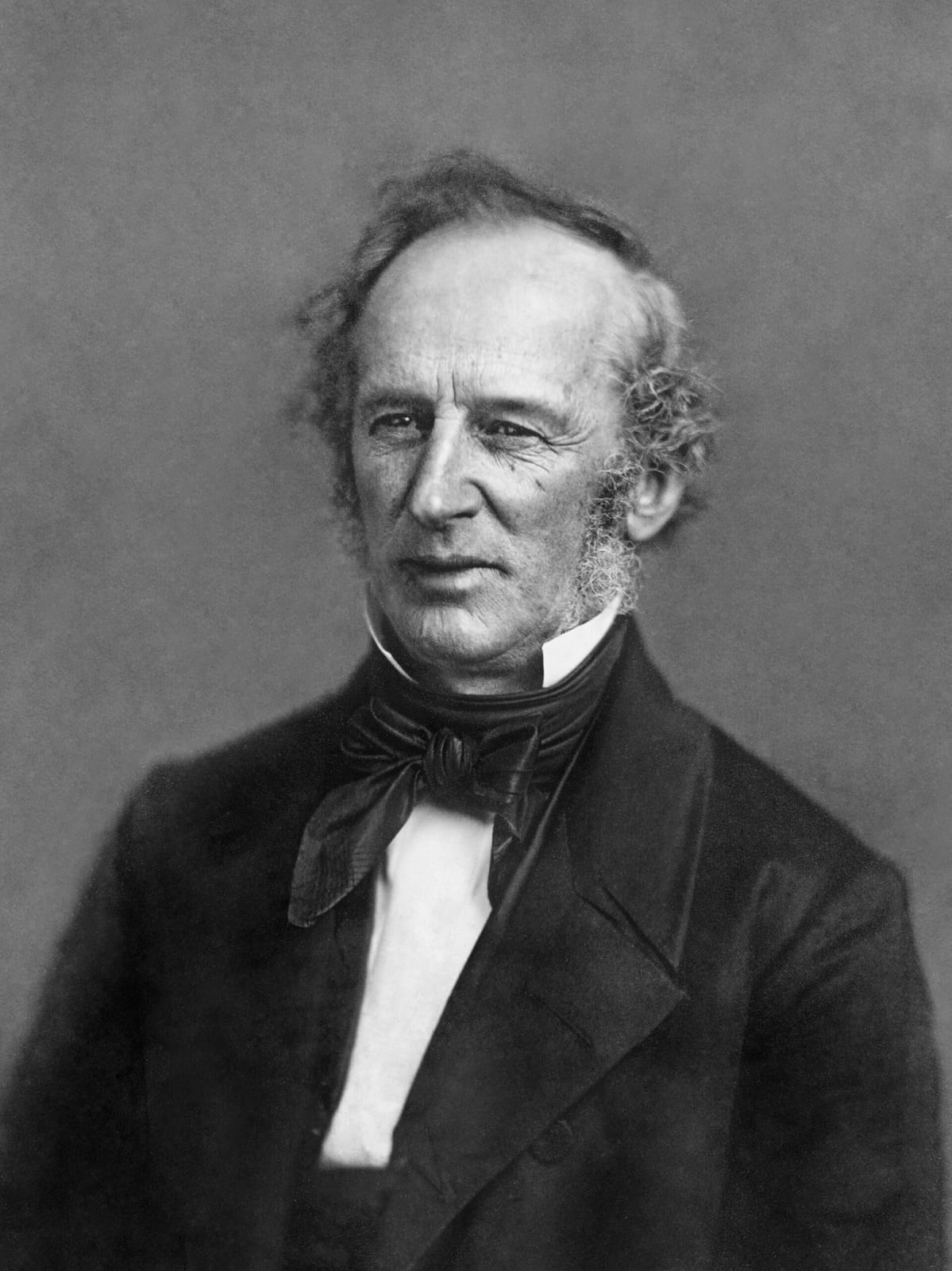
Cornelius Vanderbilt, "the Commodore." Mathew Brady studio, Library of Congress. Public domain.
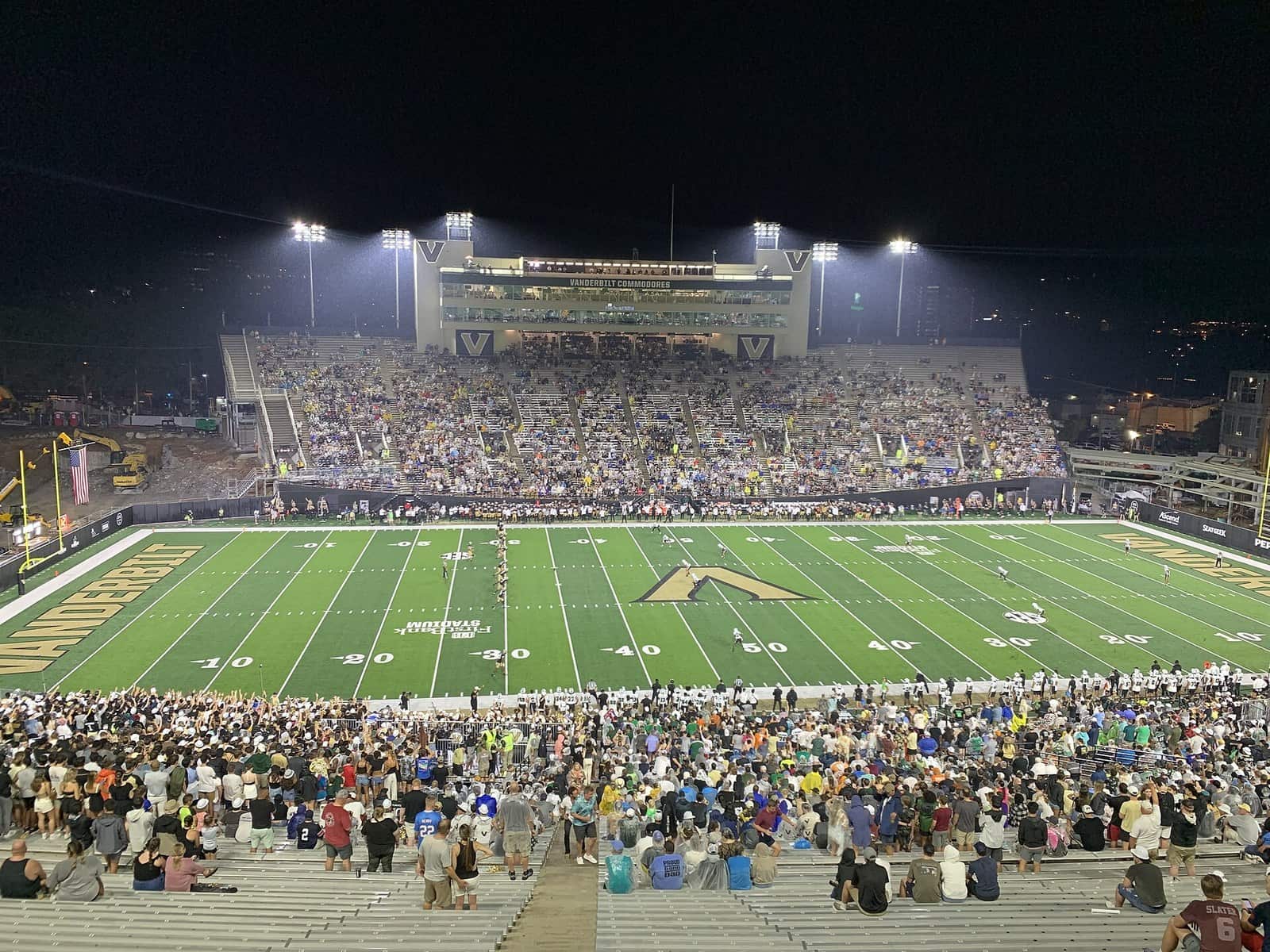
Photo: PCN02WPS / CC BY-SA 4.0
Big Ten
Illinois Fighting Illini
"Illini" is a student invention. In January 1874 the student paper changed its name from The Student to The Illini, and its first editorial suggests the word had not existed before. The University of Illinois Archives found "fighting Illini" in the Daily Illini as early as Jan. 29, 1911, describing a basketball team. The phrase took off in 1921 with the fundraising drive for Memorial Stadium, which honored Illinois people who died in World War I. The Archives say they have found no record of an official adoption. It became the name by consensus. Illinois uniform schedule 2026
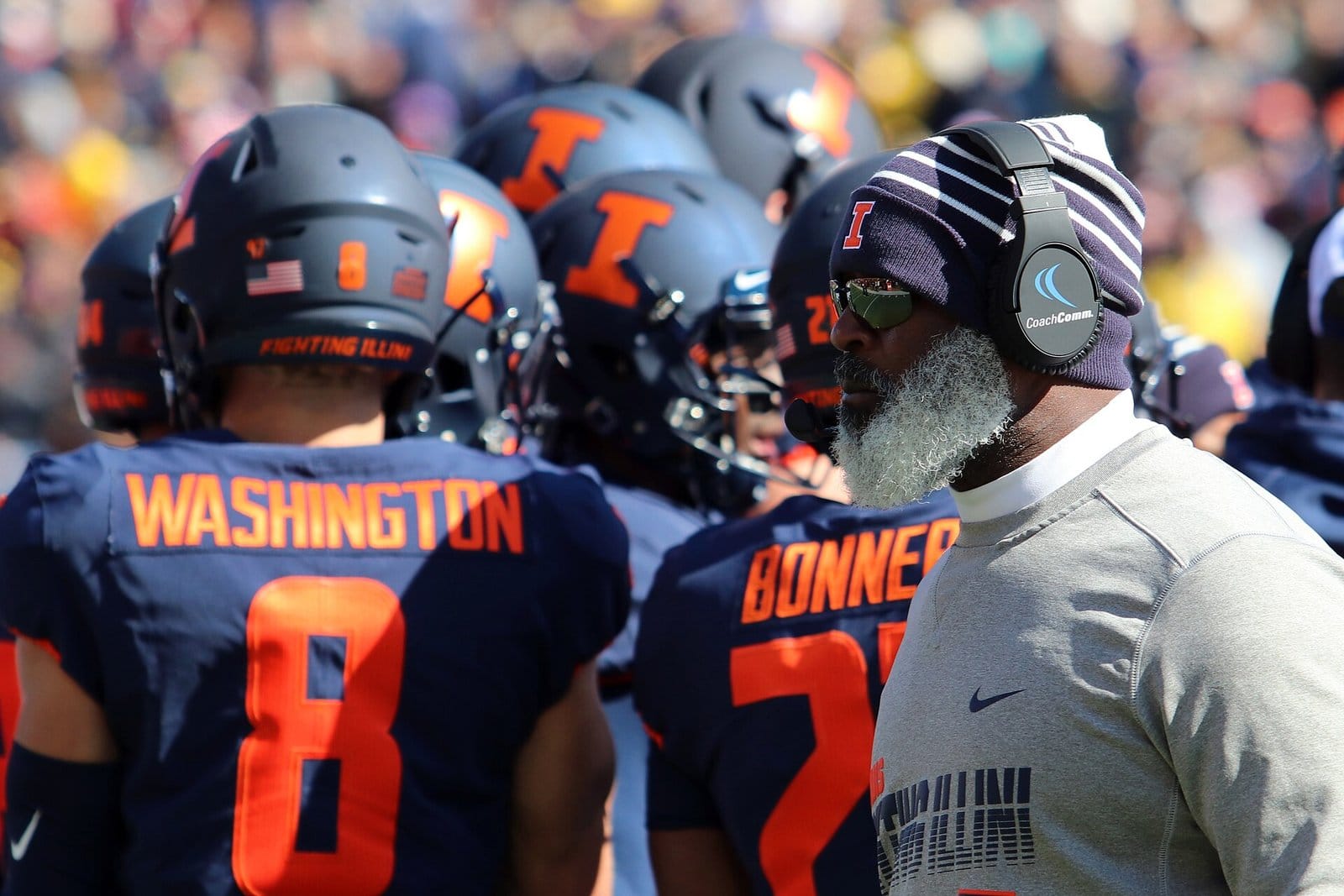
Photo: Maize & Blue Nation / CC BY 2.0
Indiana Hoosiers
Nobody knows what a Hoosier is, and the Indiana Historical Bureau says so plainly. The earliest known written use is a Feb. 11, 1831 letter about a boat to be named the "Indiana Hoosier," and John Finley's 1833 poem "The Hoosier's Nest" spread the word nationally. The theory with the most evidence, per the Bureau, is that it was Southern slang for a rough countryman, possibly from the English dialect word "hoozer," meaning something big, like a hill. The famous stories, like pioneers answering the cabin door with "Who's here?" or river brawlers who "hushed" opponents, are folk tales the Bureau calls almost certainly apocryphal. Its verdict: we will probably never know. Indiana uniform schedule 2026
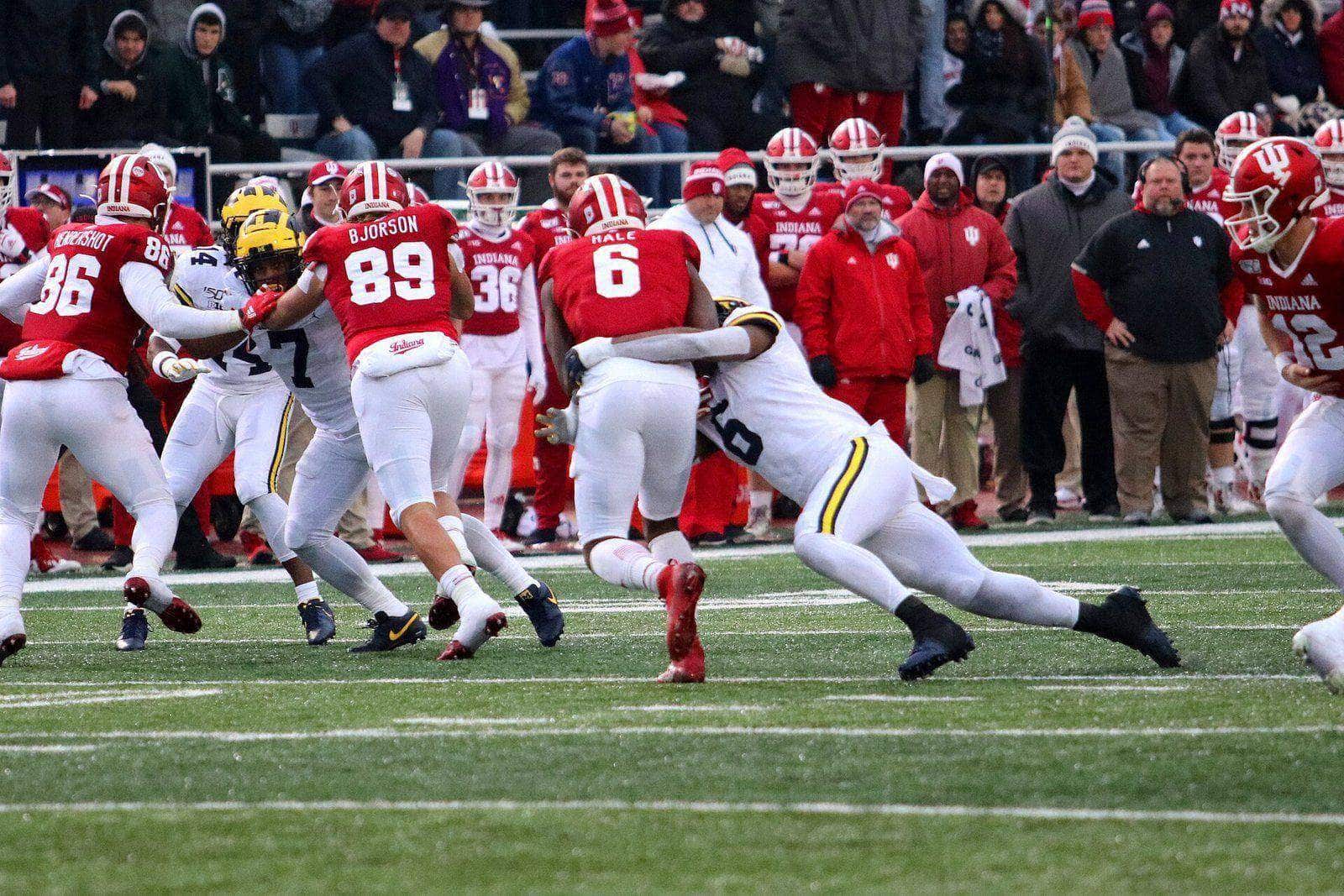
Photo: Maize & Blue Nation / CC BY 2.0
Iowa Hawkeyes
Iowa got its name from the state, and the state got it from a novel. "Hawkeye" is the frontier scout in James Fenimore Cooper's 1826 "The Last of the Mohicans." The university says Iowa Territory took on the nickname in 1838, "chiefly through the efforts" of Judge David Rorer of Burlington and newspaper editor James G. Edwards, who later renamed his paper the Burlington Hawkeye. Some accounts also tie the name to the Sauk leader Black Hawk. The cartoon hawk that became Herky was created in 1948. And a fun twist that matters in a minute: in the 1890s, Iowa's teams were sometimes called the Cornhuskers. Iowa uniform schedule 2026
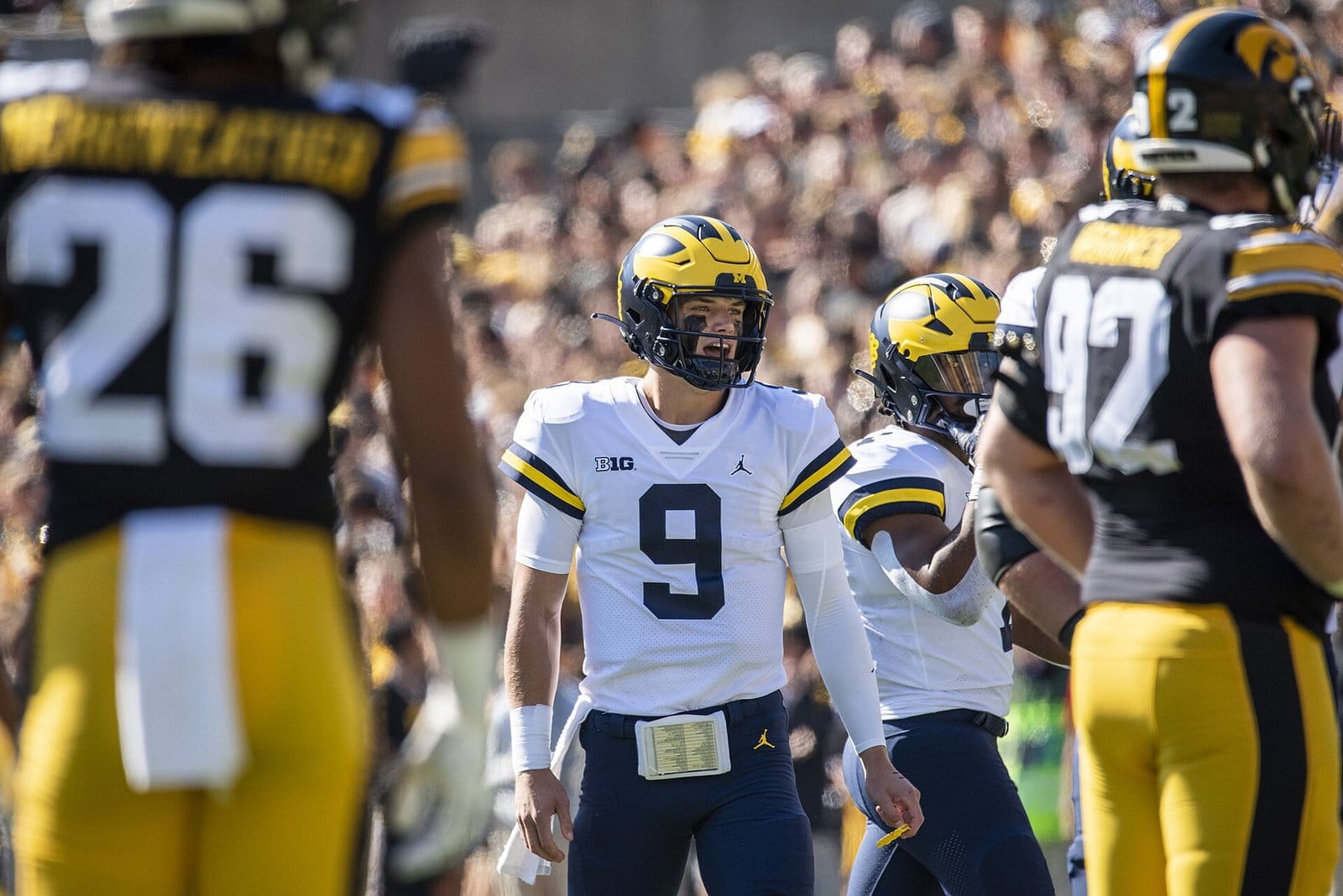
Photo: Zoey Holmstrom / Maize & Blue Nation / CC BY 2.0
Maryland Terrapins
Maryland's teams were long the Old Liners, after the state's "Old Line State" nickname. In 1932, football coach H.C. "Curley" Byrd, who later became the university's president, suggested the diamondback terrapin, a Chesapeake Bay turtle, as the mascot. Byrd came from Crisfield, Maryland, a town known for its terrapins. The bronze Testudo statue, a gift of the Class of 1933, was unveiled in June 1933. Maryland uniform schedule 2026
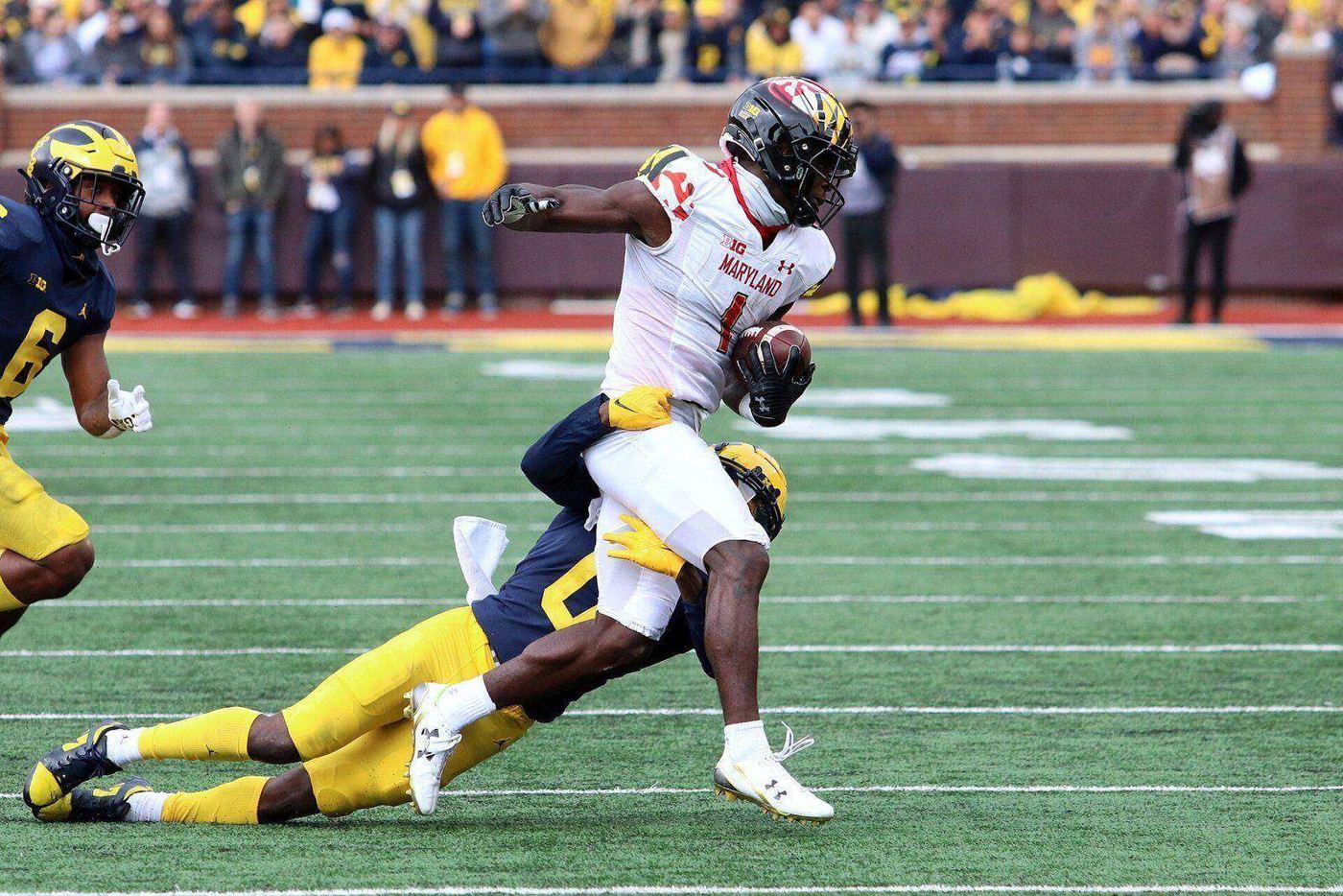
Photo: Maize & Blue Nation / CC BY 2.0
Michigan Wolverines
Nobody knows for sure. Theory one: Ohioans pinned it on Michiganders during the Toledo War of 1835-36, the border fight over the Toledo Strip. Theory two: the fur trade. Fielding Yost wrote in 1944 that wolverine pelts shipped through Sault Ste. Marie were labeled "Michigan," which led to "Michigan wolverines." Theory three: it was an insult aimed at land-hungry settlers. What is clear is that the "lots of wolverines lived here" explanation is weak. Yost himself went looking for evidence of wolverines in Michigan and came up empty. Michigan uniform schedule 2026
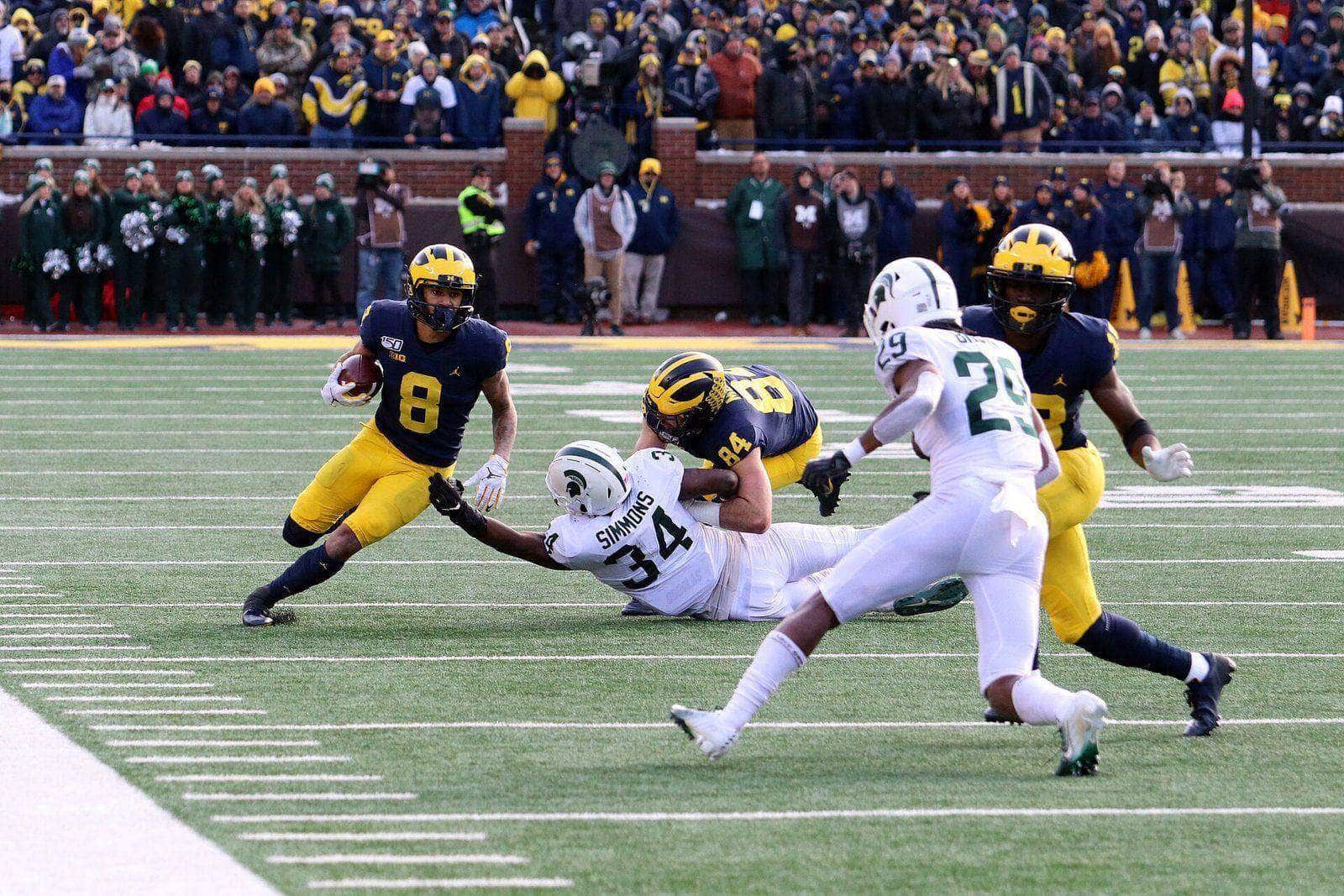
Photo: Maize & Blue Nation / CC BY 2.0
Michigan State Spartans
The school was Michigan Agricultural College and its teams were the Aggies. When it became Michigan State College in 1925, a contest picked "The Michigan Staters." Lansing State Journal sports editor George Alderton thought that was too clunky for headlines, and on April 13, 1926 he announced that "out of a clear sky, a nickname has descended": the Spartans. Who actually came up with it is still argued. Alderton said it came from the contest entries. A Lansing family says restaurant owner Stephen Scofes pitched it to his friend Alderton. And MSU's own 2026 centennial research found Alderton's first column credited correspondents who had already been calling the baseball team the Spartans. Michigan State uniform schedule 2026
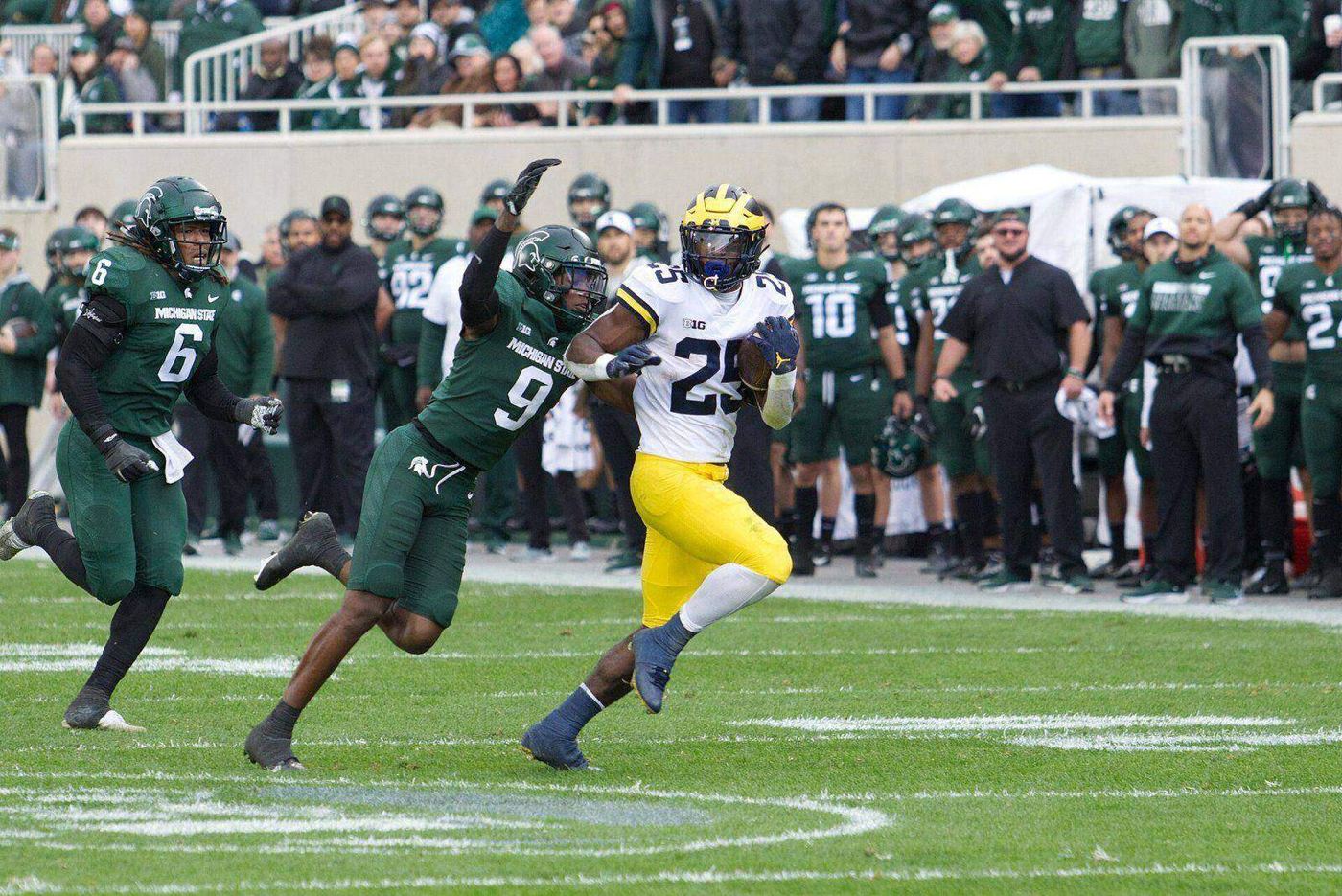
Photo: Maize & Blue Nation / CC BY 2.0
Minnesota Golden Gophers
The Gopher State nickname came from a political cartoon. R.O. Sweeny's 1850s drawing showed striped gophers with the heads of local politicians pulling a railroad car, mocking a $5 million railroad loan plan. In other words, it was making fun of the state. The university took up "Gophers," and the "Golden" came in the 1930s, when Bernie Bierman's teams wore gold jerseys and gold pants. Radio announcer Halsey Hall coined "Golden Gophers" for the all-gold look. From 1932 to 1941, Bierman's Gophers won five national championships. Minnesota uniform schedule 2026
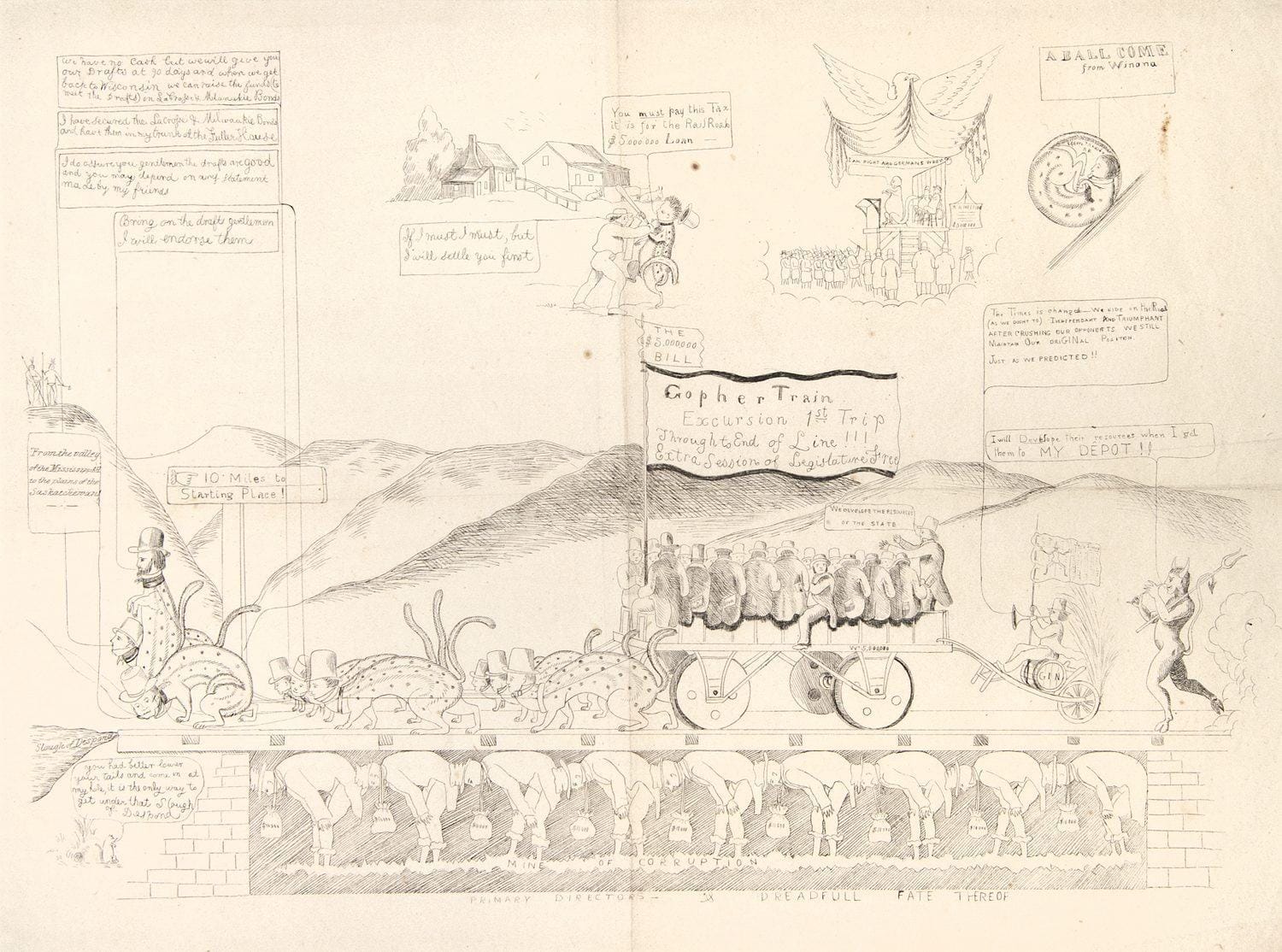
R.O. Sweeny's "Gopher State" railroad cartoon, the drawing behind the nickname. Public domain.
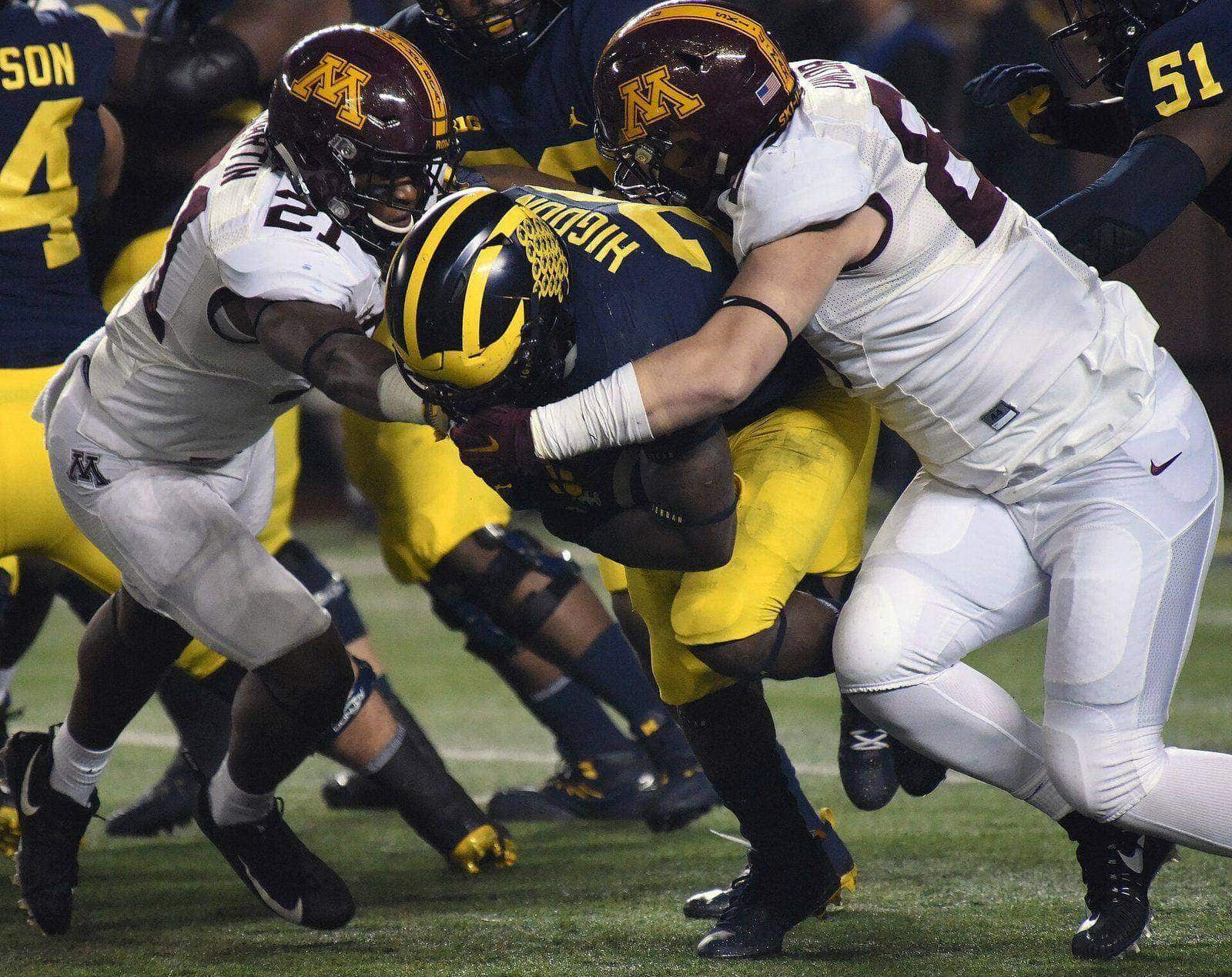
Photo: Maize & Blue Nation / CC BY 2.0
Nebraska Cornhuskers
Nebraska took the name Iowa did not want. Early Nebraska teams were the Old Gold Knights, the Antelopes, the Rattlesnake Boys and, most popularly, the Bugeaters, after the bug-eating bull bats over the plains. Lincoln sportswriter Charles "Cy" Sherman got tired of such an unglamorous name. He knew Iowa had sometimes been called the Cornhuskers, but Iowa fans preferred "Hawkeyes," so he started using "Cornhuskers" for Nebraska. Nebraska Athletics says the 1900 team was the first to carry it. Nebraska uniform schedule 2026
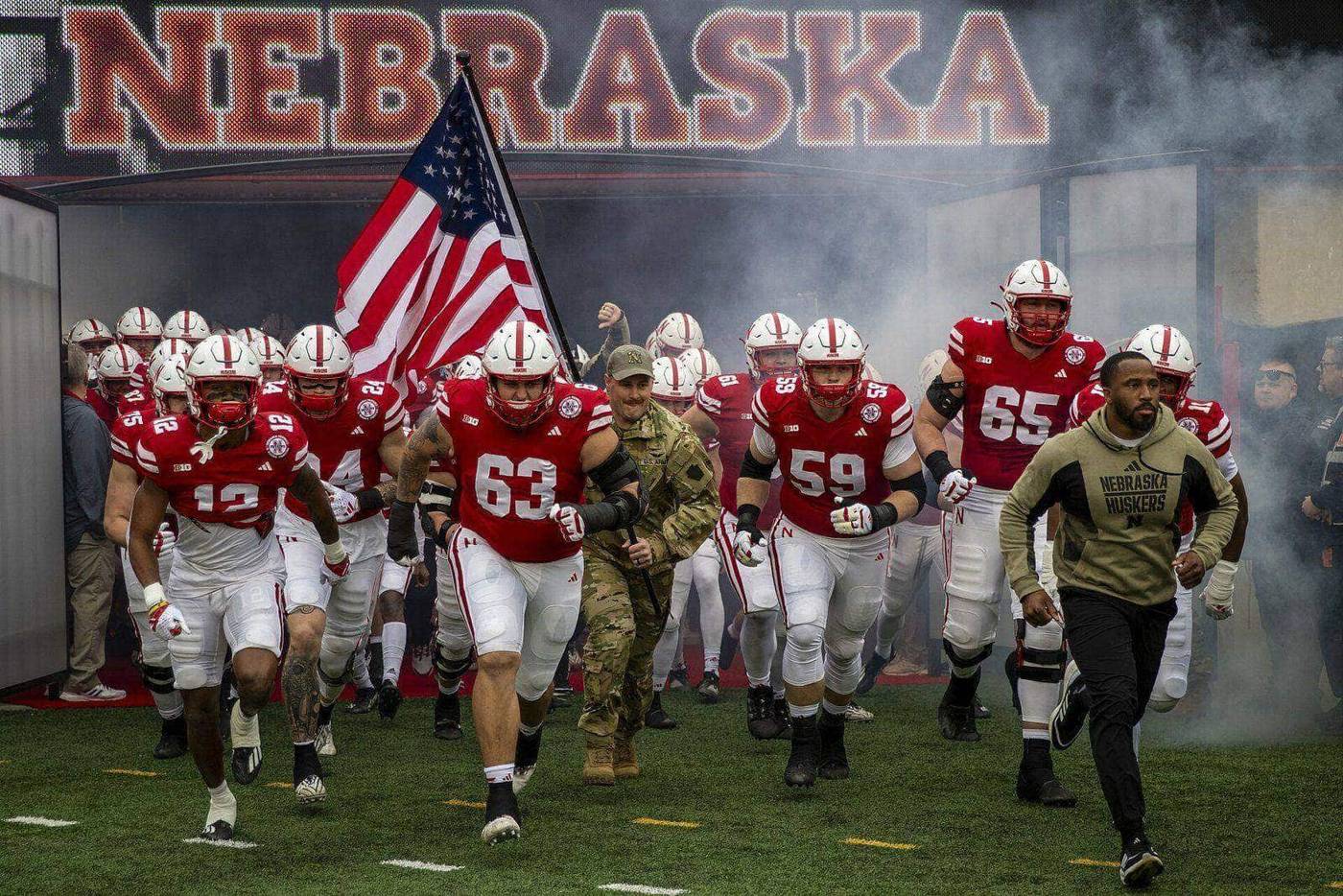
Photo: Staff Sgt. Lisa Crawford, Nebraska National Guard / Public domain
Northwestern Wildcats
Before 1924, Northwestern's teams were usually just "the Purple." After a hard-fought game against Chicago that November, Chicago Tribune reporter Wallace Abbey, a Northwestern graduate, wrote that the players "had not come down from Evanston; wildcats would be a name better suited to Thistlethwaite's boys," a reference to coach Glenn Thistlethwaite. The name was adopted that year. Willie the Wildcat came along in 1947. Northwestern uniform schedule 2026
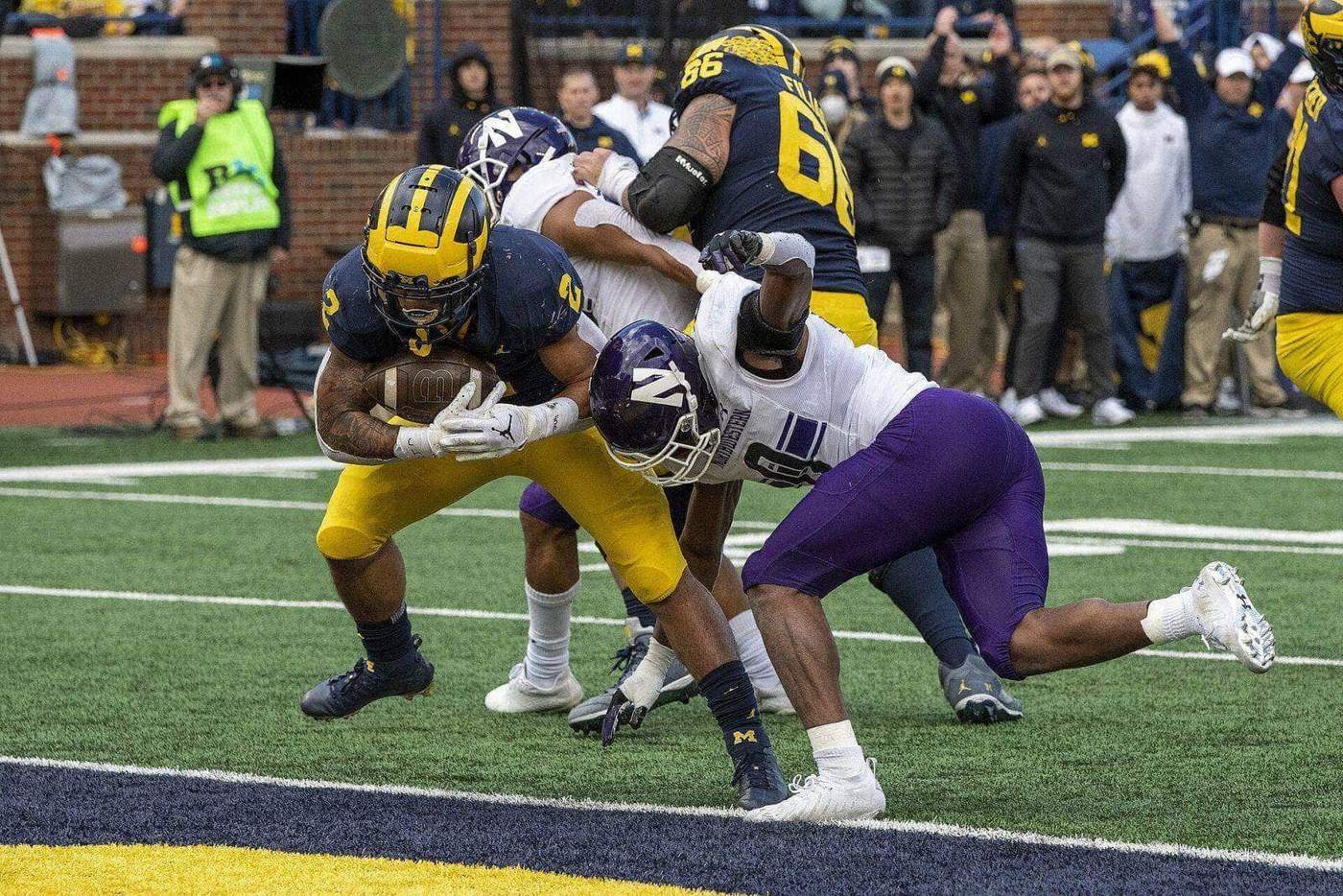
Photo: Maize & Blue Nation / CC BY 2.0
Ohio State Buckeyes
A buckeye is the nut of the Ohio buckeye tree, shiny and brown with a tan patch that looks like a deer's eye. Ohio was the Buckeye State long before Ohio State's teams were the Buckeyes, and OSU itself lists competing reasons why: there were lots of buckeye trees; pioneer Ebenezer Sproat was supposedly hailed as "Big Buckeye" in 1788; or William Henry Harrison's 1840 presidential campaign, which used buckeye walking sticks and a song called "Bonnie Buckeye State." OSU's herbarium calls the Harrison campaign "perhaps the most credible" explanation. The school made "Buckeyes" its official nickname in 1950. Ohio State uniform schedule 2026
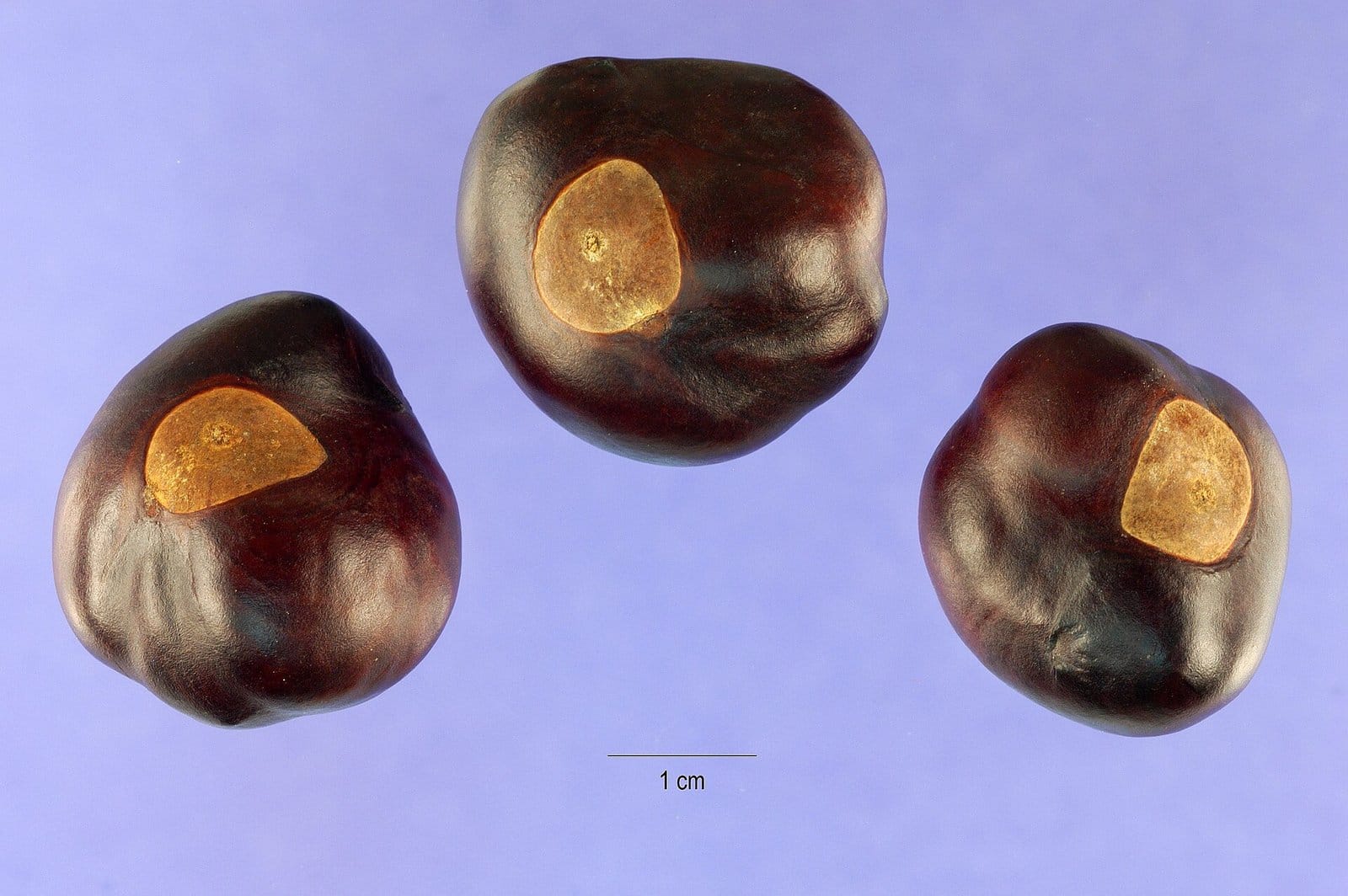
Ohio buckeye nuts, with the tan patch that looks like a deer's eye. Steve Hurst, USDA-NRCS PLANTS Database. Public domain.
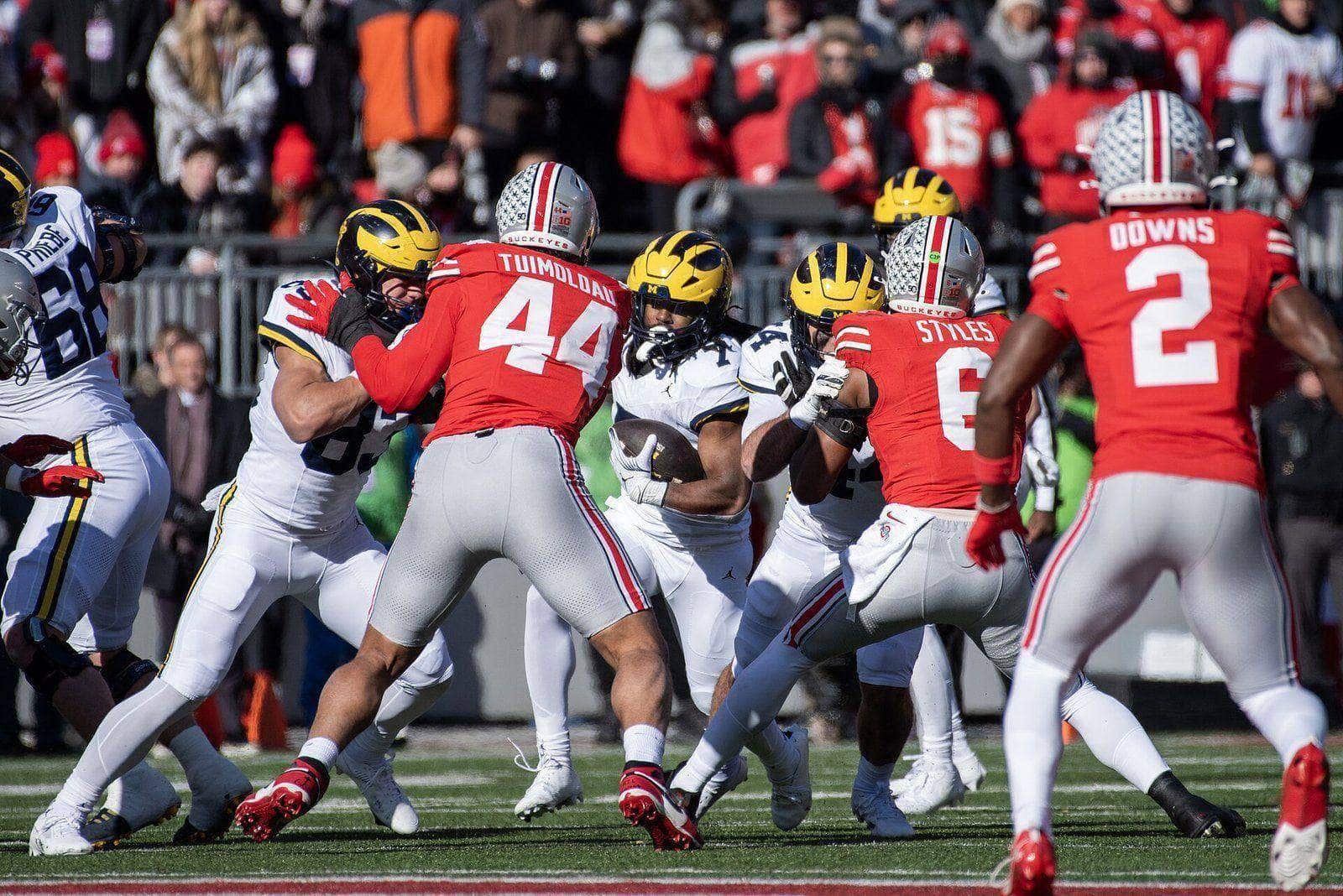
Photo: Zoey Holmstrom / Maize & Blue Nation / CC BY 2.0
Oregon Ducks
Early Oregon students were the Webfoots, after the state's old nickname. Oregon Athletics ties "Webfoot" to Massachusetts fishermen who helped George Washington's army escape in 1776 and whose descendants settled the Willamette Valley. Other accounts point to the rain. A live duck named Puddles went to games starting in the 1920s. Then in 1947, athletic director Leo Harris made a handshake deal with Walt Disney to use Donald Duck as the mascot. There was no written contract until 1973, after Disney had died. Oregon uniform schedule 2026
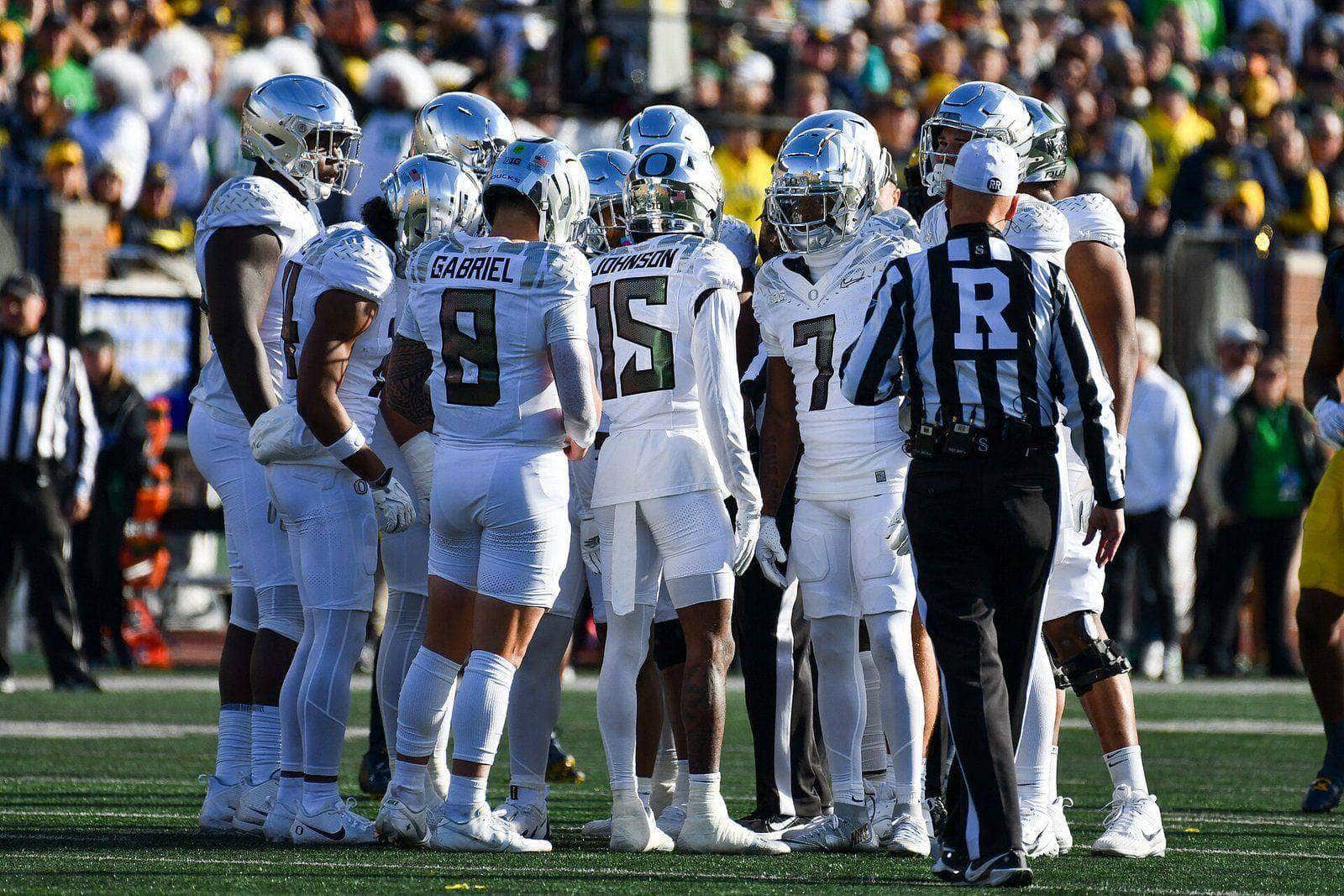
Photo: Maize & Blue Nation / CC BY 2.0
Penn State Nittany Lions
Penn State's mascot was invented on the spot during a baseball trip. On April 20, 1904, at Princeton, a Princeton player bragged about the Princeton Tiger, "the fiercest beast of them all." Third baseman Joe Mason answered that Penn State had the Nittany Mountain Lion on Mount Nittany, "who has never been beaten in a fair fight." Penn State won the game. Mason pushed the idea in the student humor magazine in 1907, and it caught on so fast that, per Penn State Libraries, there was never an official vote. A Nittany Lion is just a mountain lion, which roamed central Pennsylvania until the 1880s. Penn State uniform schedule 2026
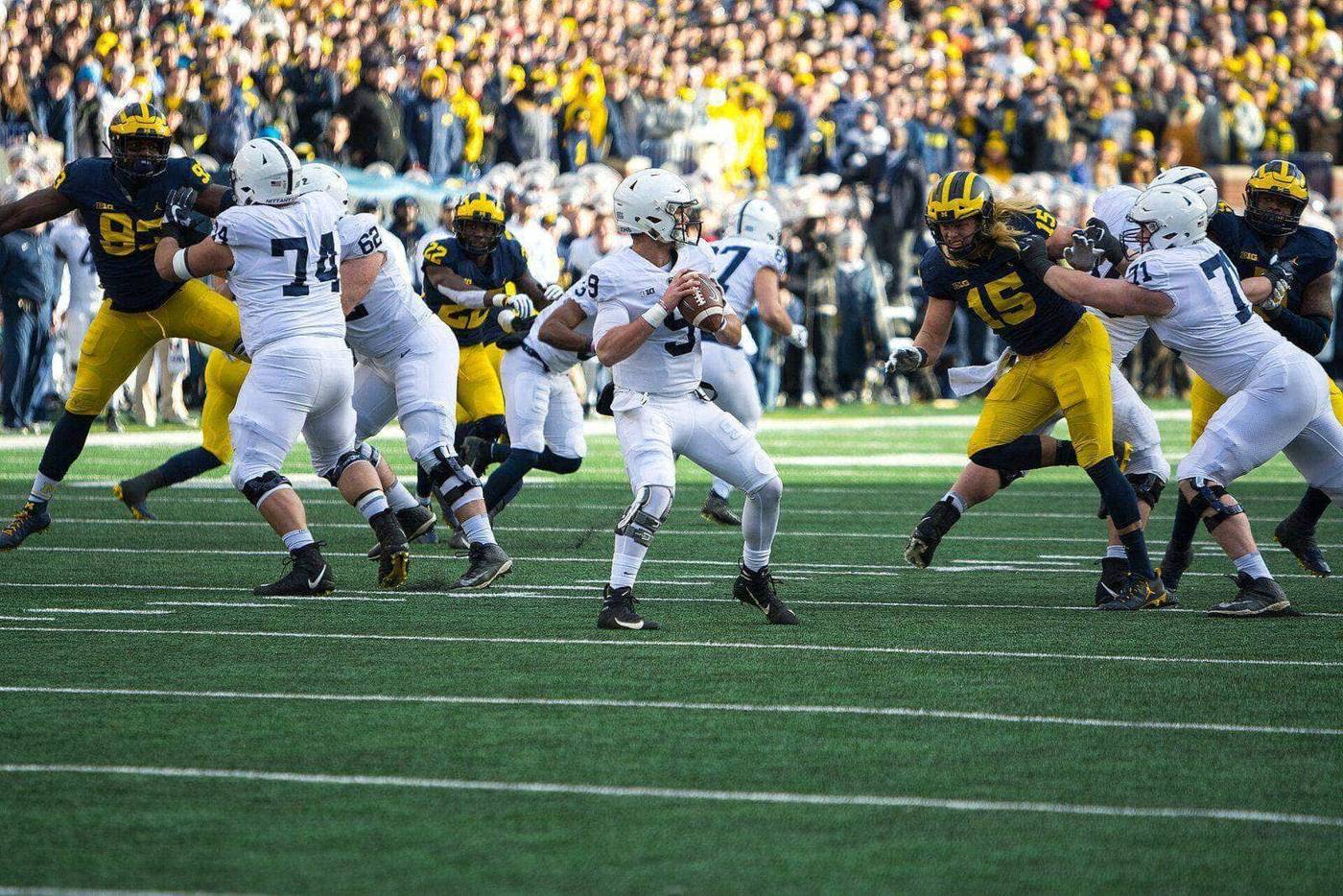
Photo: Maize & Blue Nation / CC BY 2.0
Purdue Boilermakers
Purdue's name is a rival's insult. In 1891 Purdue won 44-0 at Wabash College, and Wabash fans claimed Purdue had brought in burly ringers. A Crawfordsville paper ran the headline "Wabash Snowed Completely Under by the Burly Boiler Makers From Purdue." Earlier Purdue teams had been mocked as grangers, pumpkin-shuckers, railsplitters and cornfield sailors, all jabs at a farm and engineering school. "Boilermakers" is the one Purdue kept, and it was in common use by the next season. Purdue uniform schedule 2026
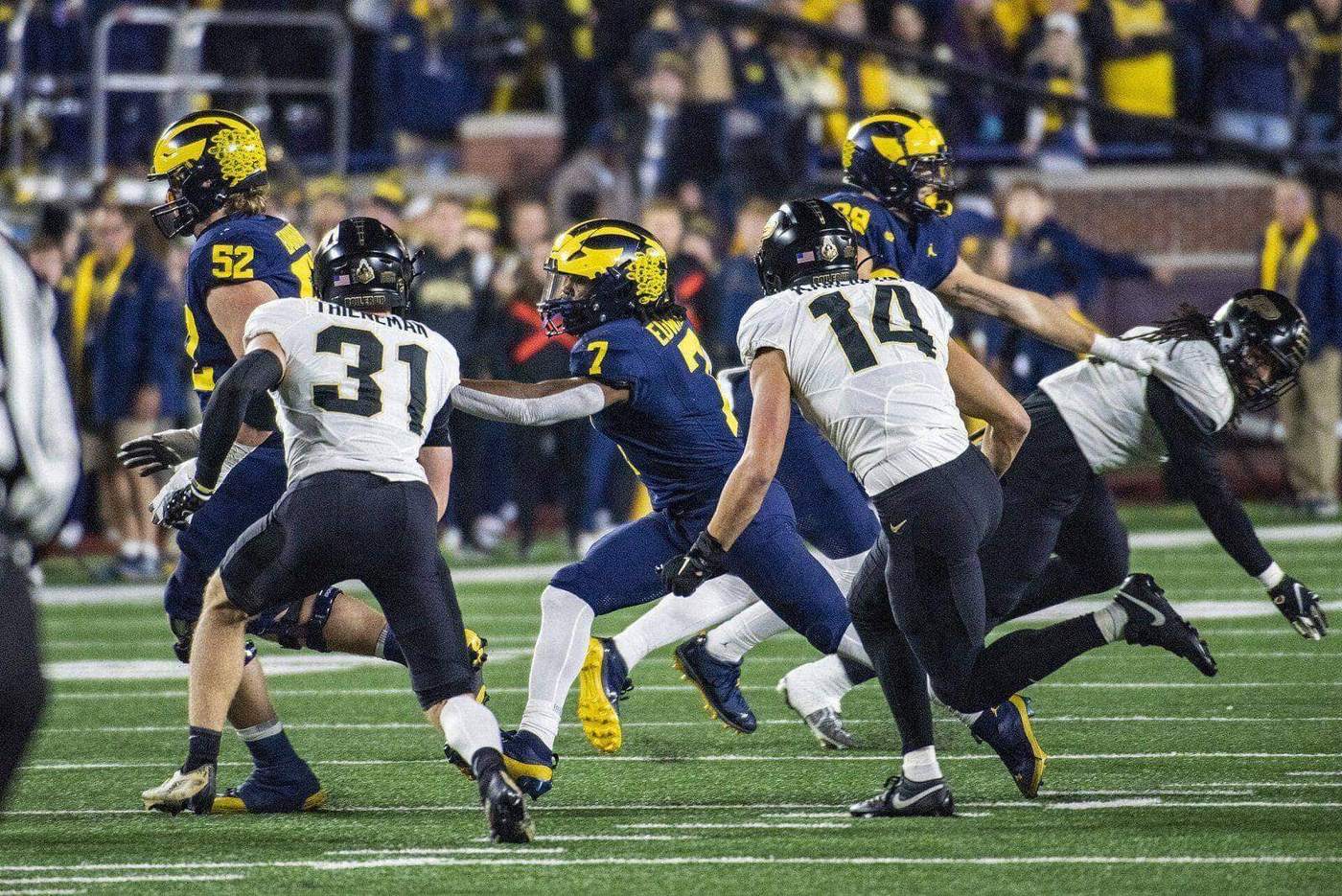
Photo: Zoey Holmstrom / Maize & Blue Nation / CC BY 2.0
Rutgers Scarlet Knights
Early Rutgers teams were the Queensmen, after the school's original name, Queen's College. From 1925 the football mascot was a rooster, the Chanticleer, which hung around for about 30 years and took plenty of jokes. In the early 1950s a campus-wide selection replaced it with a knight, and by 1955 the Scarlet Knight was official. Rutgers uniform schedule 2026
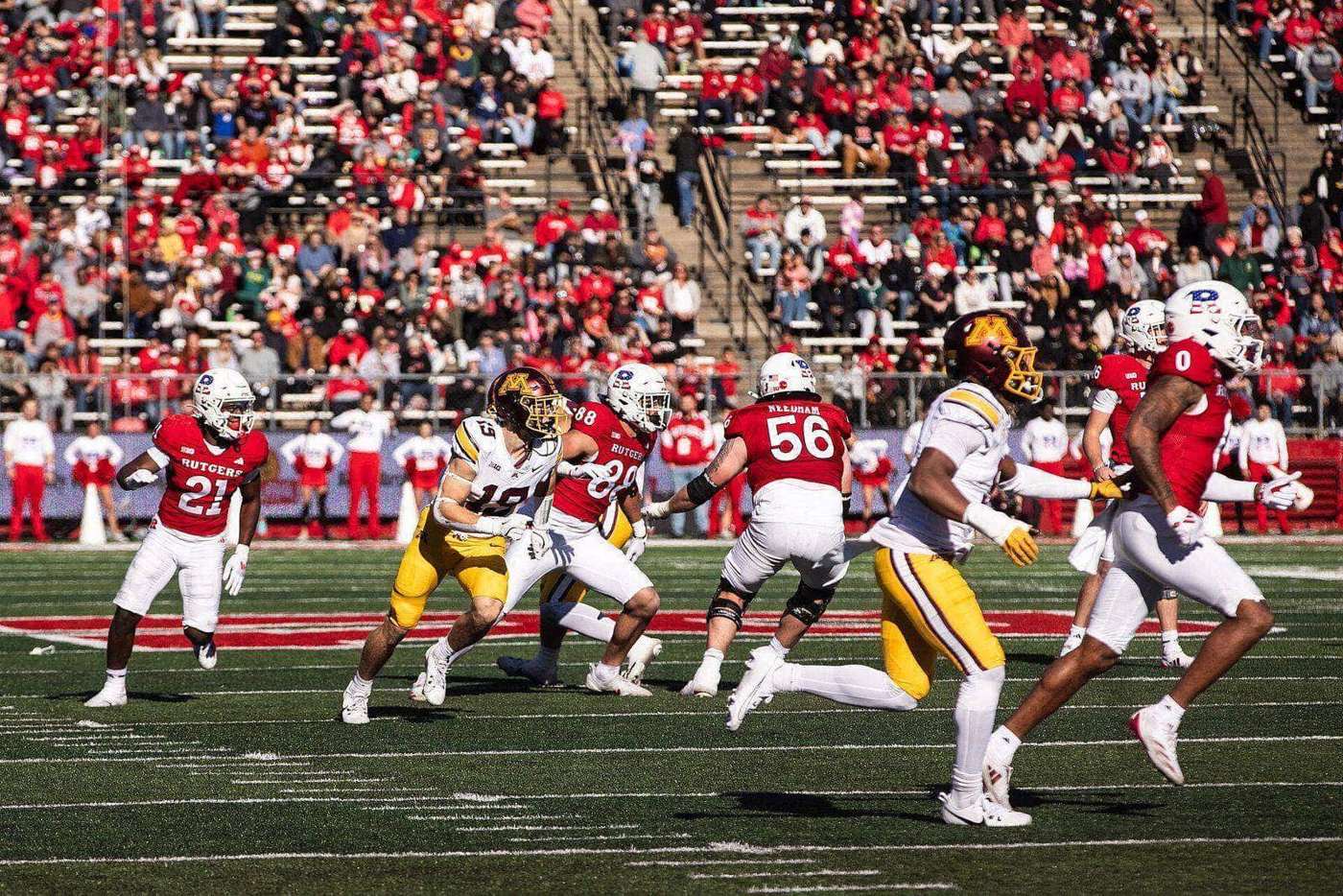
Photo: Spc. Seth Cohen, New Jersey National Guard / Public domain
UCLA Bruins
UCLA has been three different bears. It opened in 1919 as the "Southern Branch" of the University of California, and its football team was the Cubs, the little sibling of Cal's Golden Bears. In 1923 the Cubs became the Grizzlies. When UCLA joined the Pacific Coast Conference, Montana already had "Grizzlies," so UCLA became the Bruins. UCLA Athletics dates the switch to 1928; an older UCLA alumni history put it in 1926. UCLA uniform schedule 2026
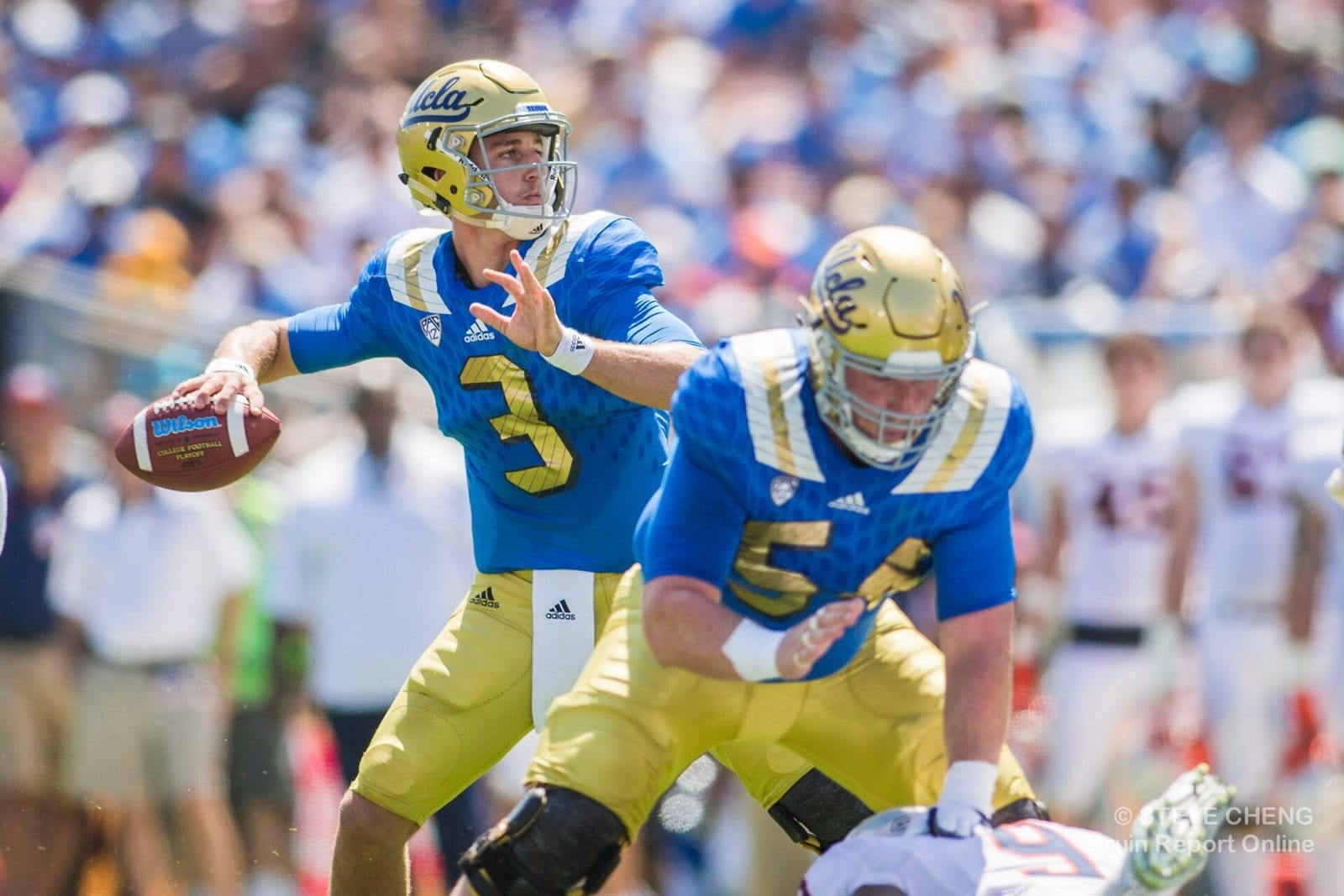
Photo: Steve Cheng, Bruin Report Online / CC BY 2.0
USC Trojans
Before 1912, USC's teams were the Methodists or the Wesleyans, and the school did not like either one. Athletic director Warren Bovard asked Los Angeles Times sports editor Owen Bird to come up with something better. Bird later explained that USC's athletes were up against bigger, better-equipped teams "yet they had splendid fighting spirit. The name 'Trojans' fitted them." He first used it in 1912, ahead of a big USC-Stanford meeting. USC uniform schedule 2026
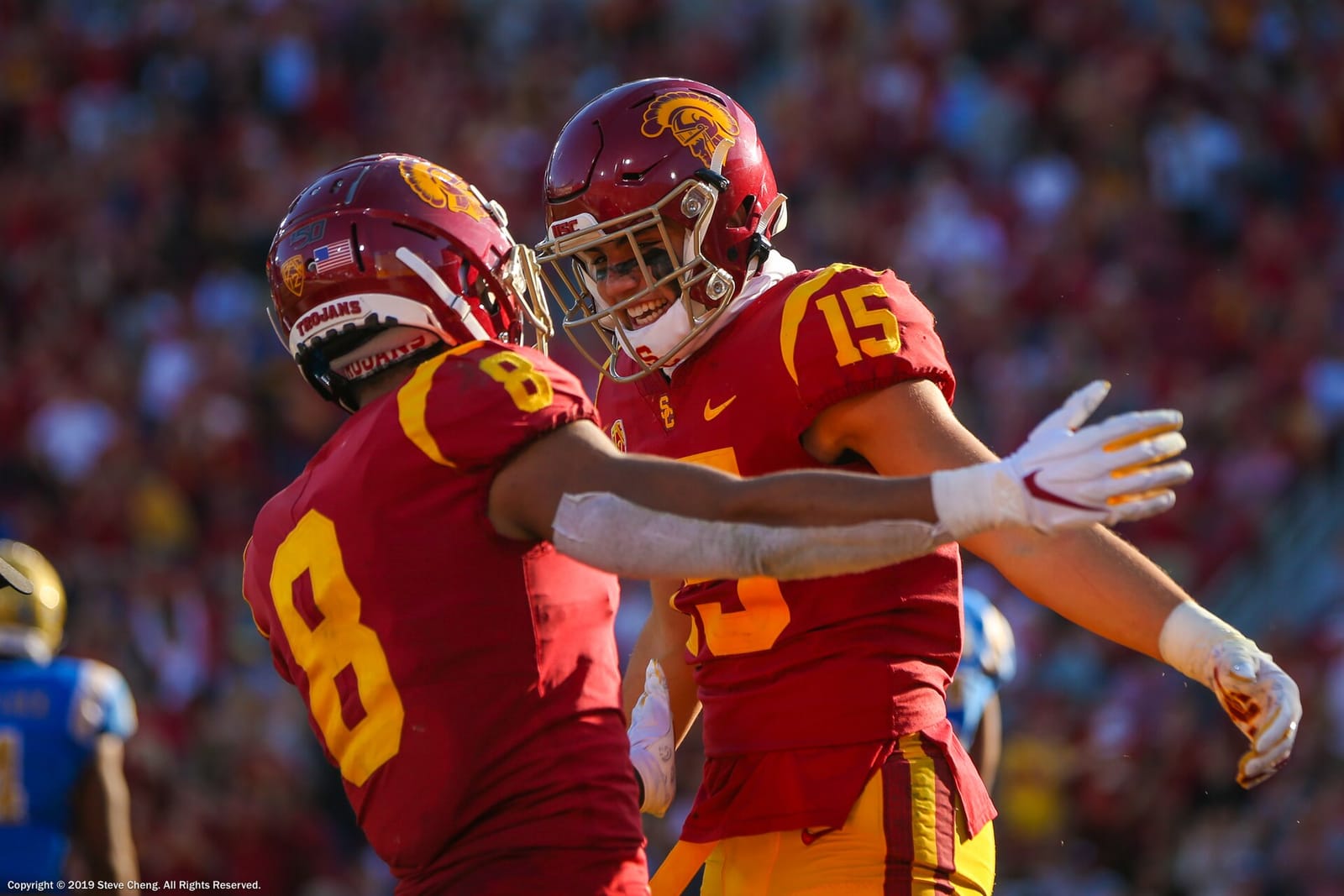
Photo: Steve Cheng, Bruin Report Online / CC BY 2.0
Washington Huskies
Around 1919 to 1921, UW's teams were the Sun Dodgers, a joke about Seattle's rain that plenty of people disliked. In December 1921 local papers started calling them the Vikings, which lasted a few weeks. A committee then weighed Wolves, Malamutes, Tyees, Northmen, Olympics and more, and it came down to Malamutes vs. Huskies. Huskies won, and UW has used the name, and live husky mascots, since 1922. Washington uniform schedule 2026
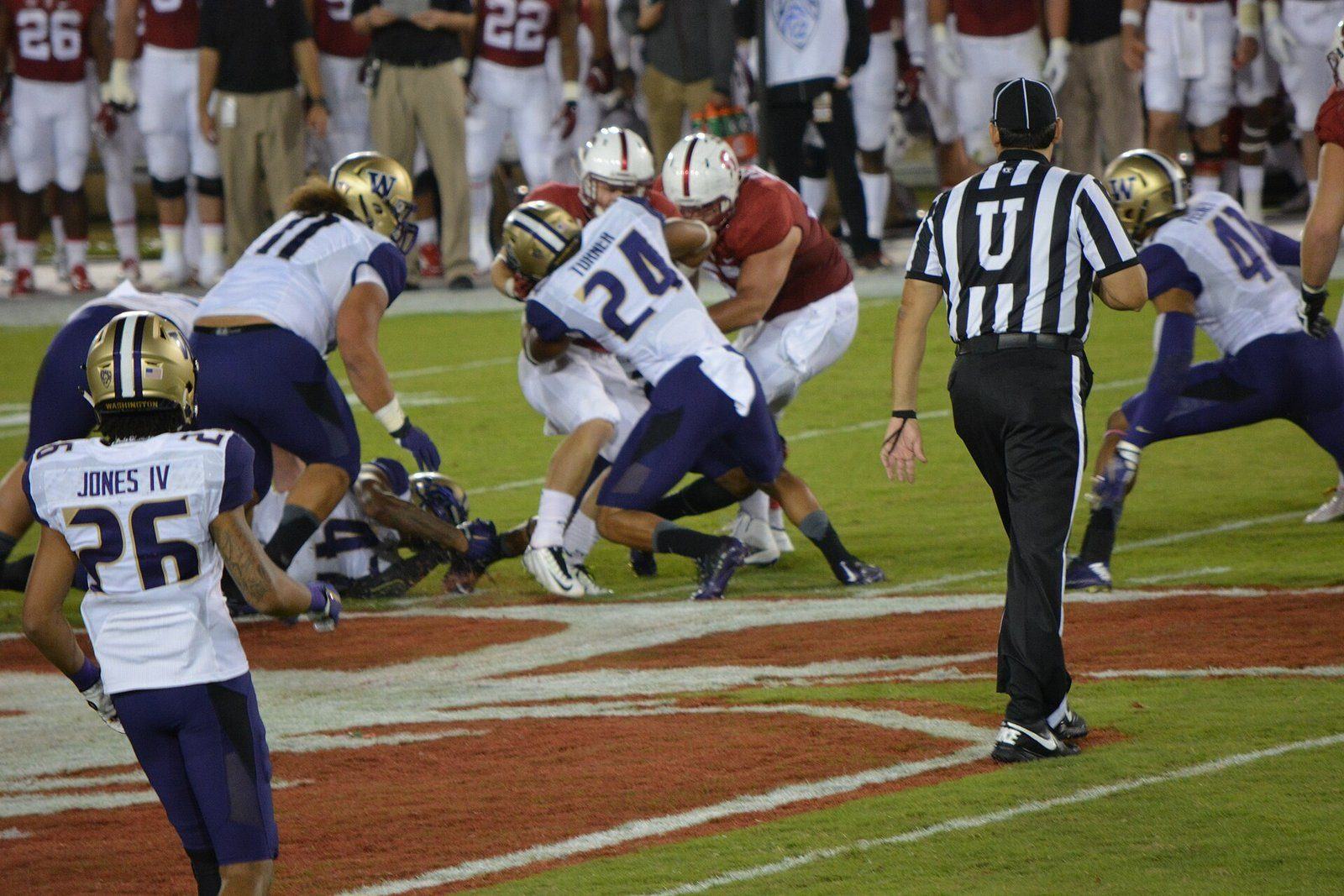
Photo: Daniel Hartwig / CC BY 2.0
Wisconsin Badgers
Wisconsin took the state's nickname, and the state got it from lead miners. During the mining boom of the 1820s and 1830s in southwest Wisconsin, the Wisconsin Blue Book says, miners too busy digging to build houses moved into old mine shafts and makeshift burrows, like badgers. It started as an insult. One historian called the evidence "ludicrously tenuous," but the Wisconsin Historical Society backs the mining story. Bucky Badger arrived in 1949, and the badger did not become the state animal until 1957. Wisconsin uniform schedule 2026
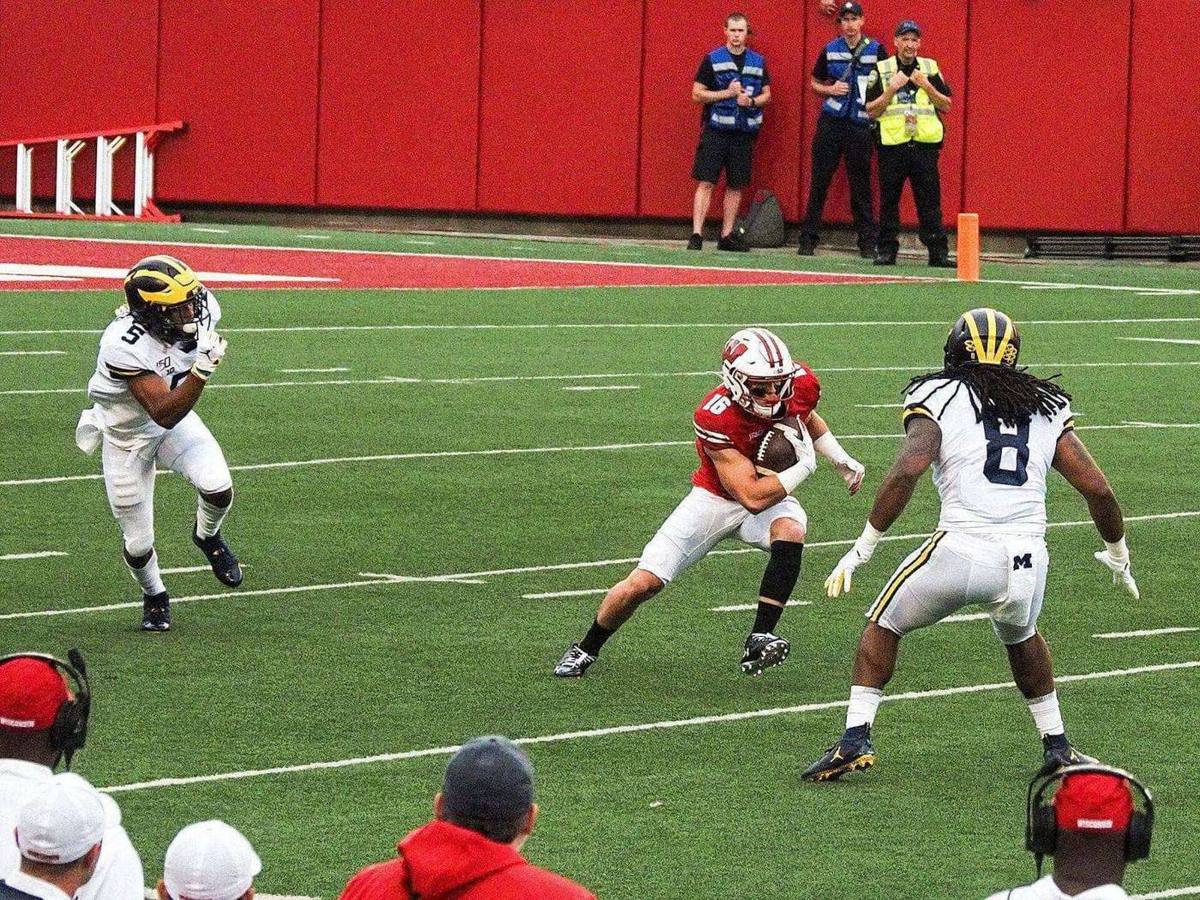
Photo: Bely Medved / CC BY-SA 2.0
Big 12
Arizona Wildcats
Arizona is named after a loss. On Nov. 7, 1914, Arizona lost 14-0 at Occidental in Los Angeles, and Bill Henry, covering the game for the Los Angeles Times, wrote that "the Arizona men showed the fight of wildcats." Students took the name right away. In 1915 the school got its first live mascot, a bobcat named Rufus Arizona. In 1964, Arizona honored Henry, by then a well-known Times columnist, as the "Father of the Wildcats." Arizona uniform schedule 2026
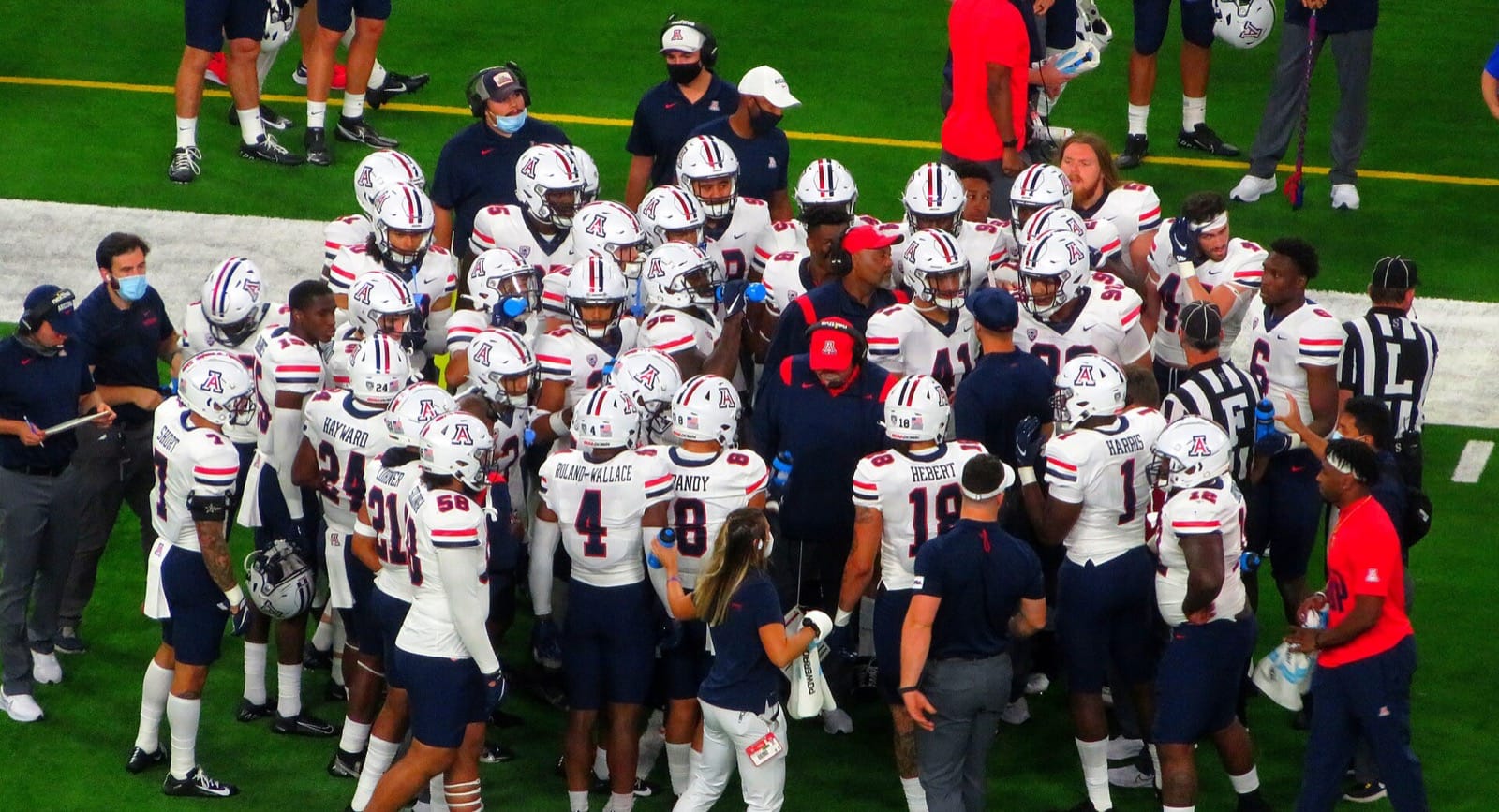
Photo: Ken Lund / CC BY-SA 2.0
Arizona State Sun Devils
Tempe Normal School's early teams were the Normals, and by the 1920s they were the Bulldogs. In 1946 a booster group called the Sun Angels pushed for something new, inspired partly by Duke's Blue Devils, and students voted to become the Sun Devils. About a year later a booster hired former Disney illustrator Berk Anthony to draw Sparky. Who came up with "Sun Devil" first is not settled. ASU's archivist credits the Sun Angels, while ASU Athletics tells a story about track coach Donn Kinzle and a dust devil on the Salt River bed. Arizona State uniform schedule 2026
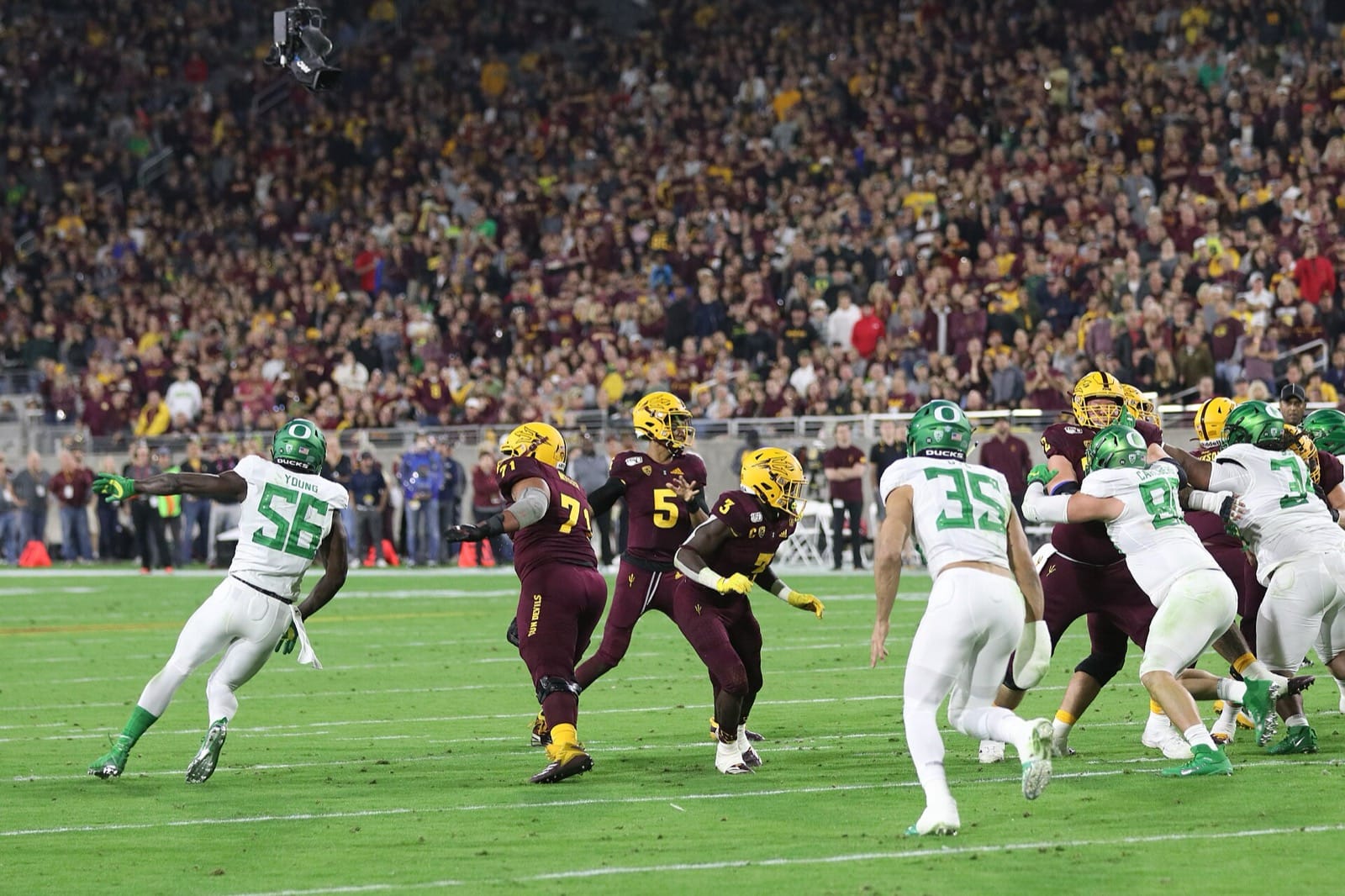
Photo: Az Skies Photography / CC BY-SA 2.0
Baylor Bears
Baylor's bear won a $5 gold piece. On Oct. 2, 1914, former student George Baines Rosborough proposed a mascot contest in chapel and put up the prize. Nearly two dozen entries came in, and in the student vote announced Dec. 12, 1914, the bear won 206 of 406 ballots, with the buffalo second. Freshman Doyle Thrailkill, who nominated the bear, got the gold. Before that, newspapers called Baylor the Bulldogs or "the Baptists." The first live bear came from soldiers at Camp MacArthur, who paraded it at a 1917 game against Texas A&M. Baylor uniform schedule 2026
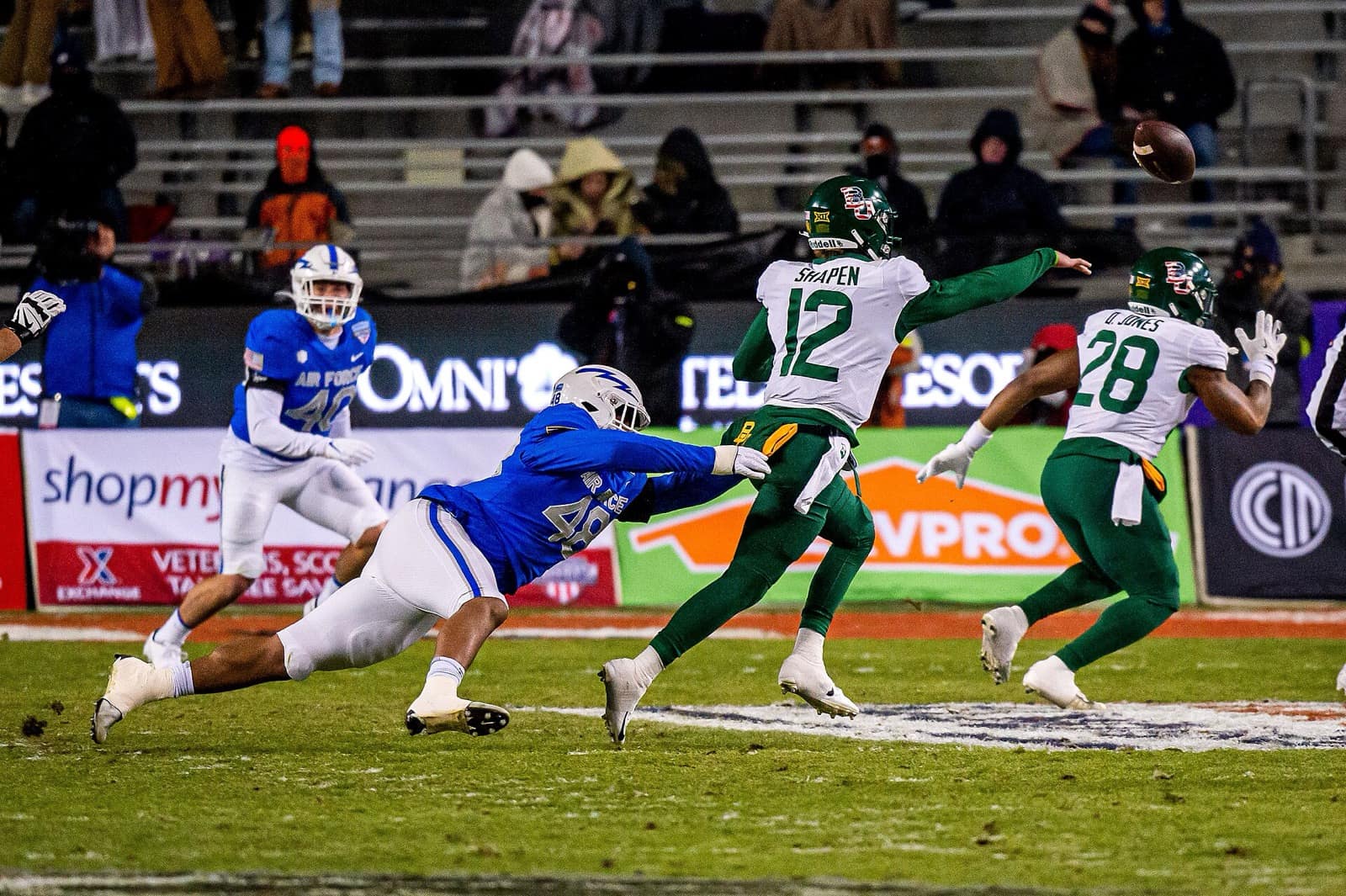
Photo: Trevor Cokley, U.S. Air Force / Public domain
BYU Cougars
Coach and faculty member Eugene L. Roberts gets the credit, and BYU and the Deseret News date the choice to Oct. 1, 1923. BYU says Roberts picked the cougar because it is native to Utah and has the traits he wanted in BYU athletes: strength, agility, grace and quickness. Two live cougar cubs, Cleo and Tarbo, came to campus in the mid-1920s. When they broke out of their cage in 1929, the cry "The cougars are out!" ended up in the 1932 fight song. BYU uniform schedule 2026
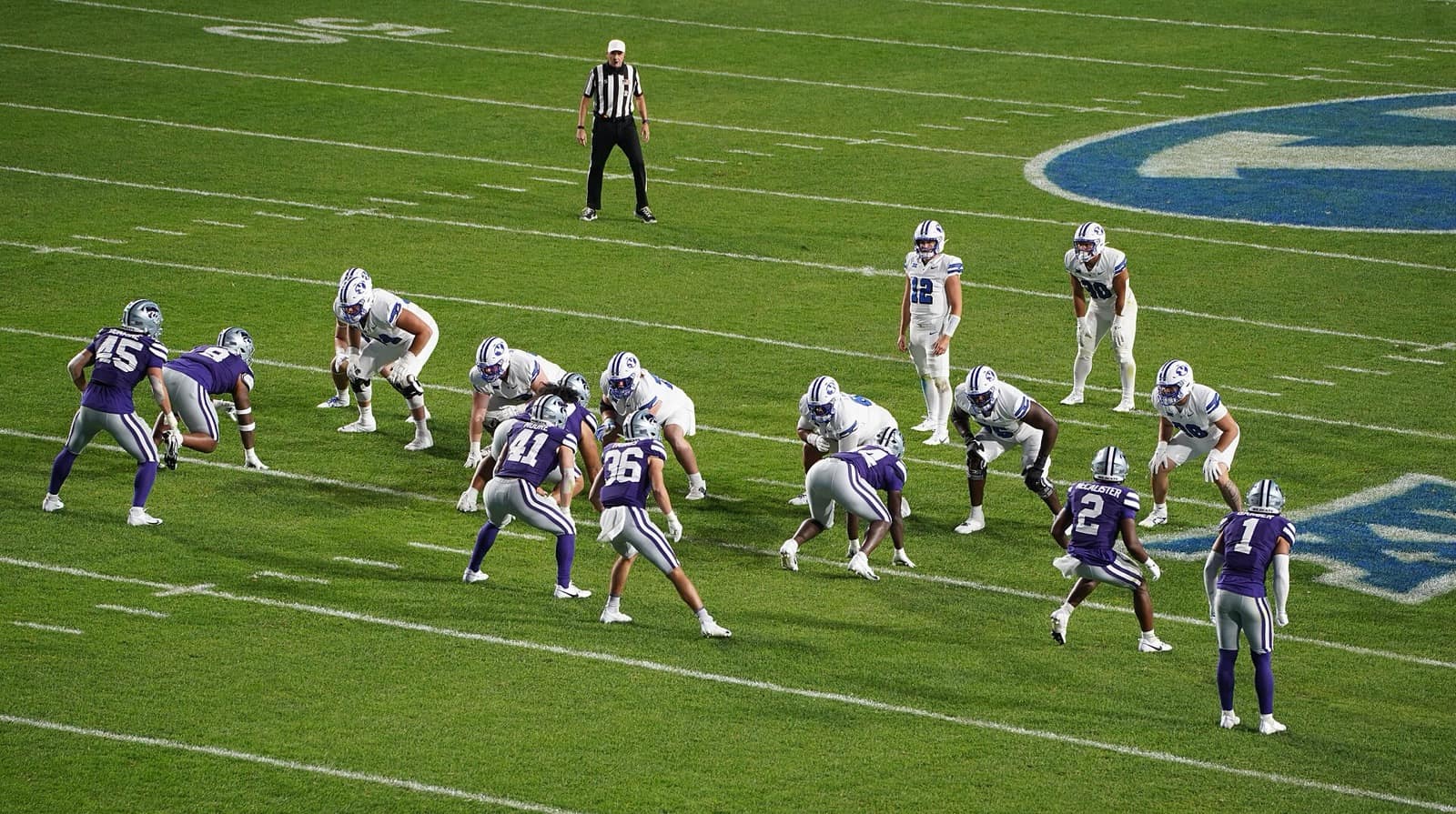
Photo: Ken Lund / CC BY-SA 2.0
Cincinnati Bearcats
Cincinnati's name is a pun on a fullback. On Oct. 31, 1914, UC played Kentucky, the Wildcats. Head cheerleader Norman "Pat" Lyon riffed on fullback Teddy Baehr: "They may be Wildcats, but we have a Baehr-cat on our side." UC won 14-7, and the student paper ran a cartoon of a "Bear Cat" chasing a wildcat. The name mostly faded after Baehr graduated, then came back for good in 1919 when Cincinnati Enquirer writer Jack Ryder called UC's teams the Bearcats. Cincinnati uniform schedule 2026
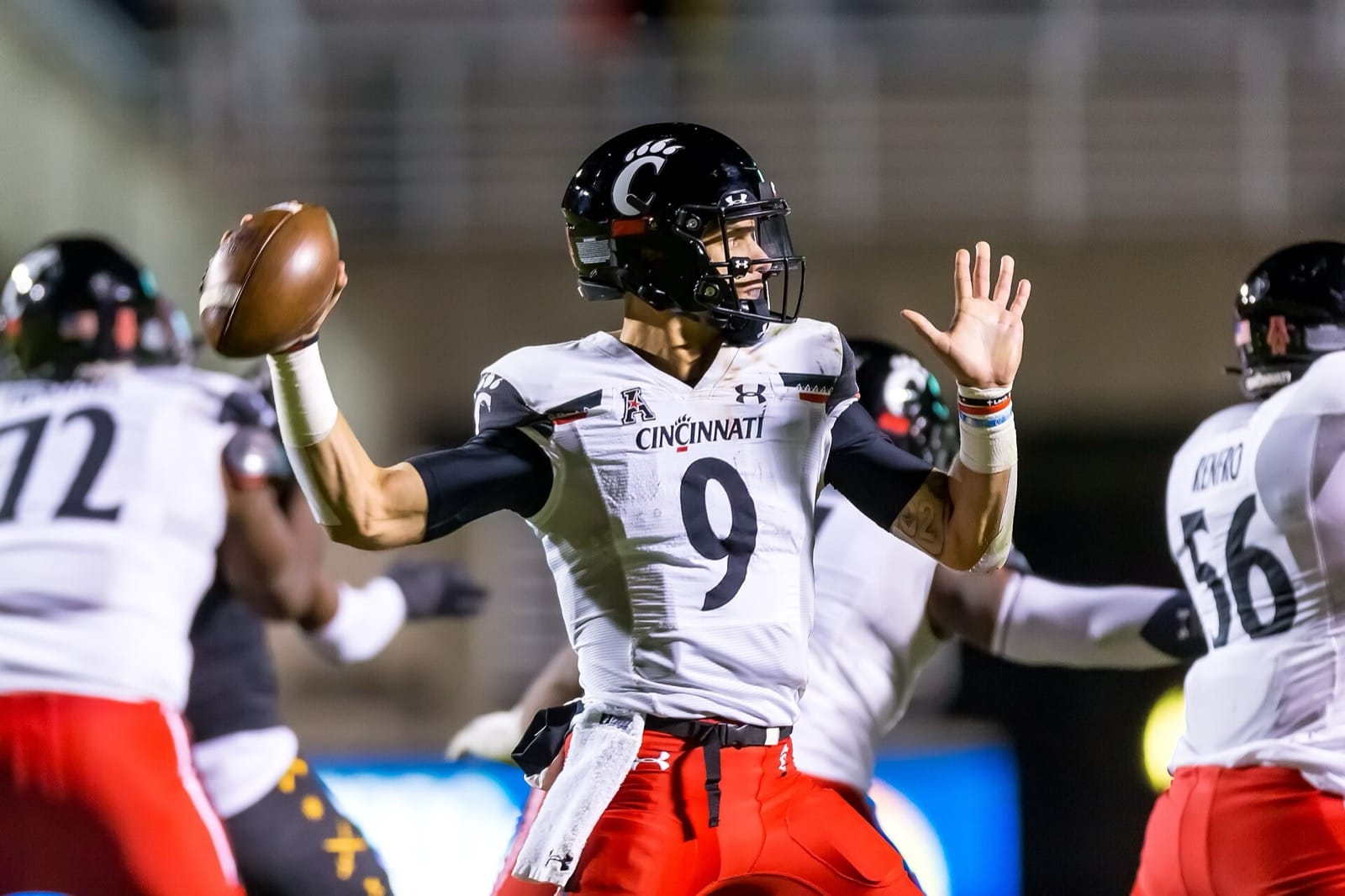
Photo: R24KBerg Photos / CC BY 2.0
Colorado Buffaloes
CU's teams were usually the Silver and Gold, along with a pile of other names: Silver Helmets, Yellow Jackets, Hornets, Big Horns, Grizzlies and Frontiersmen. A 1926 contest picked "Wolves," which never caught on. In 1934 the student newspaper ran a national contest with a $5 prize that drew more than 1,000 entries. It first named two winners, from Missouri and Ohio, then gave the prize to Boulder's Andrew Dickson instead, because his "Buffaloes" entry had arrived days earlier. For the last game of 1934, students rented a buffalo calf for $25, cowboy handler included. Colorado uniform schedule 2026
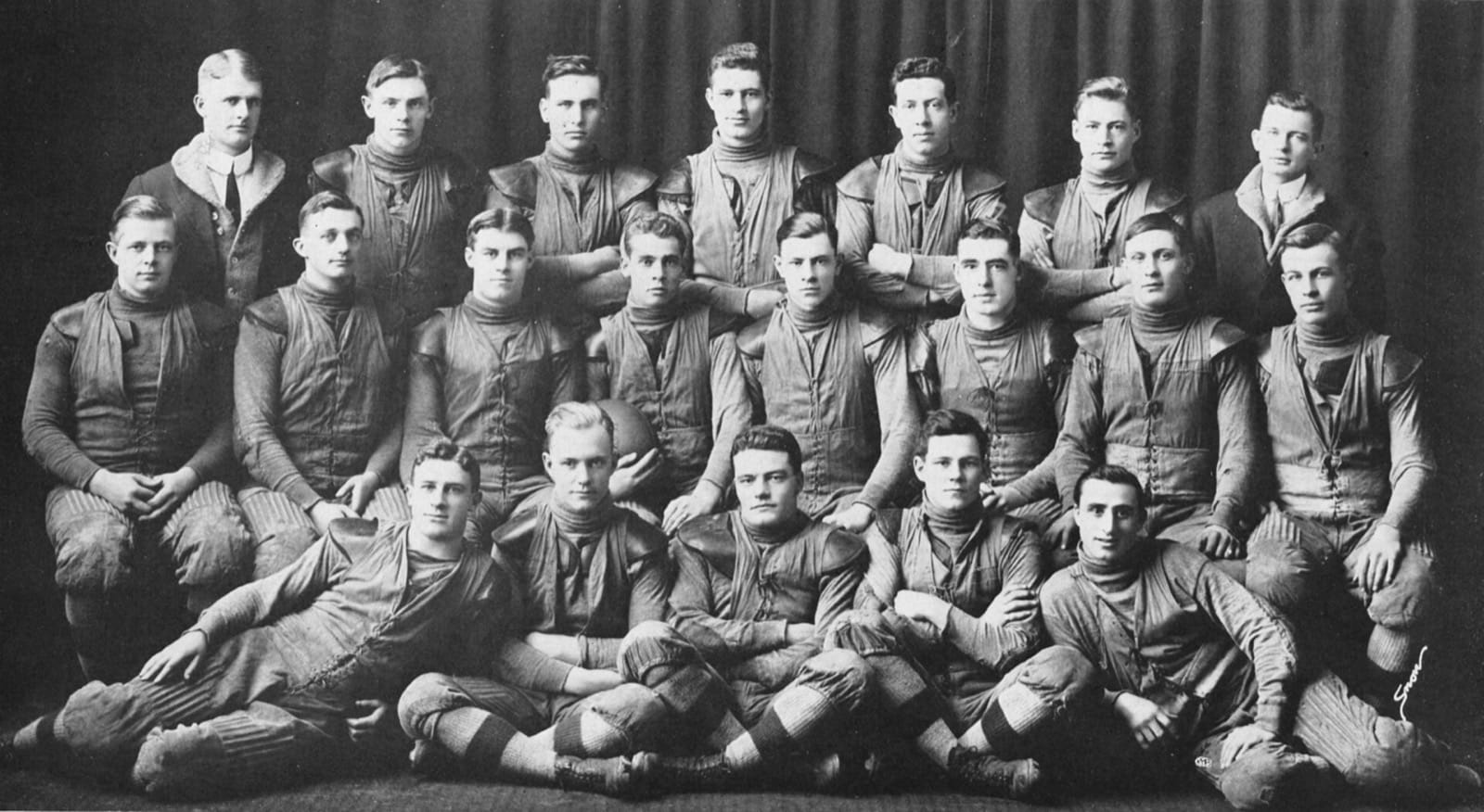
The 1914 Colorado team, then the "Silver and Gold," 20 years before the Buffaloes. University of Colorado Boulder Alumni Association. Photo via Wikimedia Commons / CC BY-SA 2.0
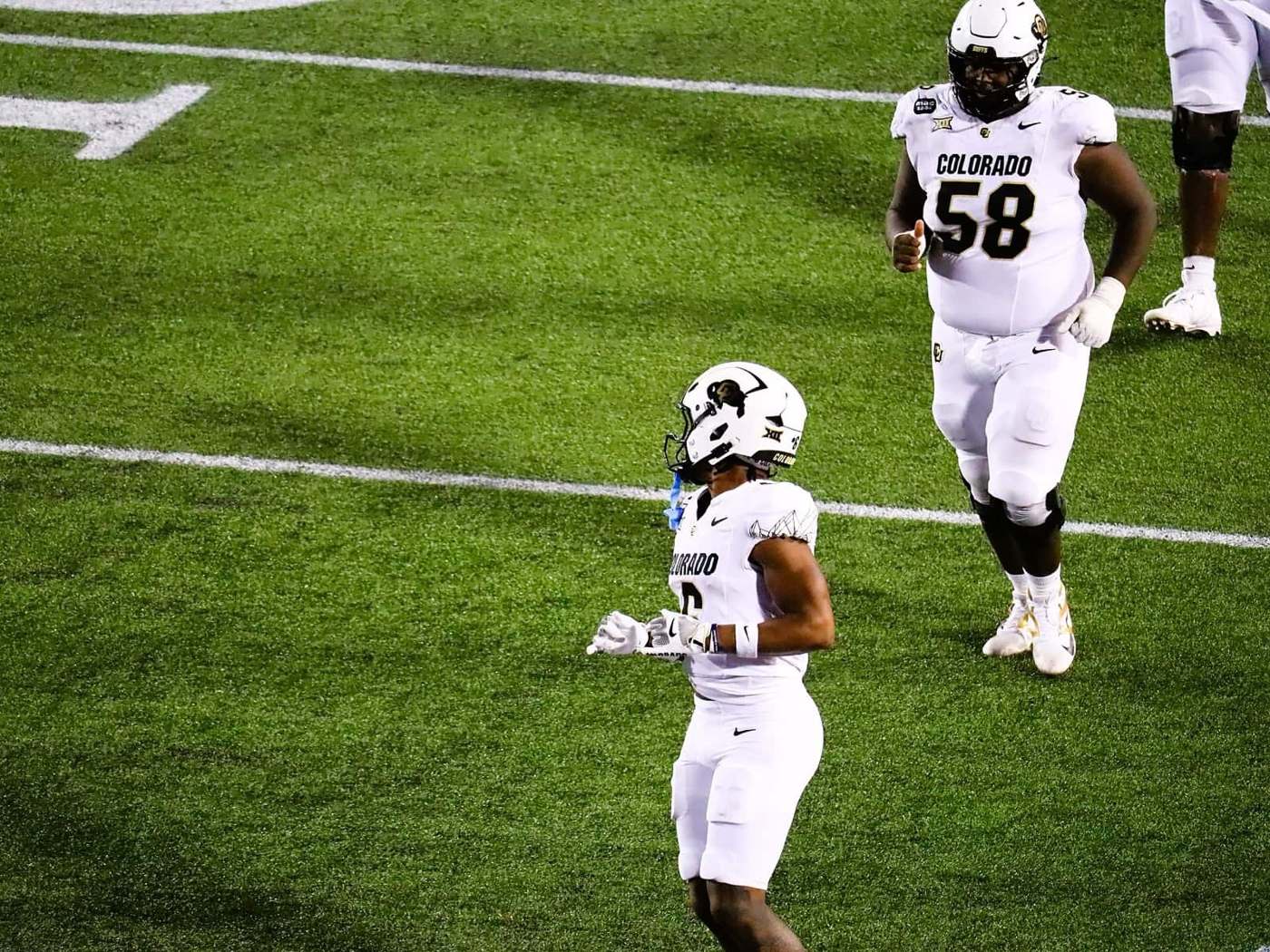
Photo: 2C2K Photography / CC BY 4.0
Houston Cougars
John R. Bender, a former Washington State coach, arrived at the new Houston Junior College in 1927 and named the team the Cougars in tribute to Washington State. It was not the first school he named. In 1915, in his one season coaching Kansas State, he renamed the Aggies the Wildcats. The cougar became Houston's official mascot in 1946, and the next year a live cougar named Shasta arrived after a naming contest with 226 entries. Houston uniform schedule 2026
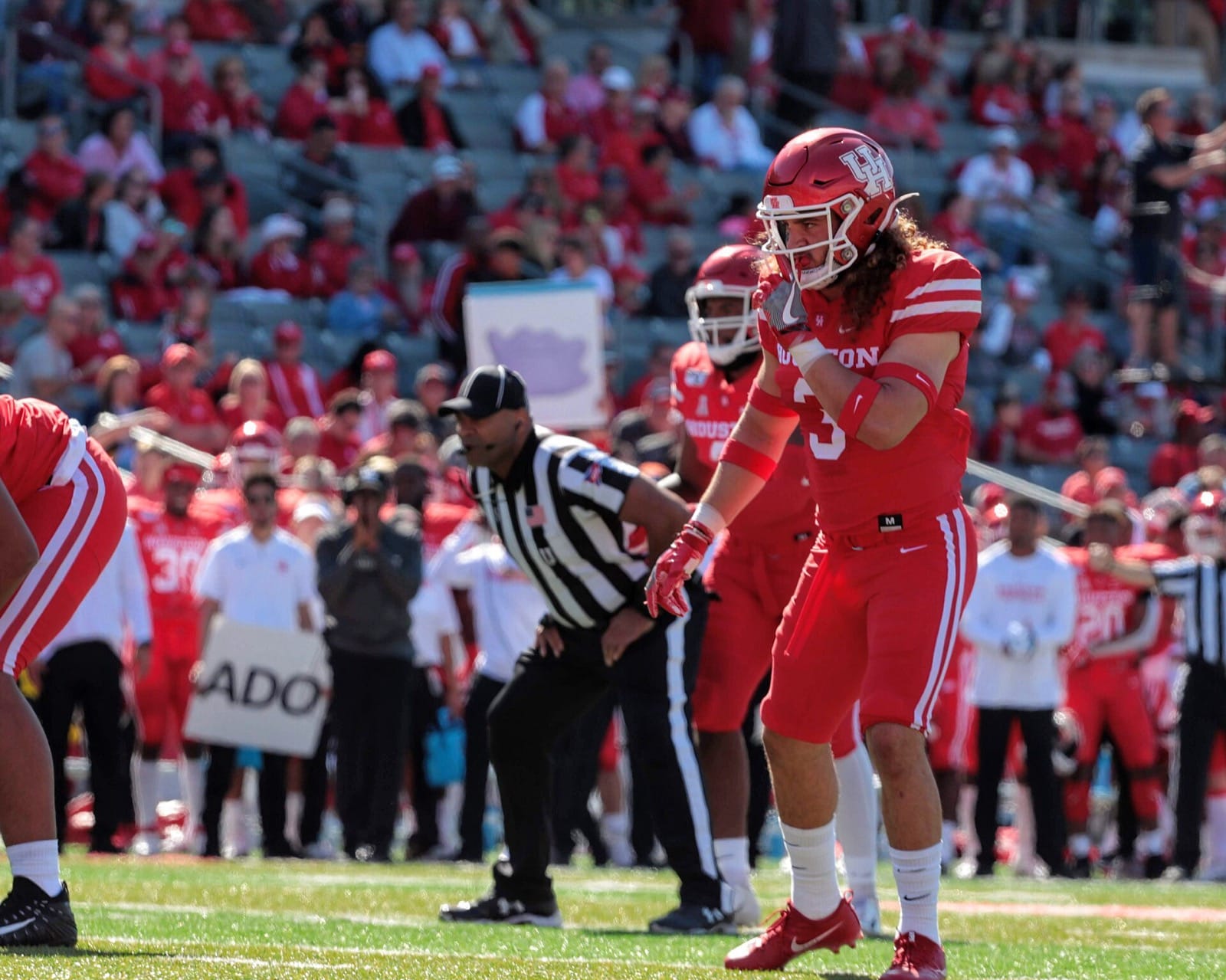
Photo: Michael Slaten / CC BY-SA 4.0
Iowa State Cyclones
Iowa State was named by a headline. On Sept. 28, 1895, Iowa Agricultural College beat Northwestern 36-0 in Evanston. The next day the Chicago Tribune ran "Struck by a Cyclone" and wrote that Northwestern "might as well have tried to play football with an Iowa cyclone." The team was christened the Cyclones, and the name stuck. In 1954 a souvenir maker pushed Iowa State to change it, because a cyclone is hard to turn into a mascot. The school kept the name and picked a cardinal, Cy, as the mascot instead. Iowa State uniform schedule 2026
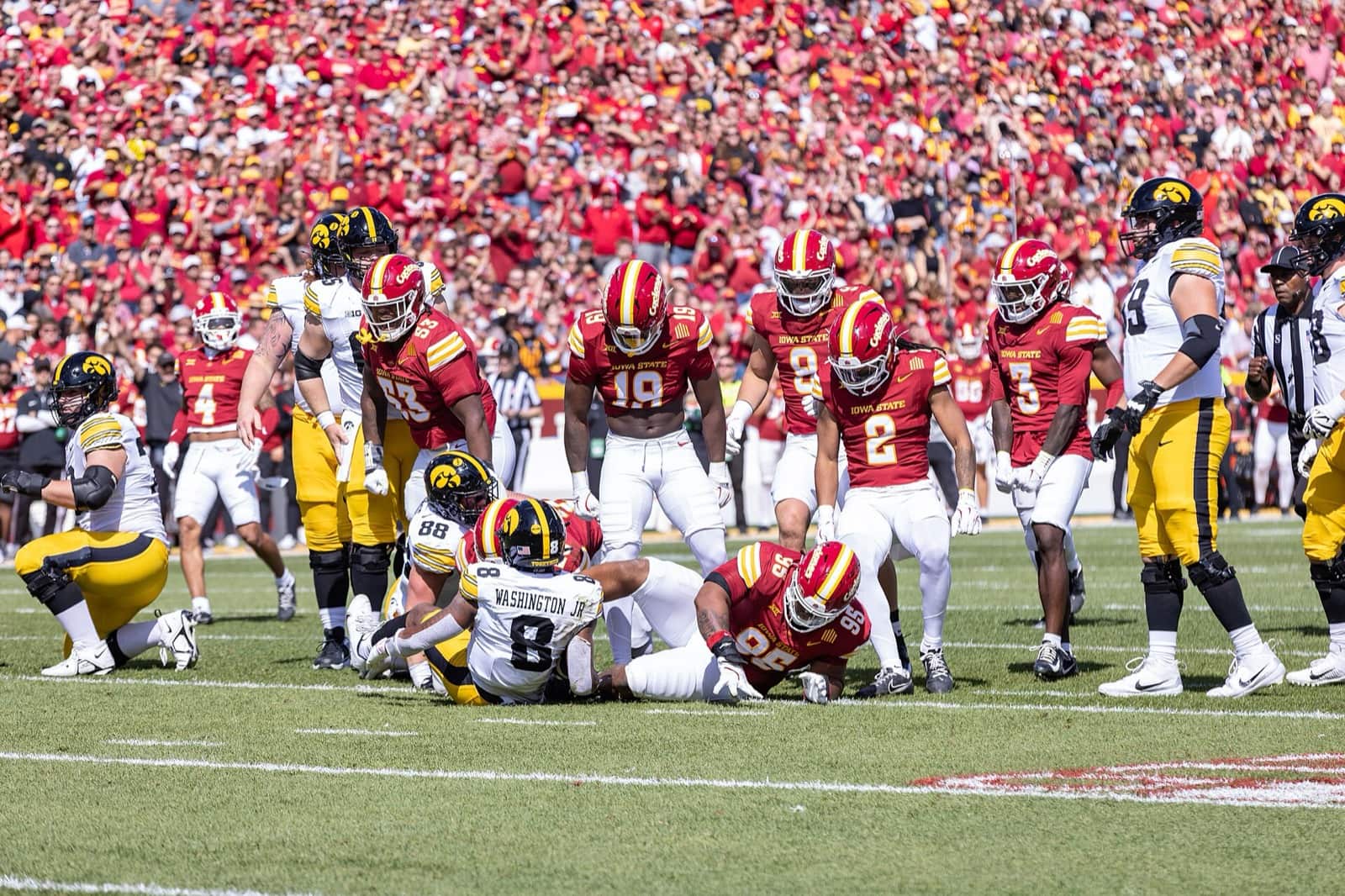
Photo: 1st Sgt. Jason Everett, Iowa Army National Guard / Public domain
Kansas Jayhawks
"Jayhawker" came out of the 1850s "Bleeding Kansas" era, when it was used for free-state fighters, like James Lane's men, battling proslavery forces, and later for Kansas troops in general. KU says the name has a double meaning, since raiders on both sides were called jayhawkers. Students adopted the bird in the 1880s, it was in the Rock Chalk chant by 1886, and the first football team in 1890 was the Jayhawkers. Where the word itself came from is disputed. The Kansas Historical Society lists three theories: that it is older than Kansas and of unknown origin, that a Free-State Irishman named Pat Devlin coined "jayhawking" for his raids in 1856, or that the Jayhawk is a mythical cross between a blue jay and a sparrow hawk. The bird got its shoes in 1912, "for kicking opponents." Kansas uniform schedule 2026
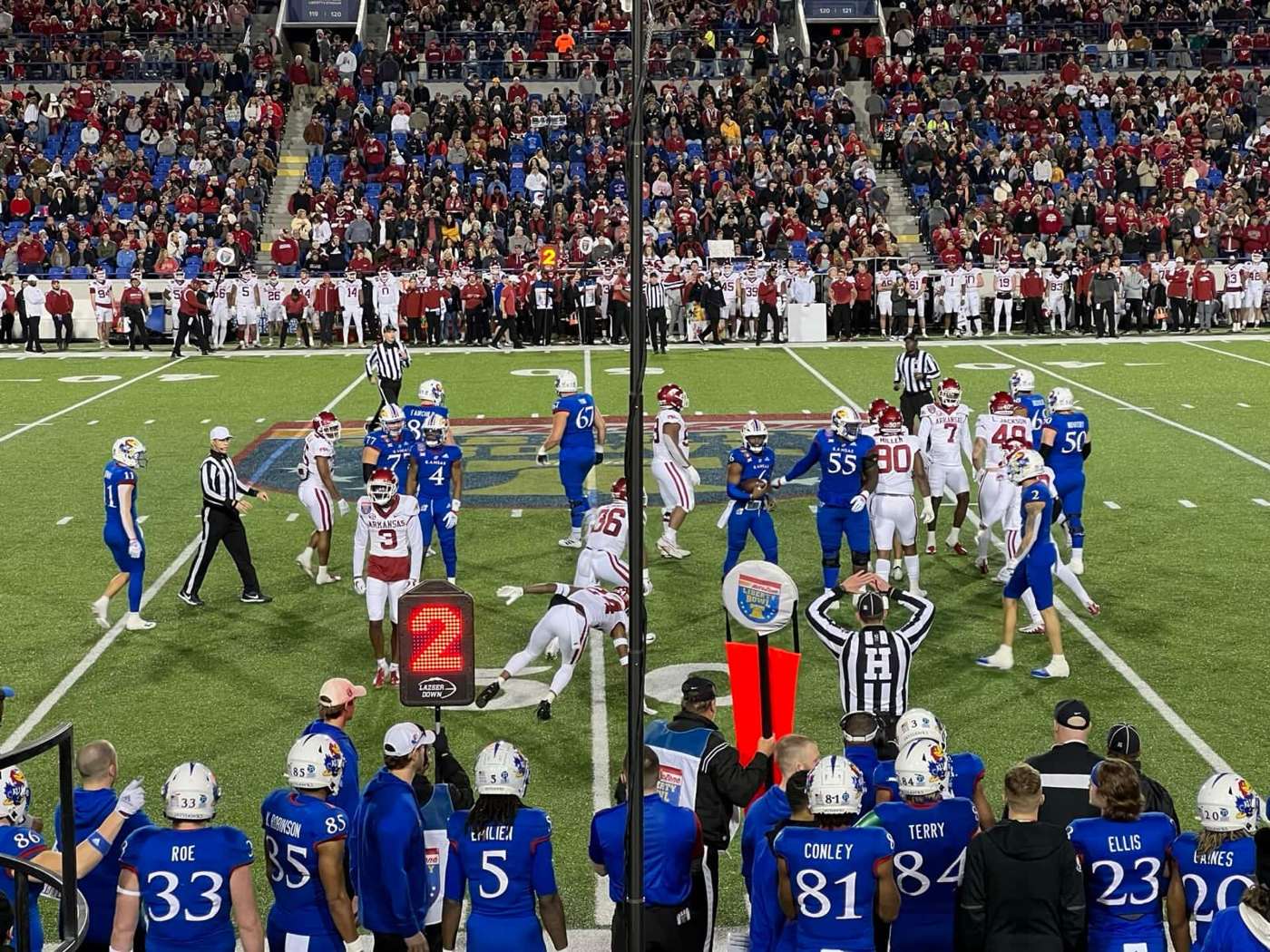
Photo: Barrett Long / CC BY-SA 4.0
Kansas State Wildcats
K-State's teams were the Aggies for their first 19 seasons. Before the 1915 season, new coach John Bender renamed them the Wildcats, the same Bender who later named the Houston Cougars. He left after one year, and in 1917 the teams became the Farmers. In 1920, new coach Charles Bachman brought "Wildcats" back, and this time it stuck. In 1922 a live bobcat, Touchdown I, arrived on campus. Kansas State uniform schedule 2026
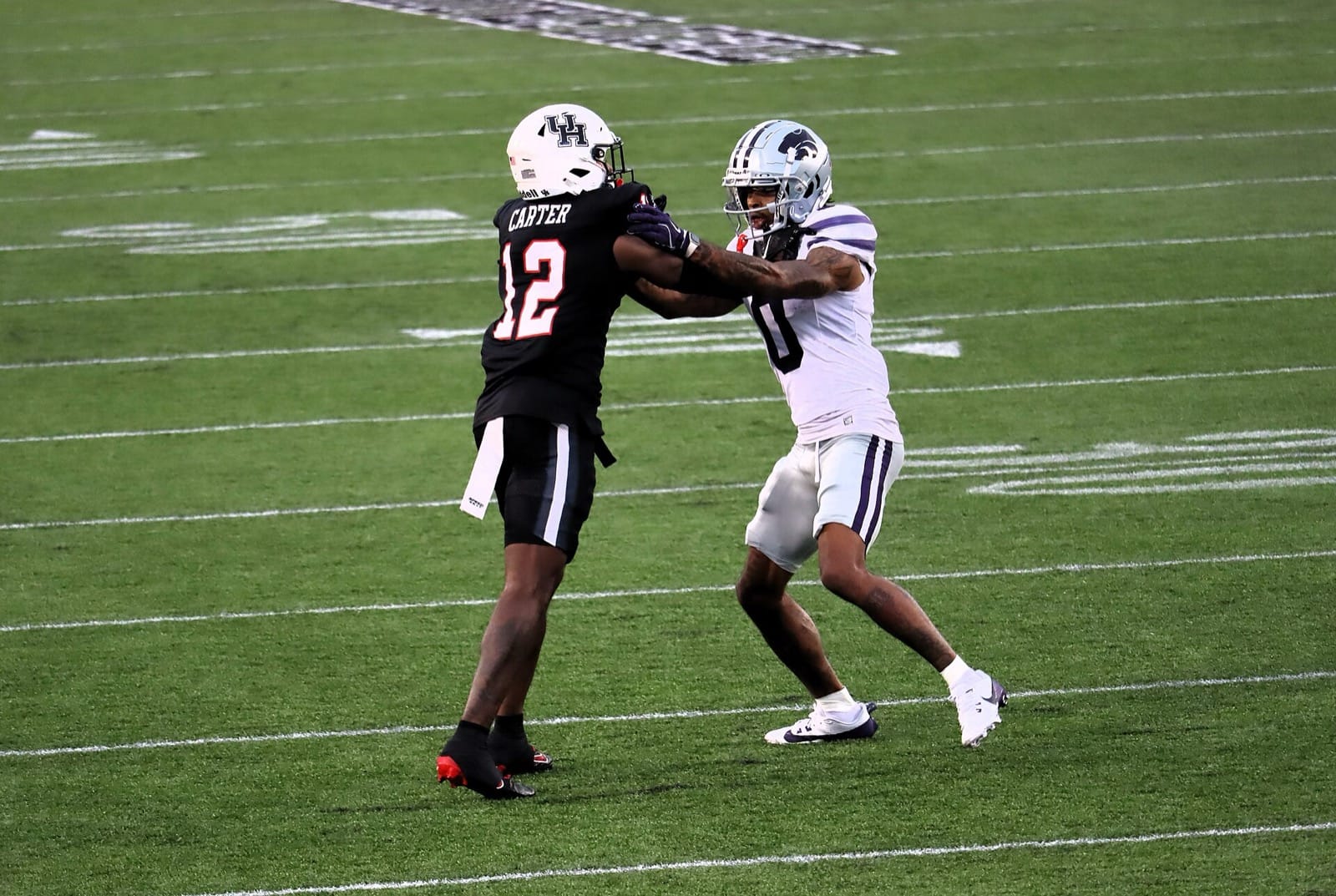
Photo: 2C2K Photography / CC BY 2.0
Oklahoma State Cowboys
Oklahoma A&M's teams were the Agriculturists, the Aggies, the Farmers and, officially but unpopularly, the Tigers. By 1924, Oklahoma City Times sports editor Charles Saulsberry and other writers were calling them the "A&M Cowboys." In 1926 the athletic council printed 2,000 balloons reading "Oklahoma Aggies - Ride 'Em Cowboy," and the name caught on. Pistol Pete is based on Frank Eaton, a former deputy U.S. marshal who led Stillwater's Armistice Day parade around 1923. "Aggies" and "Cowboys" were used side by side for decades, until A&M became Oklahoma State in 1957. Oklahoma State uniform schedule 2026
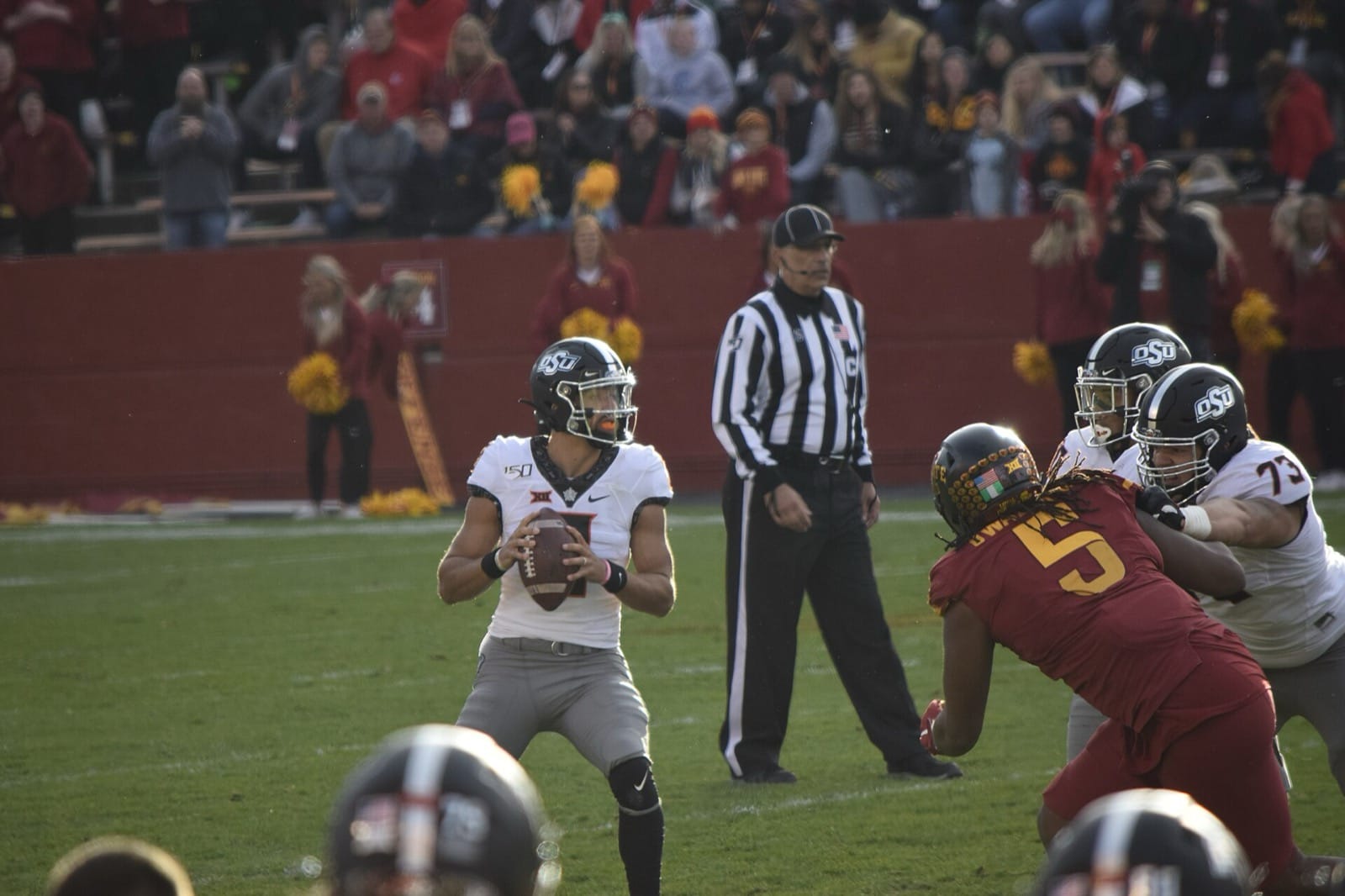
Photo: Daniel Hartwig / CC BY 2.0
TCU Horned Frogs
The name dates to 1897, when the school was still AddRan College and its first yearbook was called The Horned Frog. TCU's magazine gives two origin stories and says there may be truth to both: a four-student committee picked the name for the yearbook and the football team, or the field where the first team practiced was crawling with horned frogs and the players started calling themselves that. Either way, the name is wrong. A horned frog is not a frog. It is the Texas horned lizard. TCU uniform schedule 2026
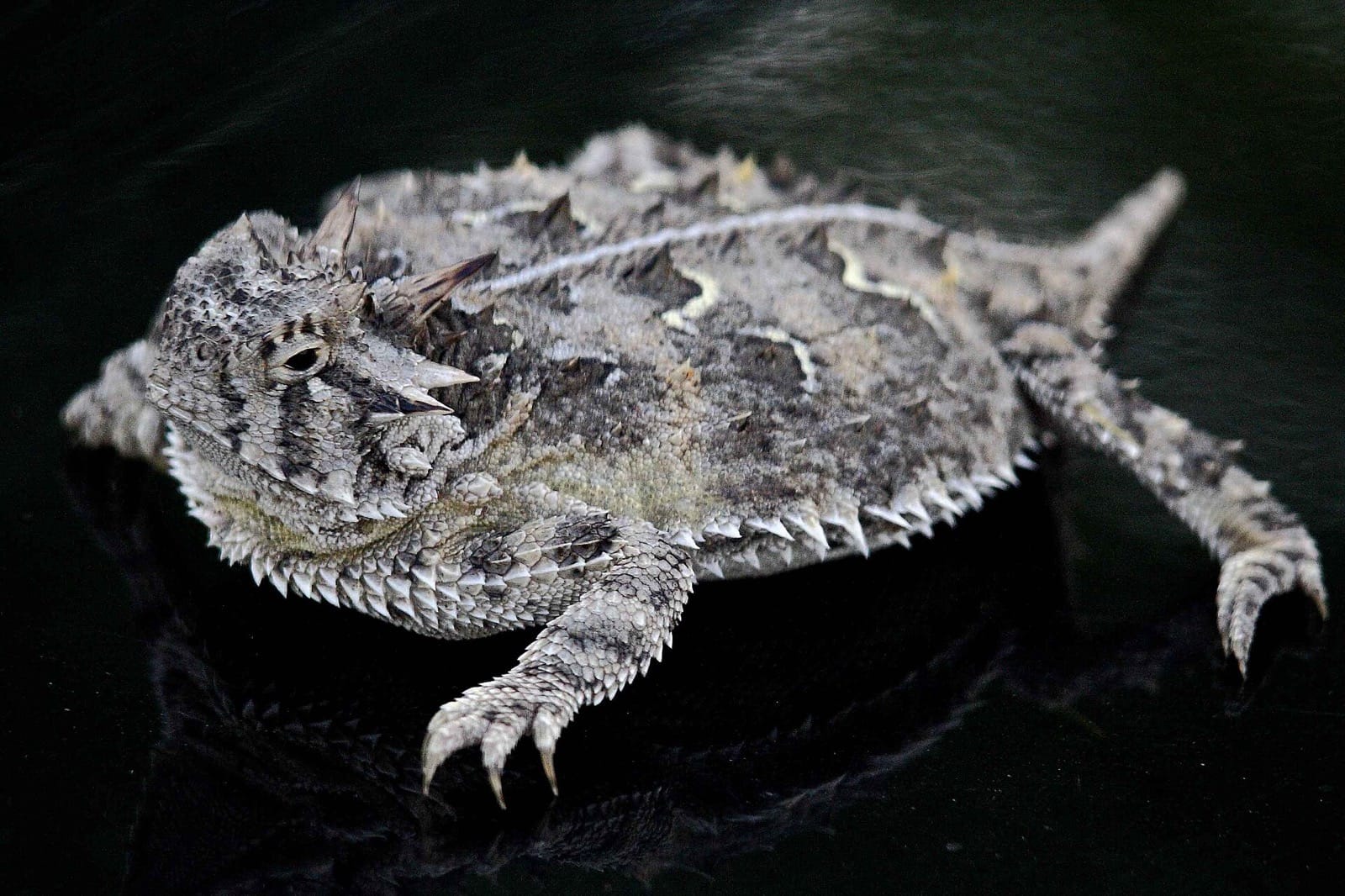
A Texas horned lizard, the "horned frog" that is not a frog. Burton Robert, U.S. Fish and Wildlife Service. Public domain.
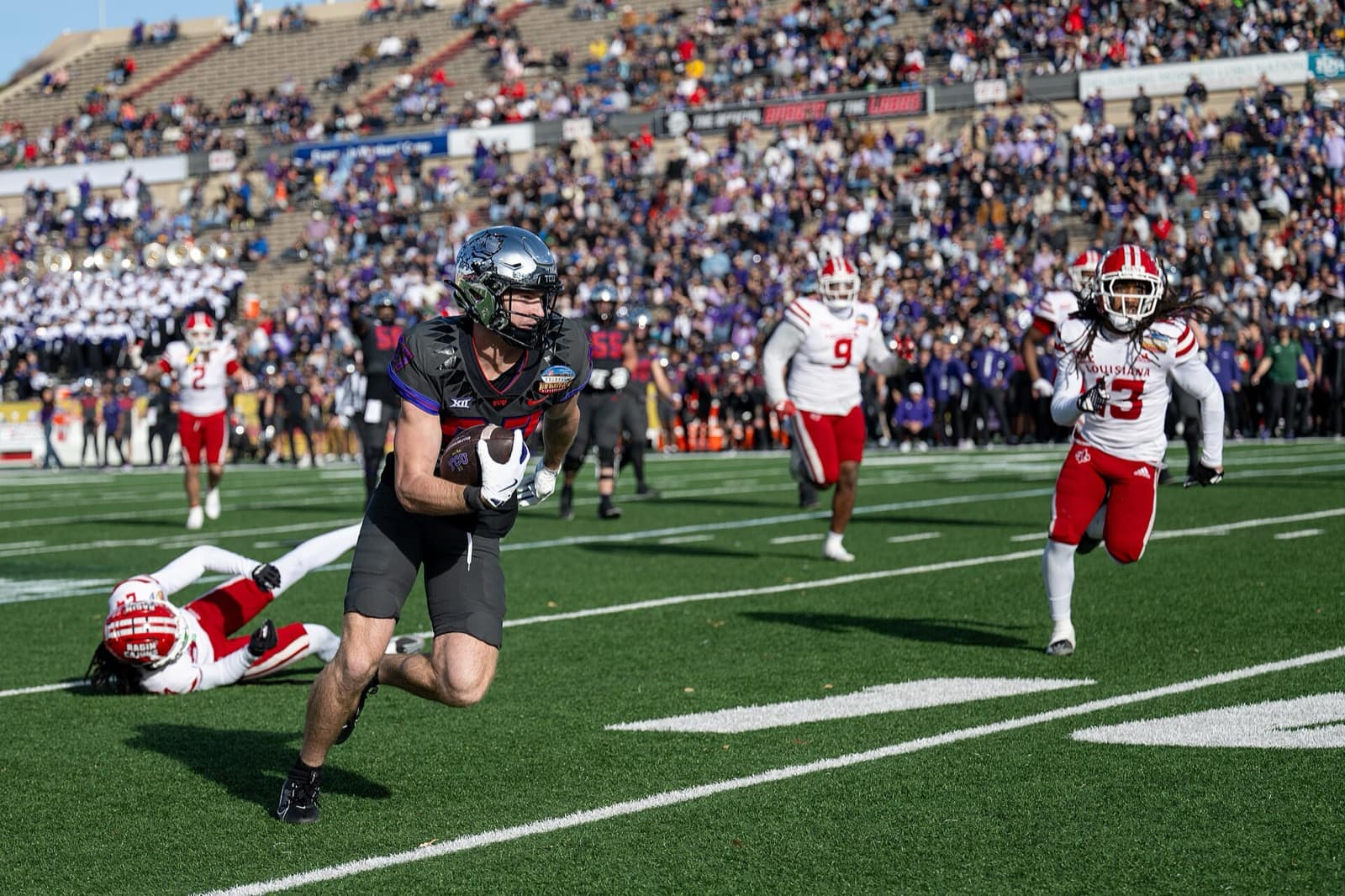
Photo: Airman 1st Class Donnell Schroeter, U.S. Air Force / Public domain
Texas Tech Red Raiders
Texas Tech opened in 1925, and its teams were the Matadors. By 1936 that had changed: Texas Tech says the fight song written that year, "Fight, Raiders, Fight," used "Tech's new nickname, the Red Raiders, instead of the Matadors." The details of the switch are disputed. The usual version credits a sportswriter in the mid-1930s, but accounts disagree on who he was and whether he was describing the team's scarlet uniforms or its aggressive style. The old name never fully left. The alma mater is still "The Matador Song." Texas Tech uniform schedule 2026
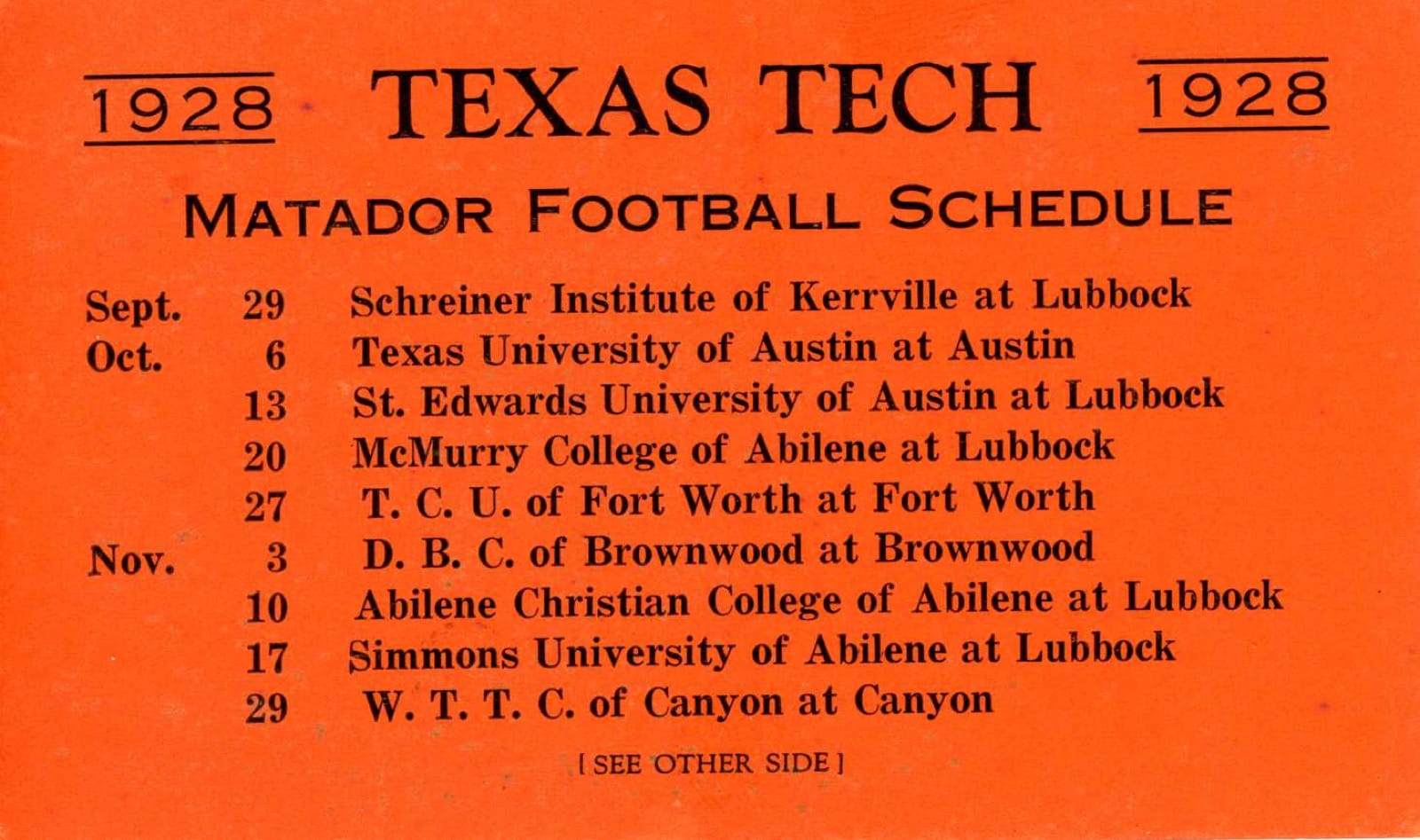
A 1928 Texas Tech "Matador" football schedule card, from before the Red Raiders. Public domain.
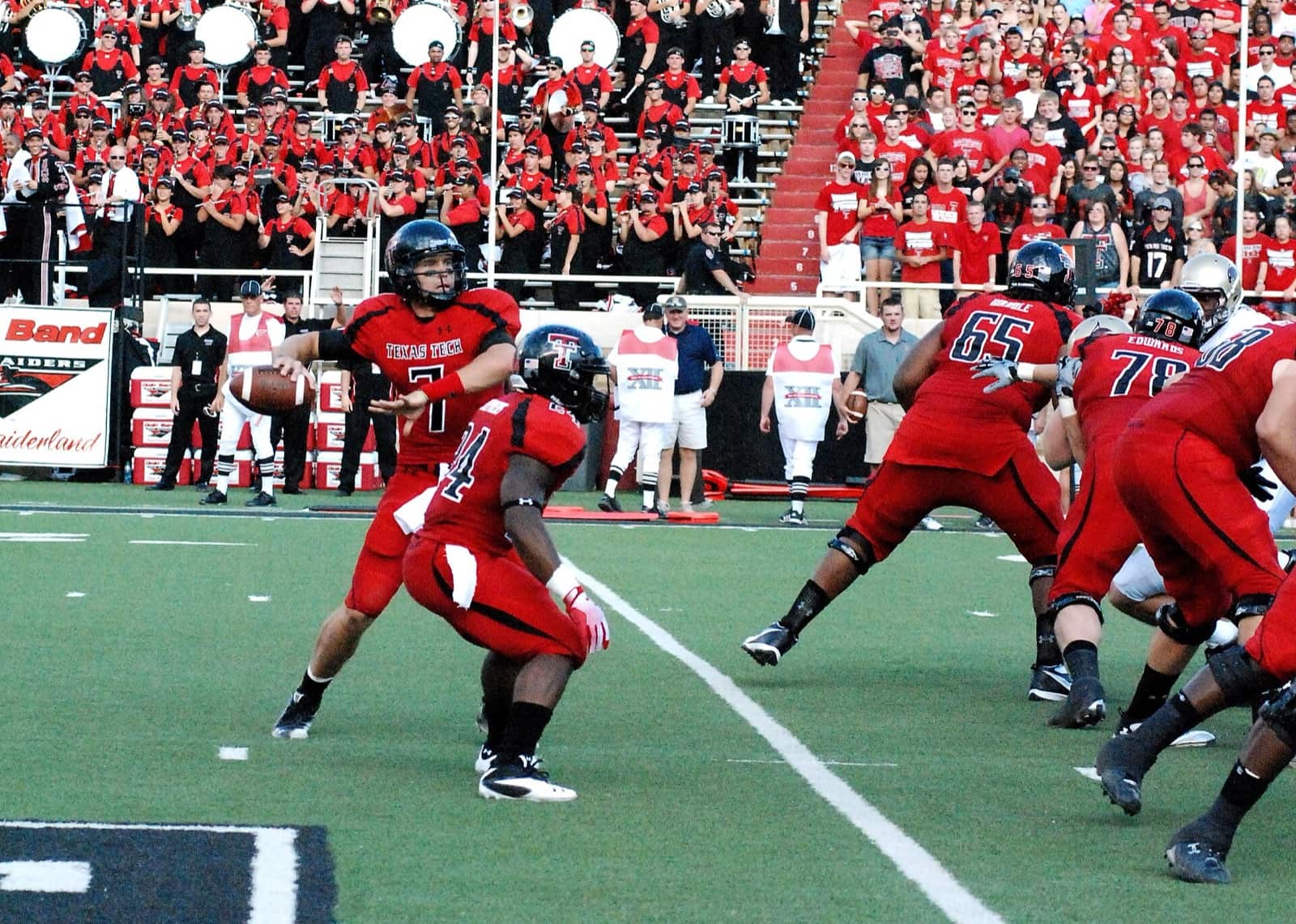
Photo: Jeff Tinnell / CC BY-SA 3.0
UCF Knights
UCF opened as Florida Technological University, and its first, unofficial mascot was the Citronaut, an orange with an astronaut's head. Students did not love it. A committee sorted at least 80 suggestions, and in a student vote "Knights of Pegasus" won 824 of 1,313 votes, with "Golden Paladins" a distant second. The Pegasus part comes from the winged horse on the university seal. One rejected finalist: the Sun Devils. UCF uniform schedule 2026
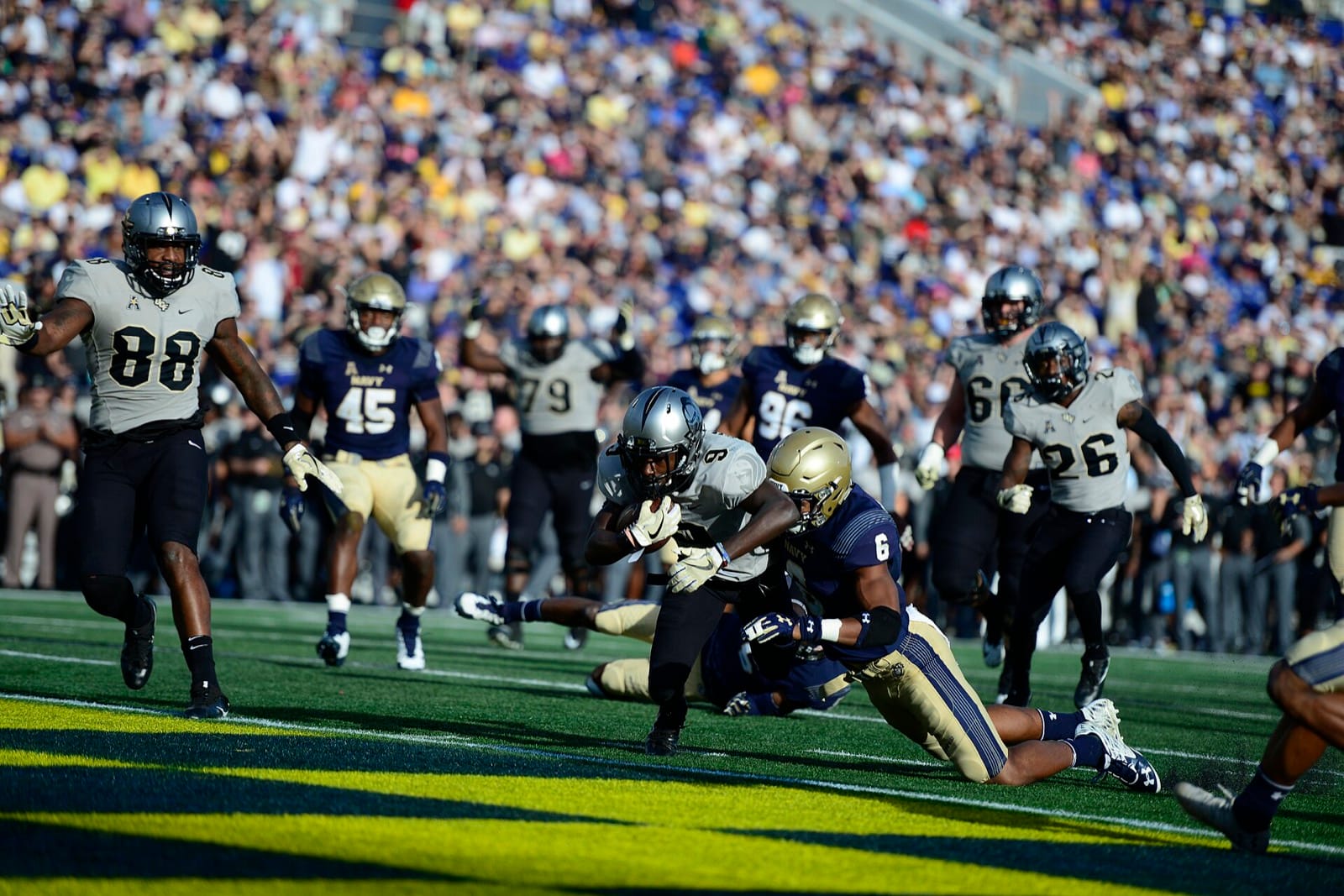
Photo: Staff Sgt. Alexandre Montes, U.S. Air Force / Public domain
Utah Utes
Utah's teams were mostly "the Crimson" until the mid-1920s. From the late 1920s through the 1960s, Indians, Utes, Redskins and Redskin Braves were all used. In 1972 the university dropped "Redskins" and adopted "Utes" alone, with the approval of the Northern Ute. Utah signed a memorandum of understanding with the Ute Indian Tribe in 2003 and a new one in 2014, in which the Tribe encouraged the school to use the name, along with scholarships for Ute students. The mascot is not a person at all. It is Swoop, a red-tailed hawk. Utah uniform schedule 2026
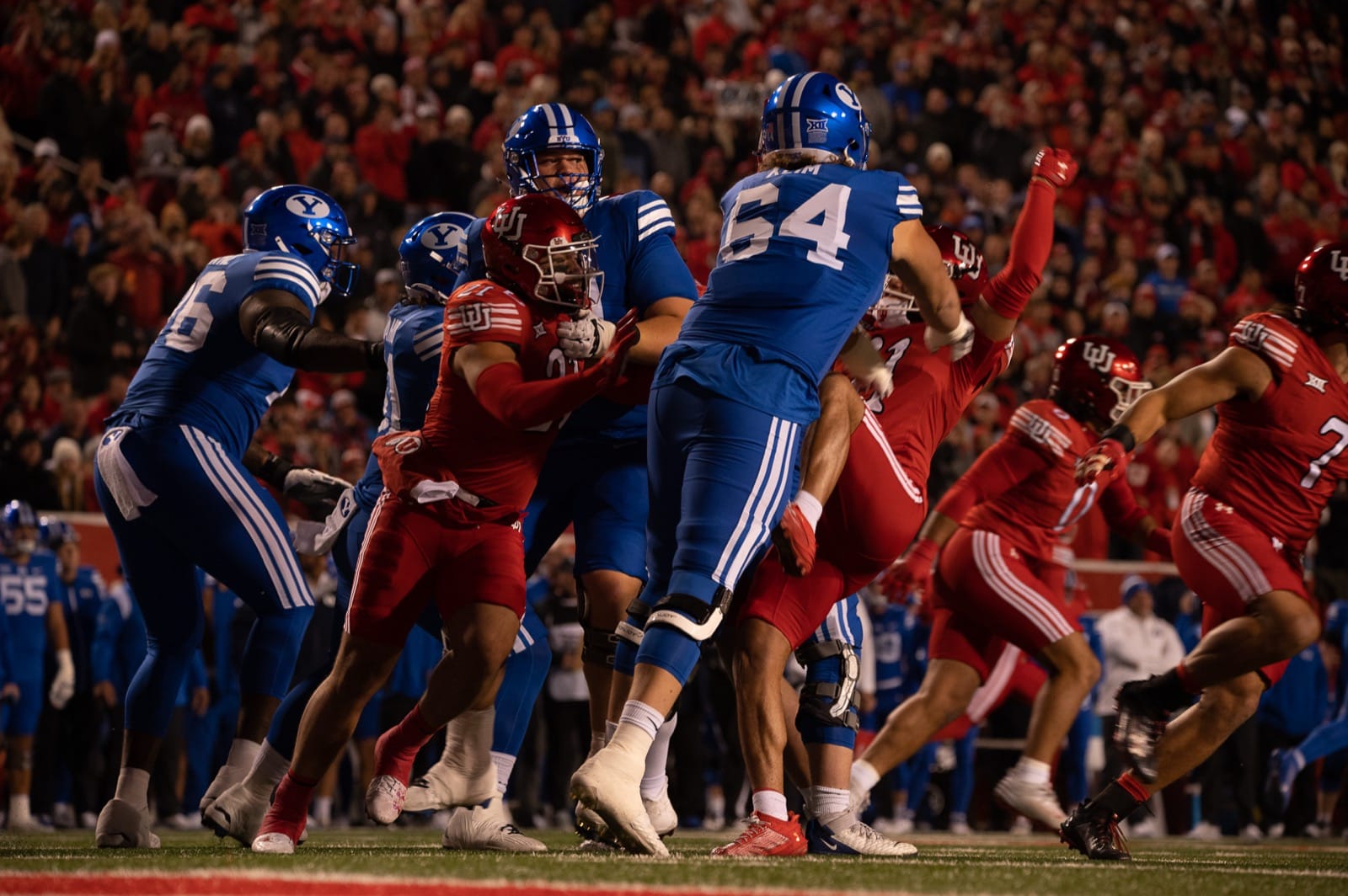
Photo: Sgt. Ian Tracy, Utah Army National Guard / Public domain
West Virginia Mountaineers
WVU Athletics says the football team first called itself "The Snakes," and Pitt fans used that as a jab for years. Someone decided "Snakes" was not a flattering name, and the team became the Mountaineers, which fits the Mountain State and its motto, "Montani Semper Liberi," Mountaineers Are Always Free. We could not find a WVU source that says exactly when or who made the switch. The first official costumed Mountaineer came in 1934. West Virginia uniform schedule 2026
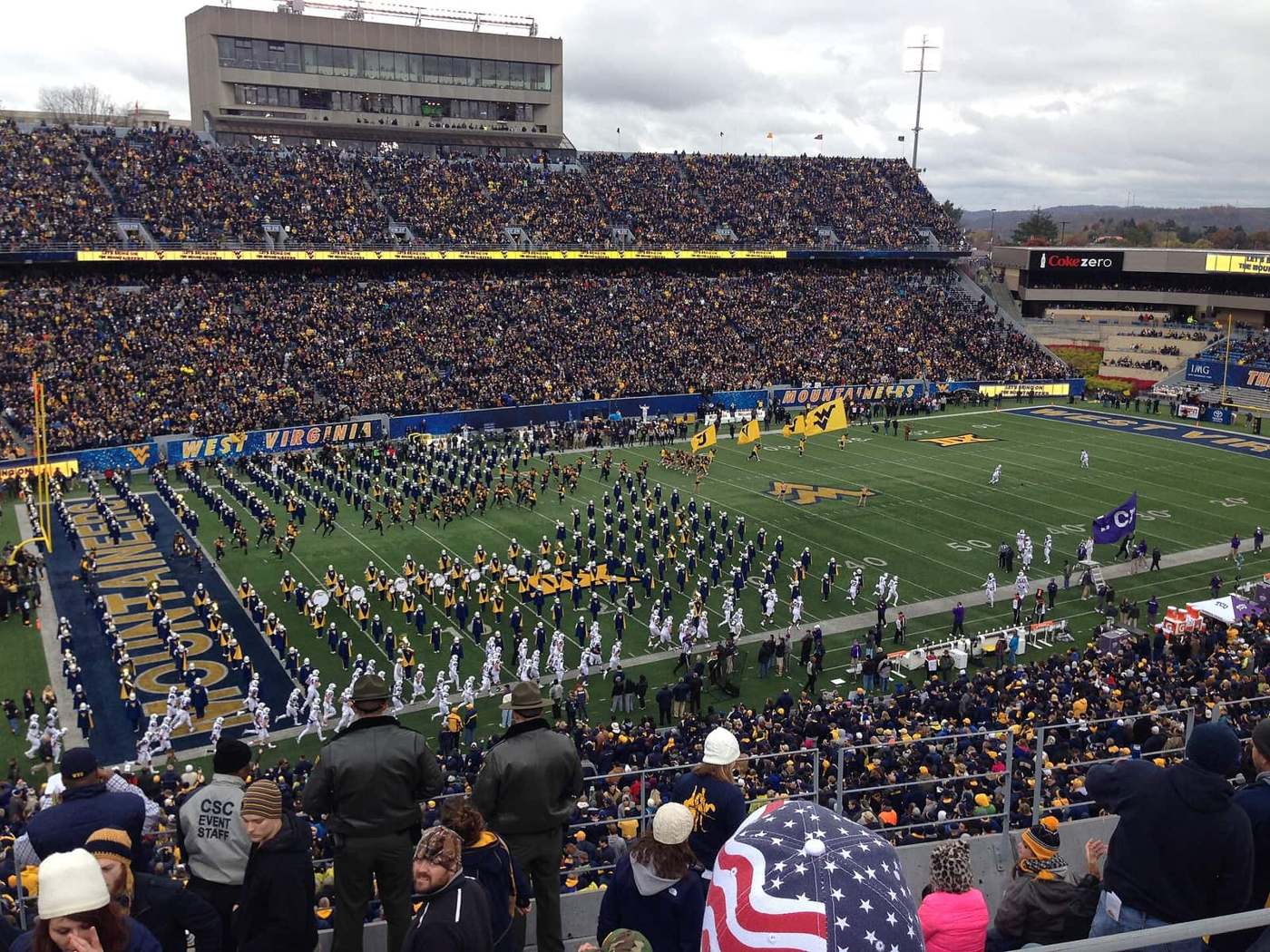
Photo: Aparkswv / CC BY-SA 4.0
ACC
Boston College Eagles
BC got its name because a cartoonist drew it as a cat. In spring 1920, after BC's track team won the Eastern intercollegiate meet, a Boston Traveler cartoonist drew the team as a stray cat. An offended alumnus who signed his letter "The Old Man" wrote to the student paper, The Heights, on May 14, 1920, proposing the eagle as "symbolic of majesty, power, and freedom." He was later identified as Rev. Edward J. McLaughlin. By December 1920, the eagle was BC's. Boston College uniform schedule 2026
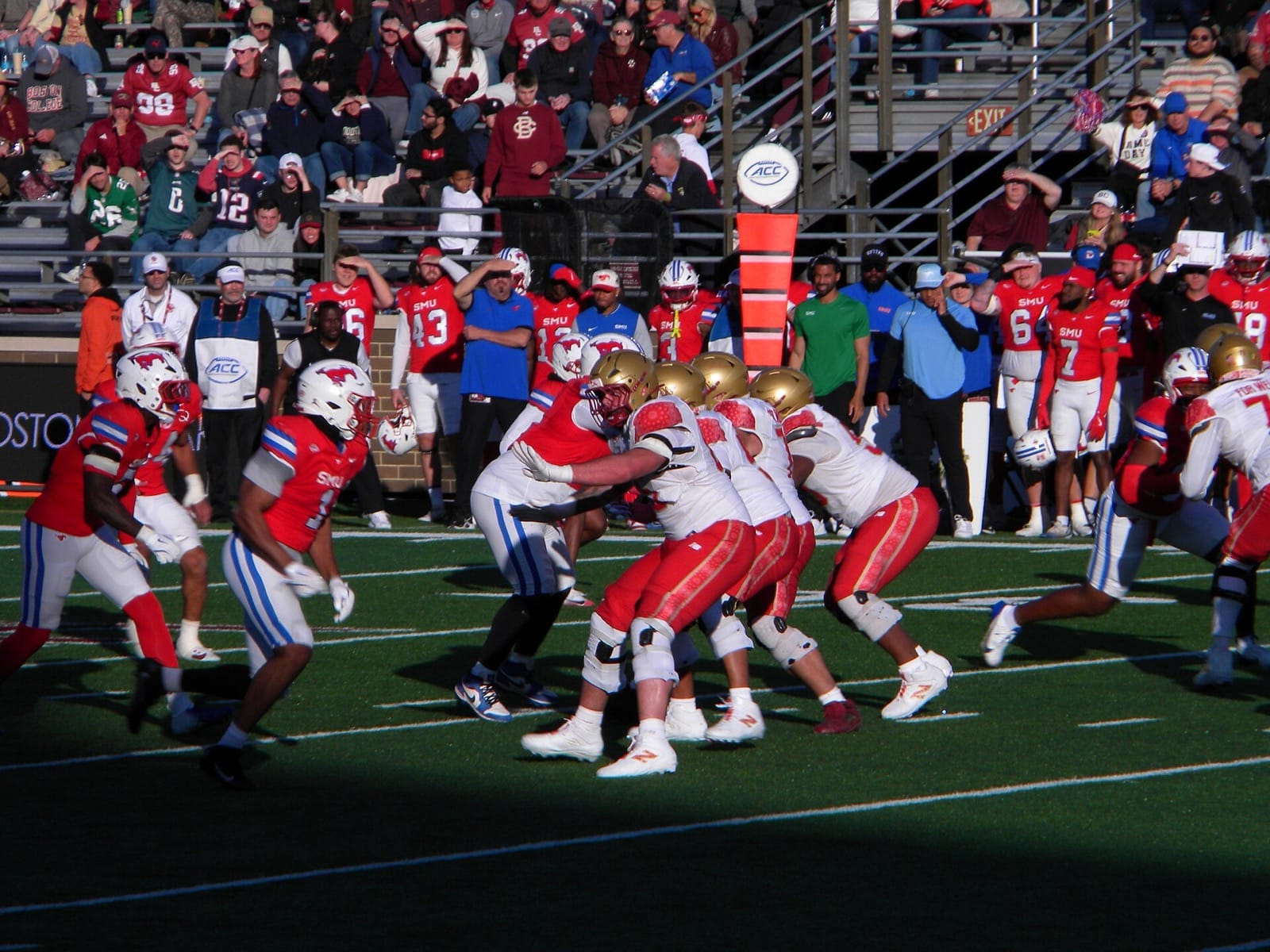
Photo: DavidBermanFan / CC0
Cal Golden Bears
The name came from a track trip, not football. In 1895, Cal's track team toured the Midwest and East and won five of its eight meets. Regent Arthur Rodgers had commissioned a blue silk banner with a golden grizzly, the symbol of California, for the trip. Professor Charles Mills Gayley wrote the song "The Golden Bear," and Cal's teams have been the Golden Bears ever since. Cal uniform schedule 2026
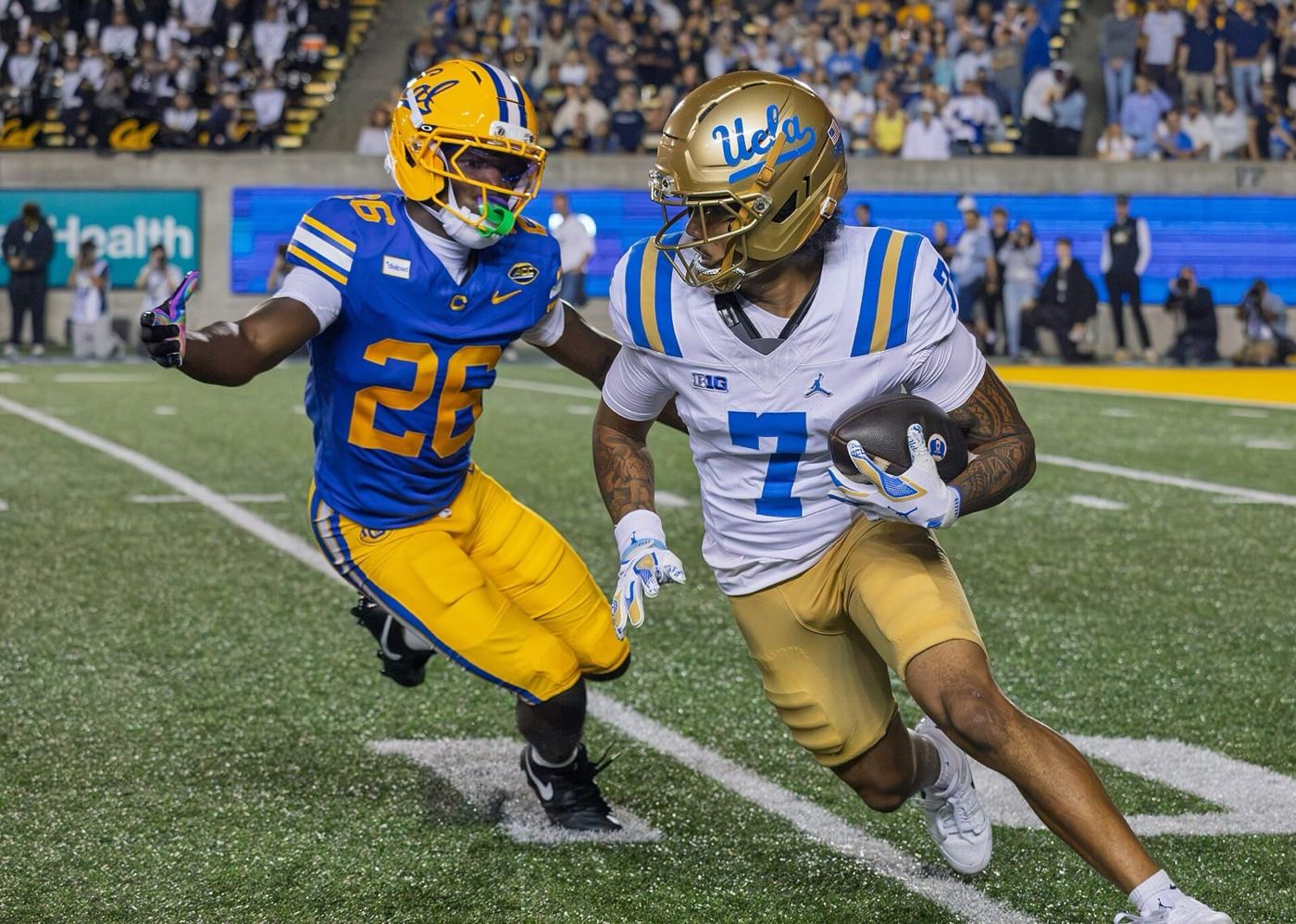
Photo: Jesse Kornblum / CC BY-SA 4.0
Clemson Tigers
Clemson has been the Tigers since its first football season in 1896, under Walter Riggs, who had played at Auburn, also the Tigers. The most-told version is that the players picked the name to honor Princeton, the dominant program of the day, and some accounts credit a player named Thompson. Others say Riggs brought it from Auburn, or that the team's striped stockings looked like a tiger. We could not find a Clemson-published account that settles it, so treat Princeton as the leading theory, not a fact. Clemson uniform schedule 2026
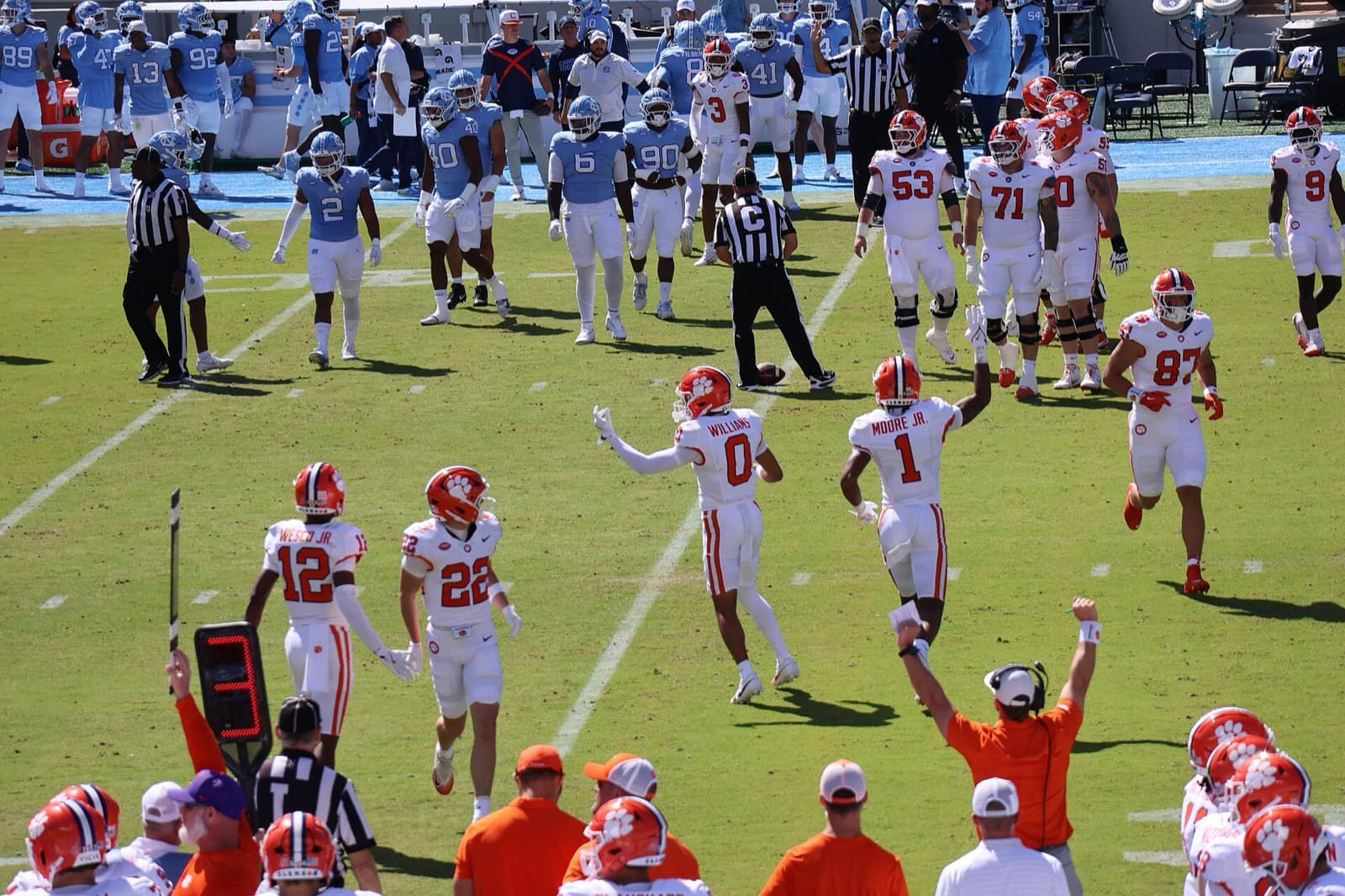
Photo: Hameltion / CC BY-SA 4.0
Duke Blue Devils
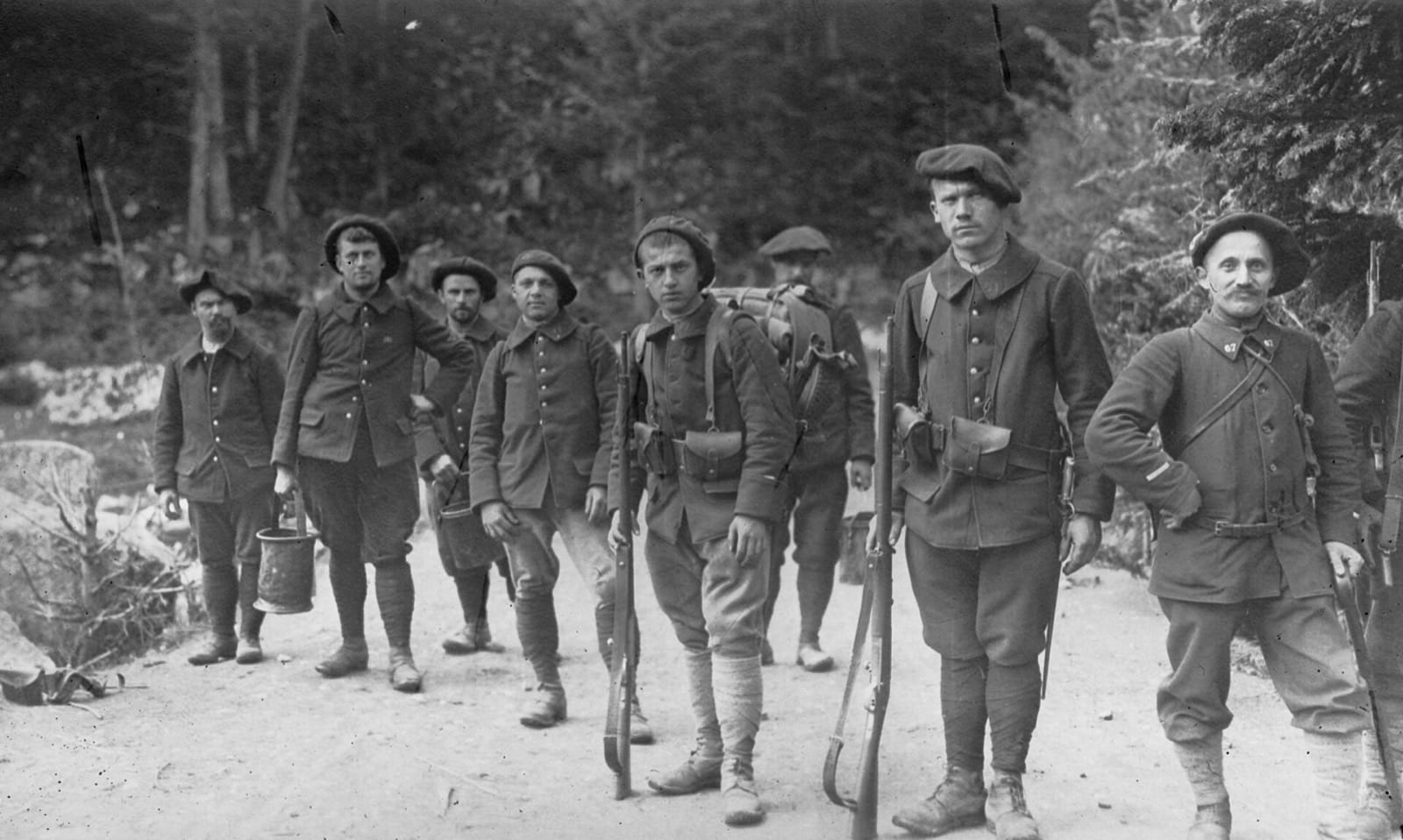
Duke was still Trinity College when it brought football back in the early 1920s. In 1921 the student paper asked students to pick a name, and Catamounts, Blue Titans, Polar Bears, Royal Blazes and others all failed to win a majority. In 1922 the new editor, William H. Lander, and his staff simply started using "Blue Devils," for the French Chasseurs Alpins, World War I mountain troops in blue uniforms and berets known as "les Diables Bleus." Lander later admitted the name was "generally unpopular." Trinity became Duke in 1924, so the nickname is older than the name Duke. Duke uniform schedule 2026
French Chasseurs Alpins in 1915, the "Blue Devils" of World War I. Agence Rol, via Gallica (BnF). Public domain.
Photo: U.S. Naval Academy Photo Archive / Public domain
Florida State Seminoles
Students picked it in the fall of 1947 from more than 100 suggestions. Other finalists included Statesmen, Rebels, Tarpons, Fighting Warriors and Crackers, and a column at the time noted that "Seminoles" was rejected on the first ballot before winning. FSU now says its imagery from 1947 into the 1970s was disrespectful, and it began consulting the Seminole Tribe of Florida in the 1970s. In 2005 the Tribal Council unanimously passed a resolution supporting FSU's continued use of the name. Florida State uniform schedule 2026
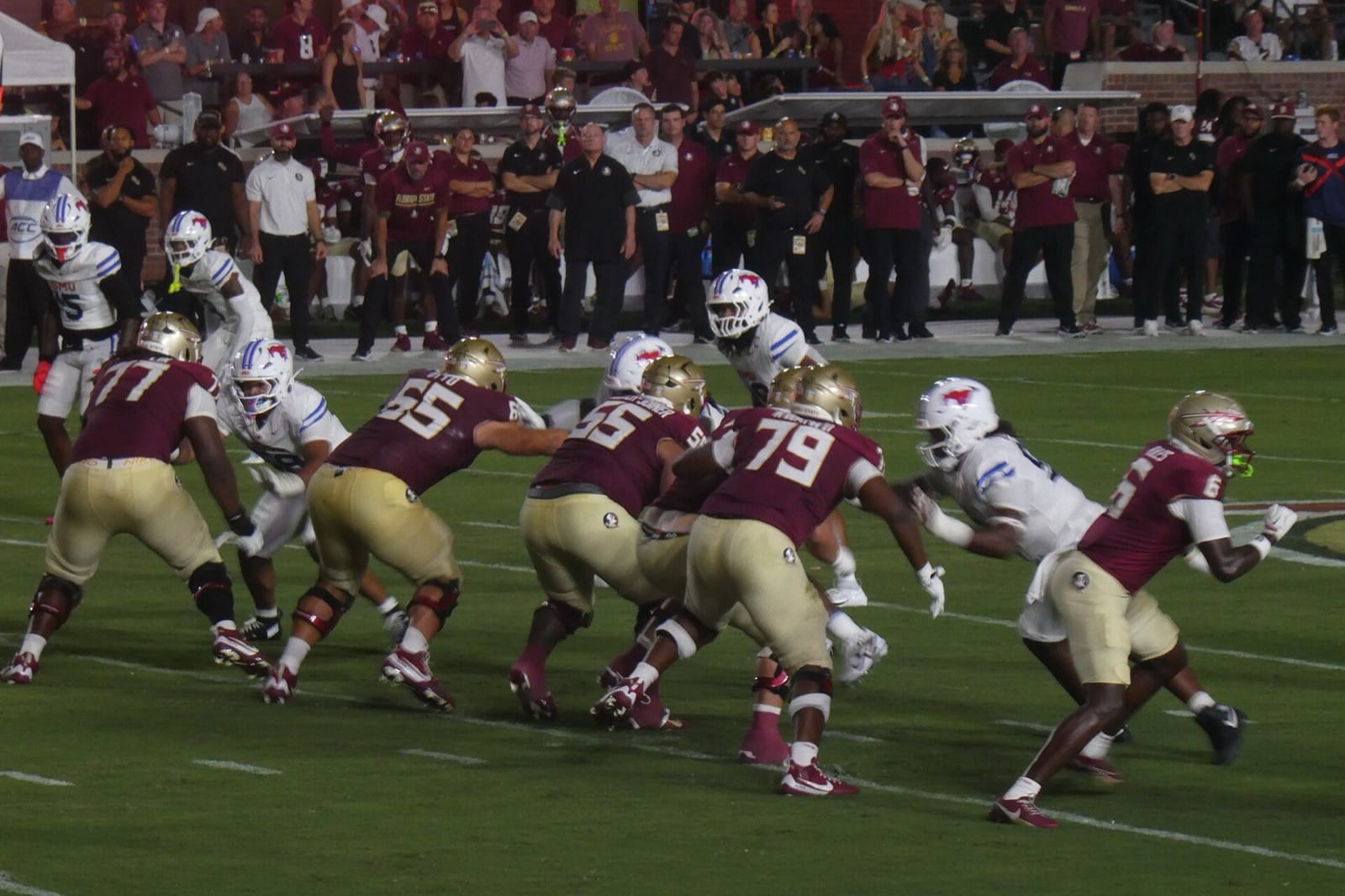
Georgia Tech Yellow Jackets
The name started with clothes, not insects. Georgia Tech says fans wore yellow jackets, as in coats, to games, and that in 1905 coach John Heisman, yes, the trophy Heisman, said he wanted the team known as the Yellow Jackets. Sportswriters also called Tech the Engineers, the Blacksmiths, the Techs and the Golden Tornado, but the school never officially adopted any of those. Georgia Tech uniform schedule 2026
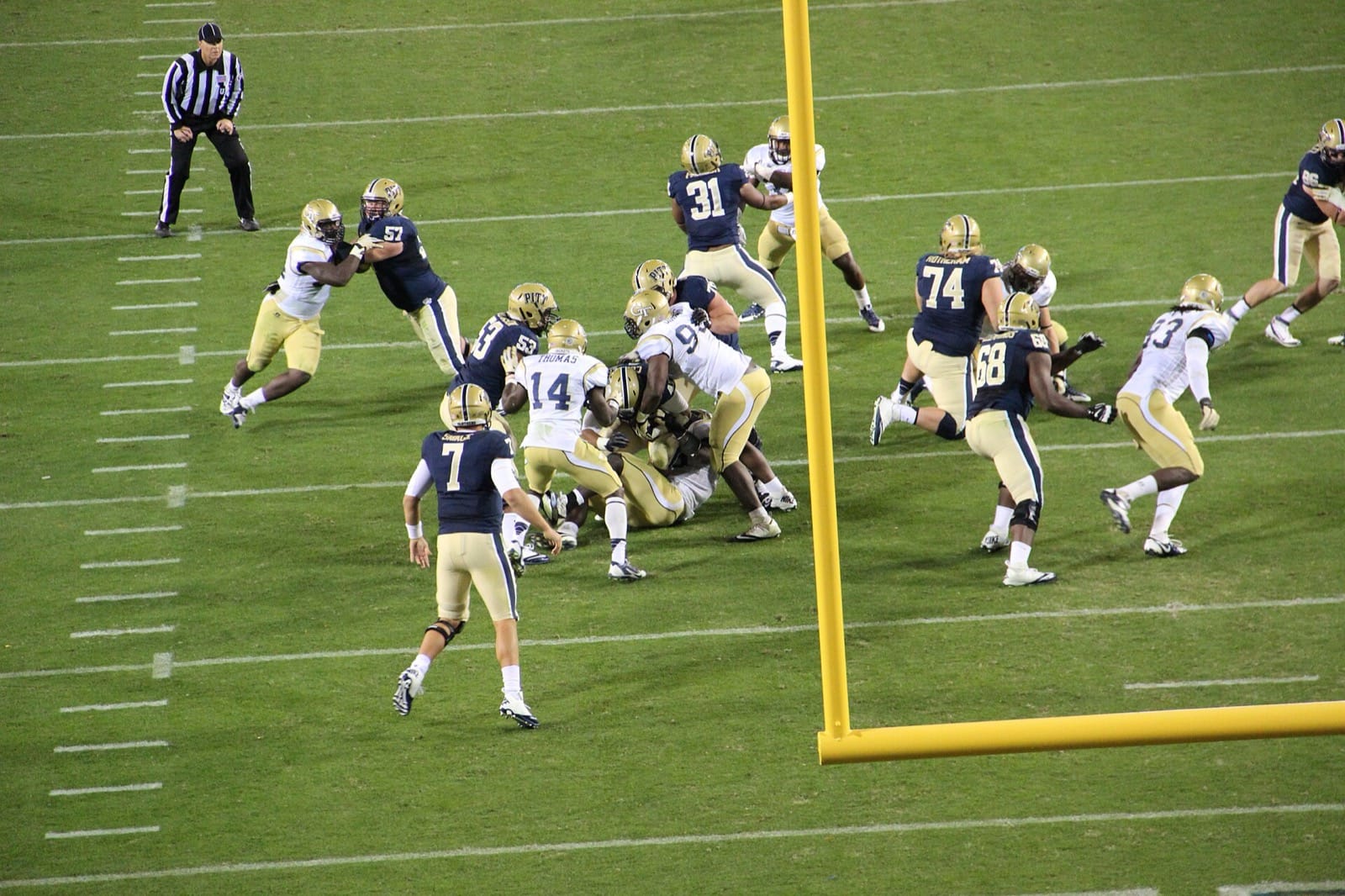
Photo: Thomson20192 / CC BY 2.0
Louisville Cardinals
Even Louisville's archives say the origin is unclear. Tradition credits Ellen Patterson, wife of Dean John L. Patterson, with suggesting red and black and the cardinal in 1913. But the Louisville Courier-Journal was already calling the football team "the Red and Black" in October 1912, and university records from the period are sparse and do not answer the question. Louisville uniform schedule 2026
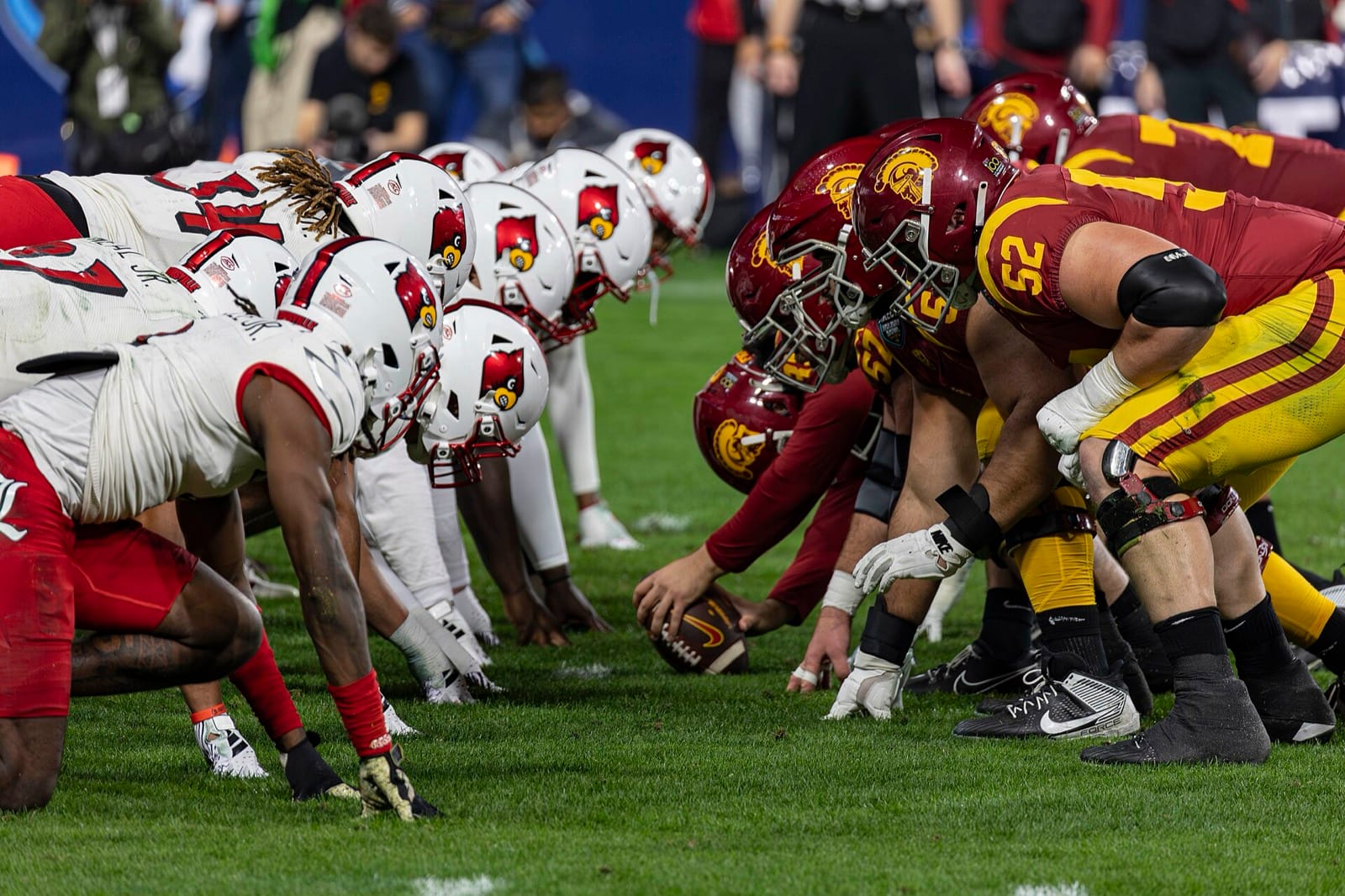
Photo: MC2 Clayton A. Wren, U.S. Navy / Public domain
Miami Hurricanes
The University of Miami fielded its first football team in 1926, and the Great Miami Hurricane hit on Sept. 18, 1926, postponing the opener. UM itself says there are a few theories about the name: that the storm inspired it, or that the team wanted to sweep opponents away with the same force. The detailed version you see most often, a sportswriter asking a player for a nickname, is not well documented. The ibis, the mascot since 1957, was picked because it is said to be the last animal to leave before a hurricane and the first to return. Miami uniform schedule 2026
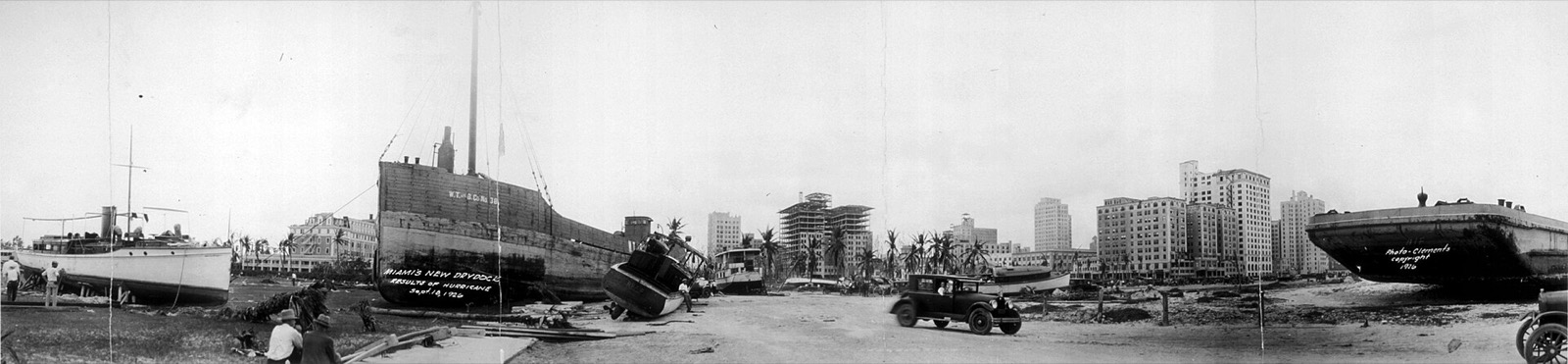
Ships driven aground in Miami after the hurricane of Sept. 18, 1926, the storm that delayed the Hurricanes' first season. R.S. Clements, Library of Congress. Public domain.
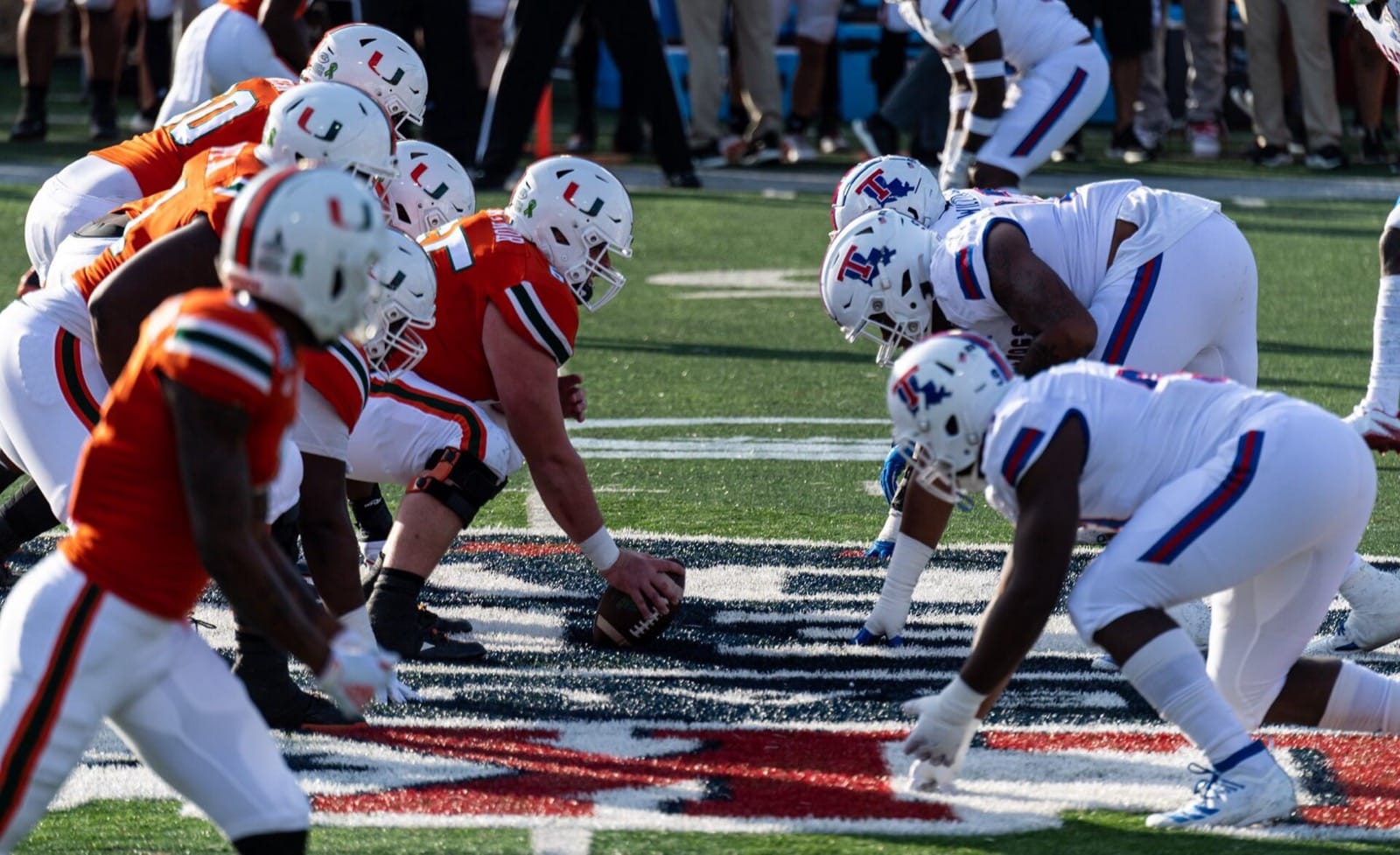
Photo: Airman 1st Class Lillian Miller, U.S. Air Force / Public domain
North Carolina Tar Heels
The name comes from North Carolina's tar, pitch and turpentine industry. The earliest known use is a Feb. 6, 1863 diary entry by a North Carolina lieutenant, and a June 1863 letter in a Raleigh paper said troops from other states called North Carolinians "Tar Heels" and that they "stuck" in a fight like tar. NCpedia says it probably started as an insult from other states' soldiers, especially Virginians, before North Carolinians wore it proudly. Parts of the legend are disputed: Robert E. Lee's supposed "God bless the Tar Heel boys" is tradition, not proof, and the story about British troops getting tar on their feet is folklore. North Carolina uniform schedule 2026
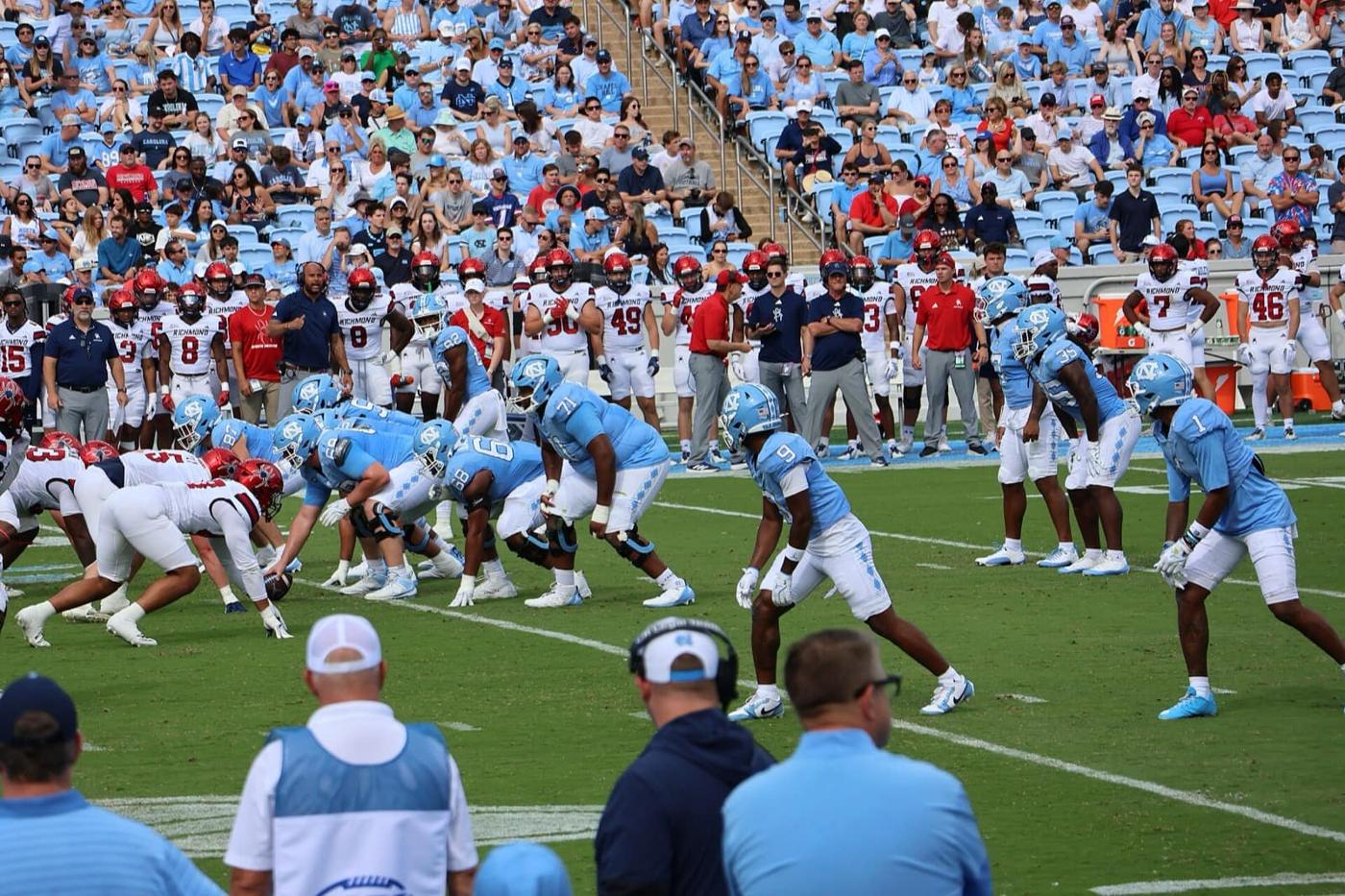
Photo: Hameltion / CC BY-SA 4.0
NC State Wolfpack
Before 1921, NC State's teams were the Techs, the Farmers or the Aggies. In February 1921, an unsigned alumnus letter in the Alumni News suggested "Wolf Pack." The popular story about a fan complaining the team was "unruly as a pack of wolves" is listed by NC State's own library as unsubstantiated. In 1946 the chancellor tried to drop the name because "wolfpack" brought to mind World War II German U-boat formations. Students voted overwhelmingly to keep it, and in 1947 every NC State team adopted it. NC State uniform schedule 2026
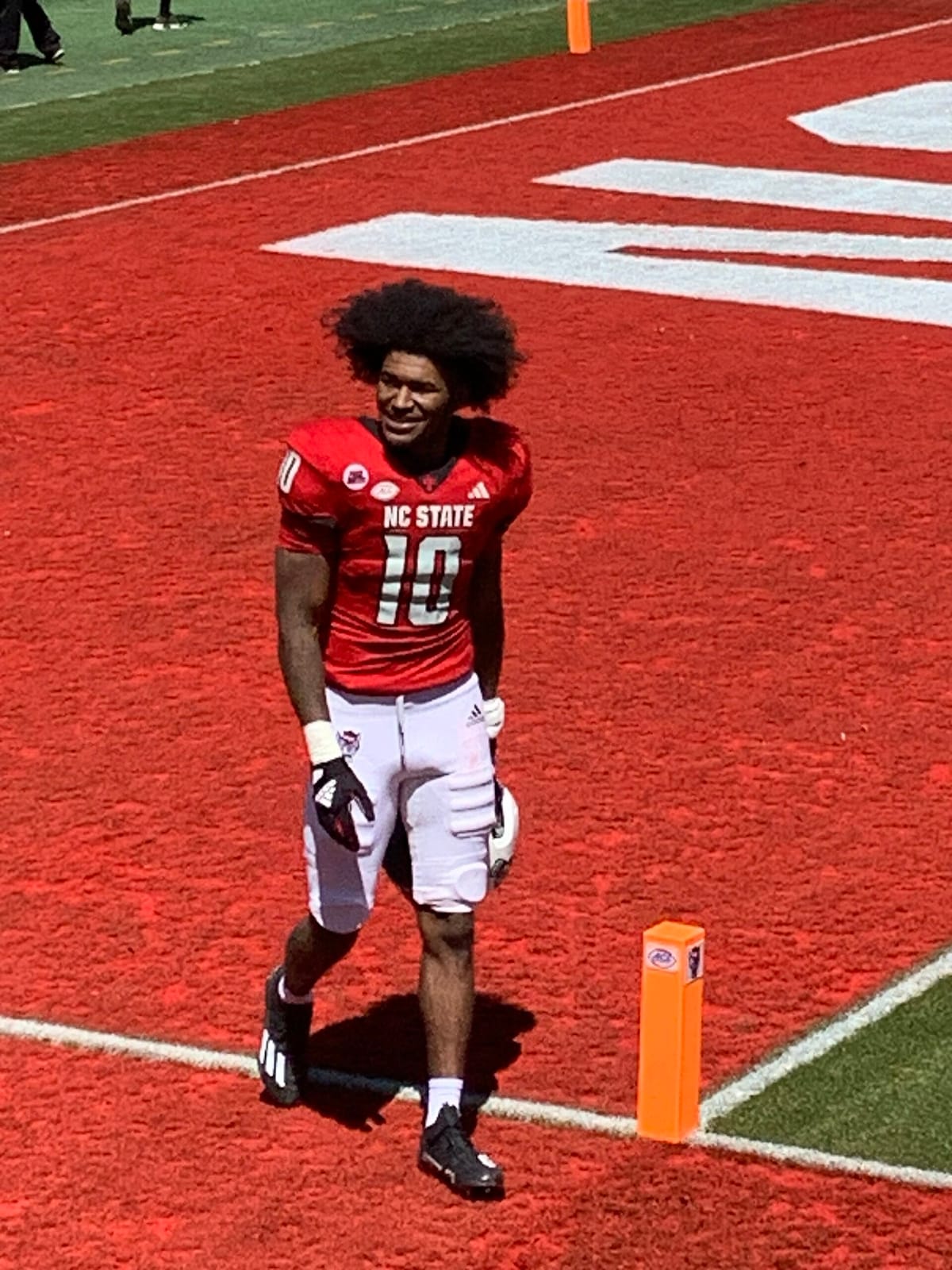
Photo: CavsFan45 / CC BY-SA 4.0
Pitt Panthers
In 1909, at a meeting of students and alumni, George M.P. Baird suggested the panther and laid out his reasons: it was once native to the Pittsburgh area, it had a noble place in heraldry, its golden color matched Pitt's old gold, no other college had claimed it, and "Pitt Panther" alliterates. That last one is official reasoning. The costumed mascot is named ROC, after Pitt great Steve "The Rock" Petro. Pitt uniform schedule 2026
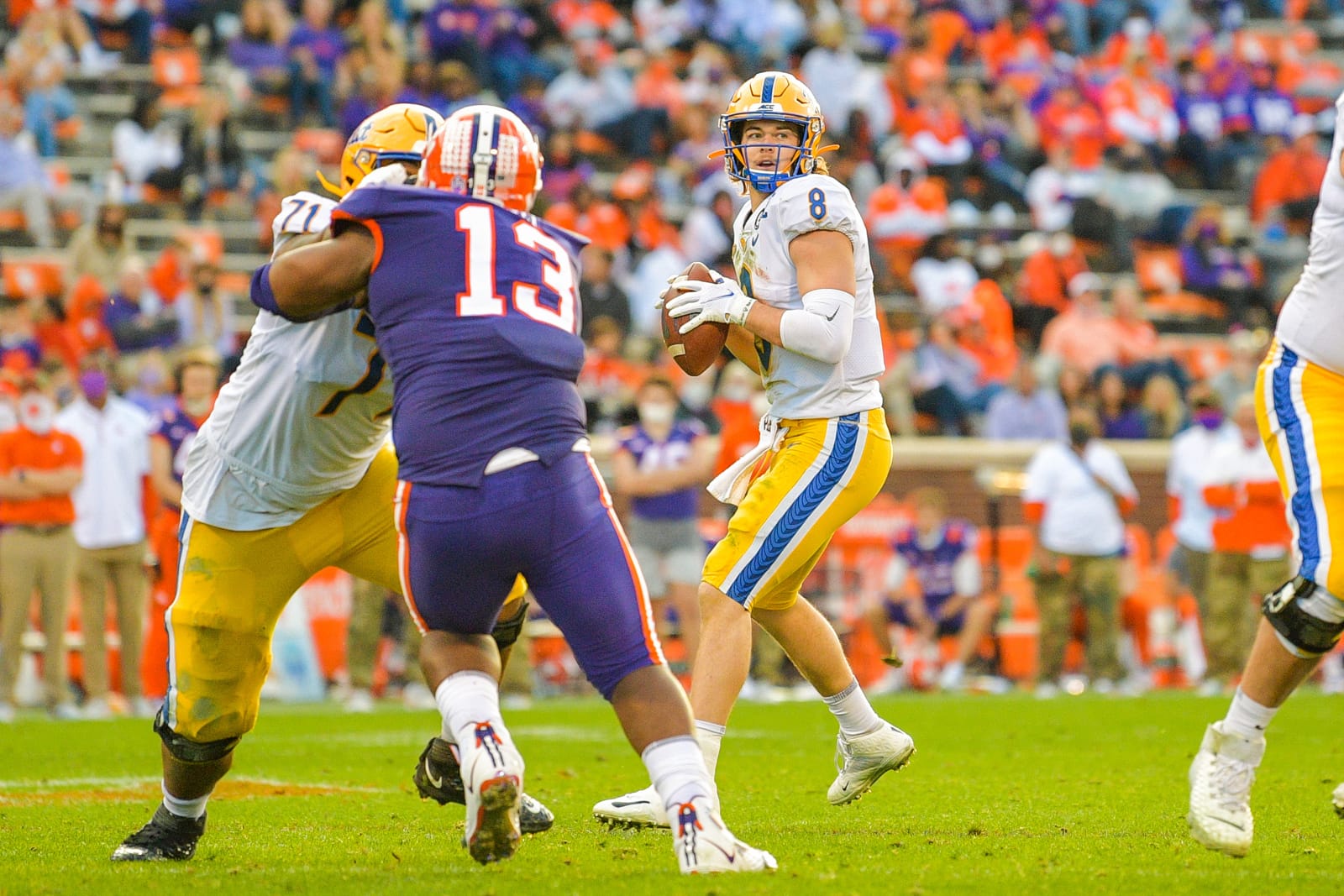
Photo: Carl Ackerman / TigerNet.com / CC BY-SA 2.0
SMU Mustangs
On Oct. 25, 1917, SMU voted on four choices: Bison, Greyhounds, Pioneers and Mustangs. The winning idea came from Dorothy Amann, secretary to President Robert Hyer. Watching football practice from her Dallas Hall office, she said it looked "just like a bunch of wild Mustangs." SMU uniform schedule 2026
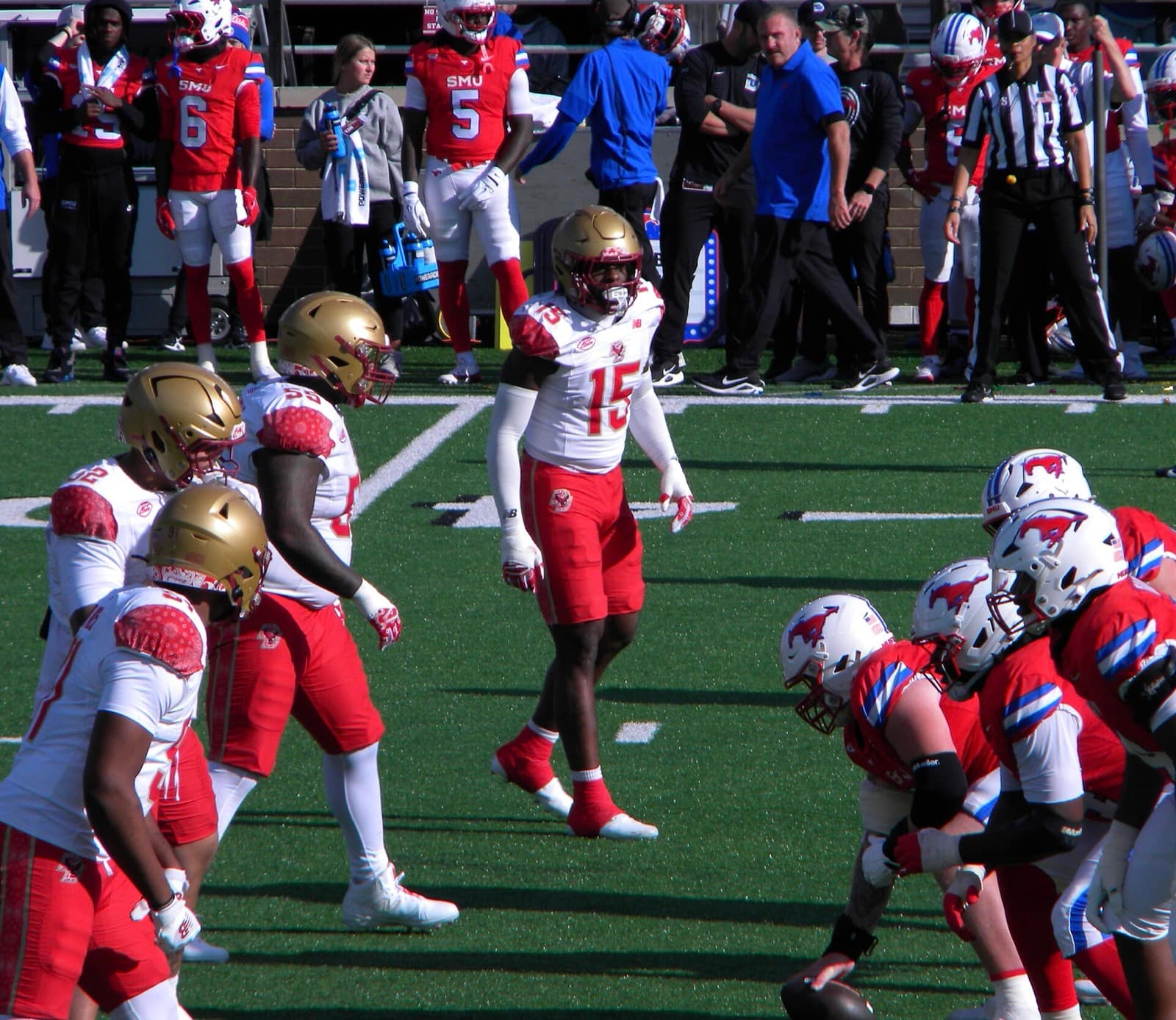
Photo: DavidBermanFan / CC0
Stanford Cardinal
The color, not the bird. Stanford had no official nickname until 1930, when students adopted the Indian. In 1972, after Native American students met with President Richard Lyman, the Student Senate voted 18-4 to drop it. From 1972 to 1981 the teams were the "Cardinals," meaning the color. On Nov. 17, 1981, President Donald Kennedy declared that Stanford would be represented by the color cardinal alone, making it the singular "Cardinal." Ideas that did not make it, floated by students in 1975: Robber Barons, Sequoias and Railroaders. Stanford has no official mascot. The Tree belongs to the band. Stanford uniform schedule 2026
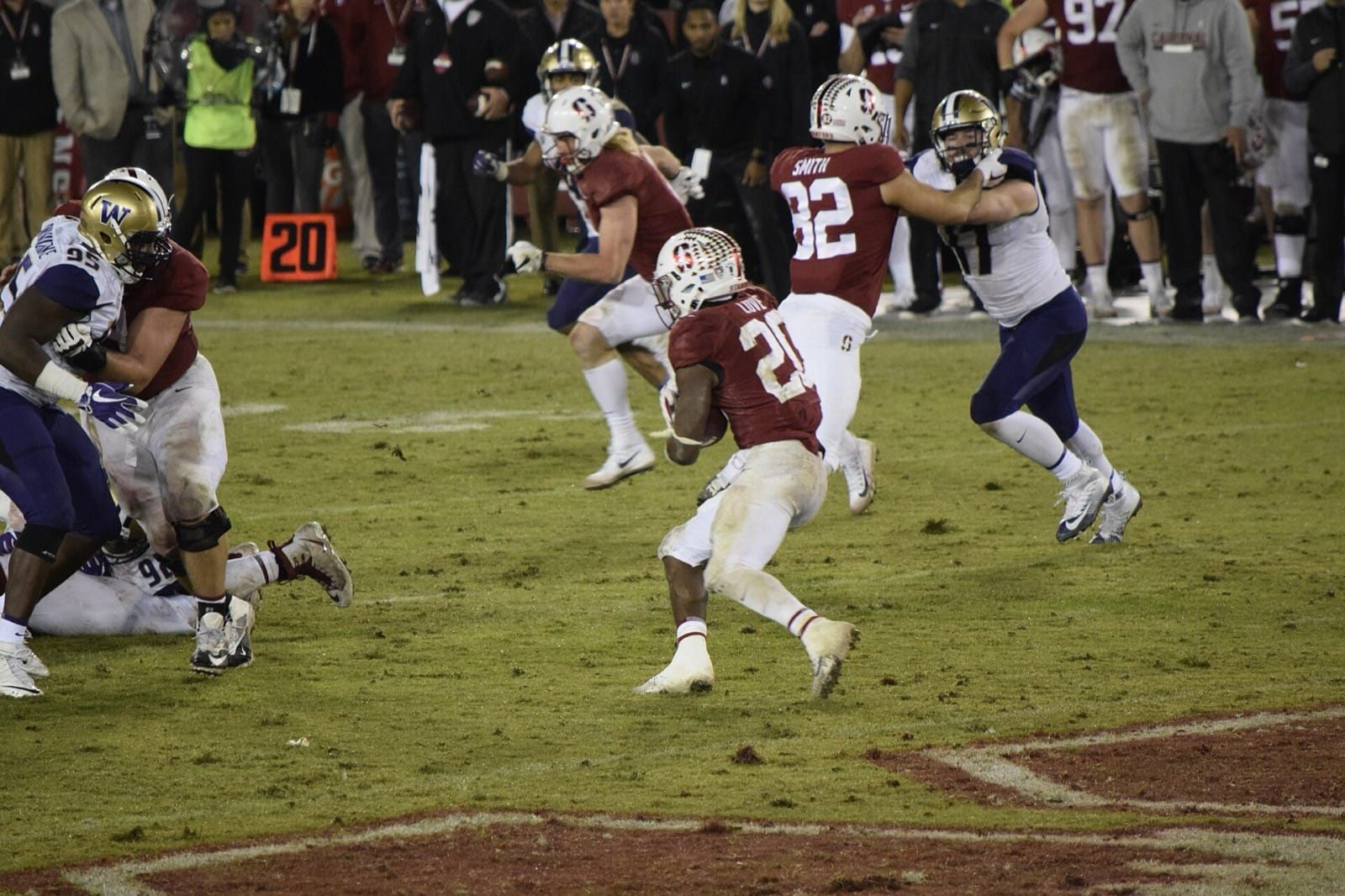
Photo: Daniel Hartwig / CC BY 2.0
Syracuse Orange
Syracuse's first colors, adopted in 1872, were rose pink and pea green. After the school's colors were mocked at an 1889 field meet, a committee found that no college had taken orange as a single color, and in 1890 the alumni chose it. Men's teams became the Orange or the Orangemen, and when women's varsity sports began in 1971, they were the Orangewomen. In 2004 every team became simply the Syracuse Orange. It is the color, not the fruit. Syracuse uniform schedule 2026
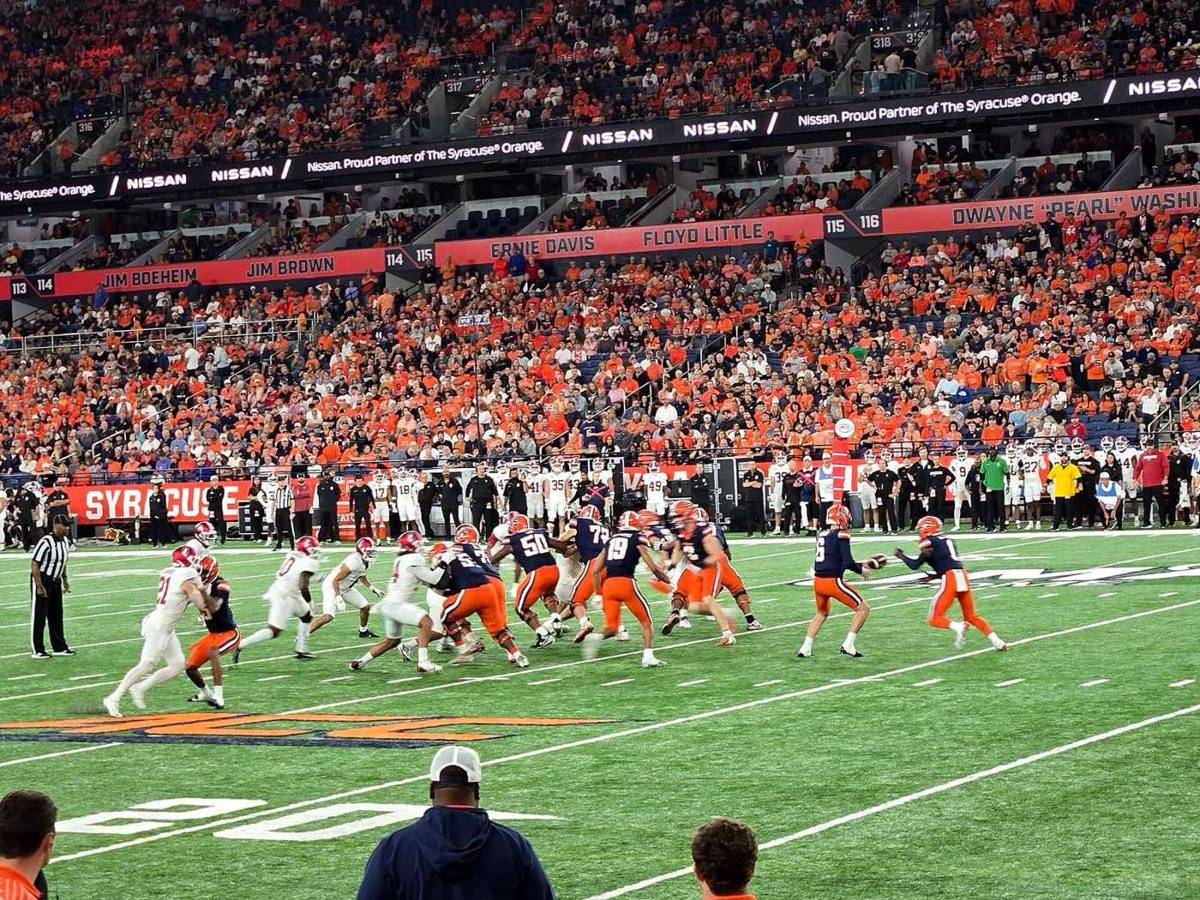
Photo: Kiran891 / CC BY-SA 4.0
Virginia Cavaliers
Virginia's name came from a fight song that did not last. In 1923 the student paper held a contest for an alma mater and a fight song, and "The Cavalier Song" won. UVA says the song never became a lasting tradition, but it "inspired the nickname 'Cavaliers.'" The other name, Wahoos or 'Hoos, has its own origin, and UVA calls the popular story that Washington and Lee baseball fans coined it in the 1890s a legend. Virginia uniform schedule 2026
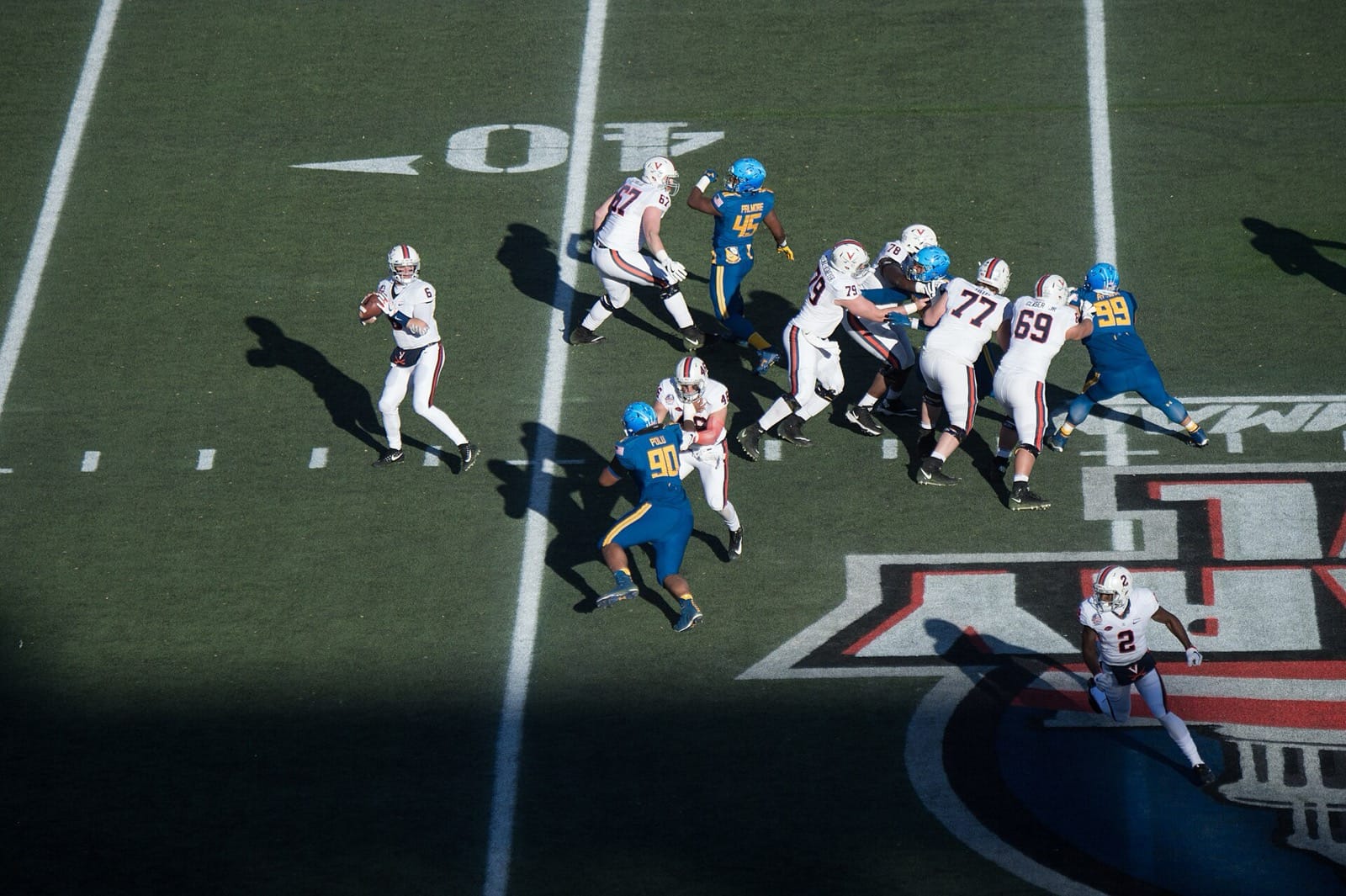
Photo: Sgt. James K. McCann, U.S. Army / Public domain
Virginia Tech Hokies
"Hokie" does not mean anything. In 1896 the school became VPI and needed a new cheer, so the Athletic Association held a contest. Senior O.M. Stull won the $5 prize with the "Old Hokie" yell, inventing "Hokie" as an attention-getter. Decades later he recalled, "I was surprised when my yell was accepted, but I needed the five spot." For years the teams were mostly the Gobblers, a name Virginia Tech says has a widely disputed origin. The HokieBird first appeared in 1981. Virginia Tech uniform schedule 2026
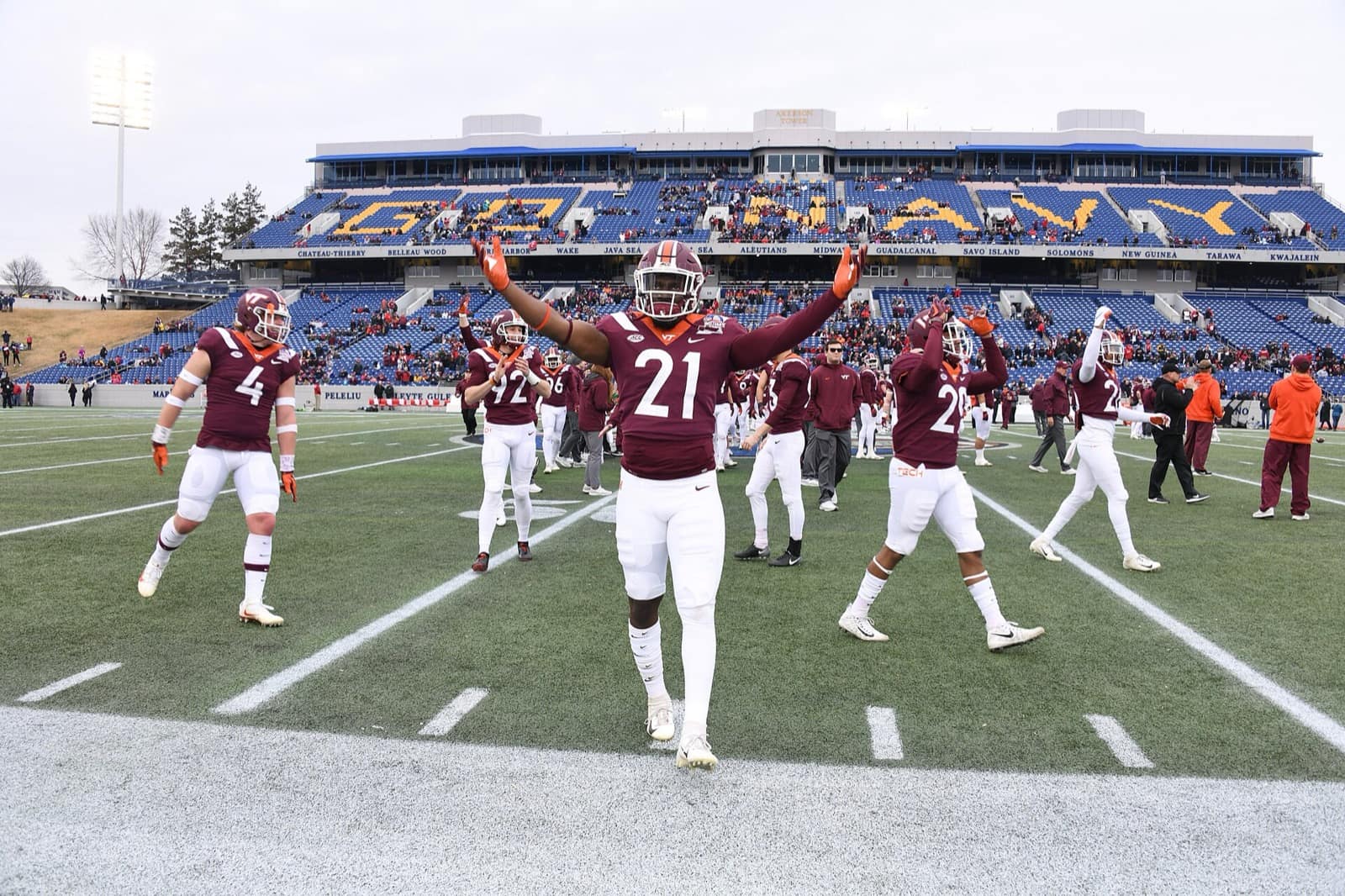
Photo: Maryland GovPics / CC BY 2.0
Wake Forest Demon Deacons
Early Wake Forest teams were the Baptists, the Old Gold and Black, or the Fighting Deacons. The student paper's earliest located "Demon Deacons" is a headline from Oct. 26, 1923, and the name is generally credited to student editor Mayon Parker. That fall the paper used it covering a 16-9 win over Trinity's "Blue Devils," so two brand-new nicknames met in the same game story. WFU's own library notes that the exact wording, year and game behind the name are disputed. Wake Forest uniform schedule 2026
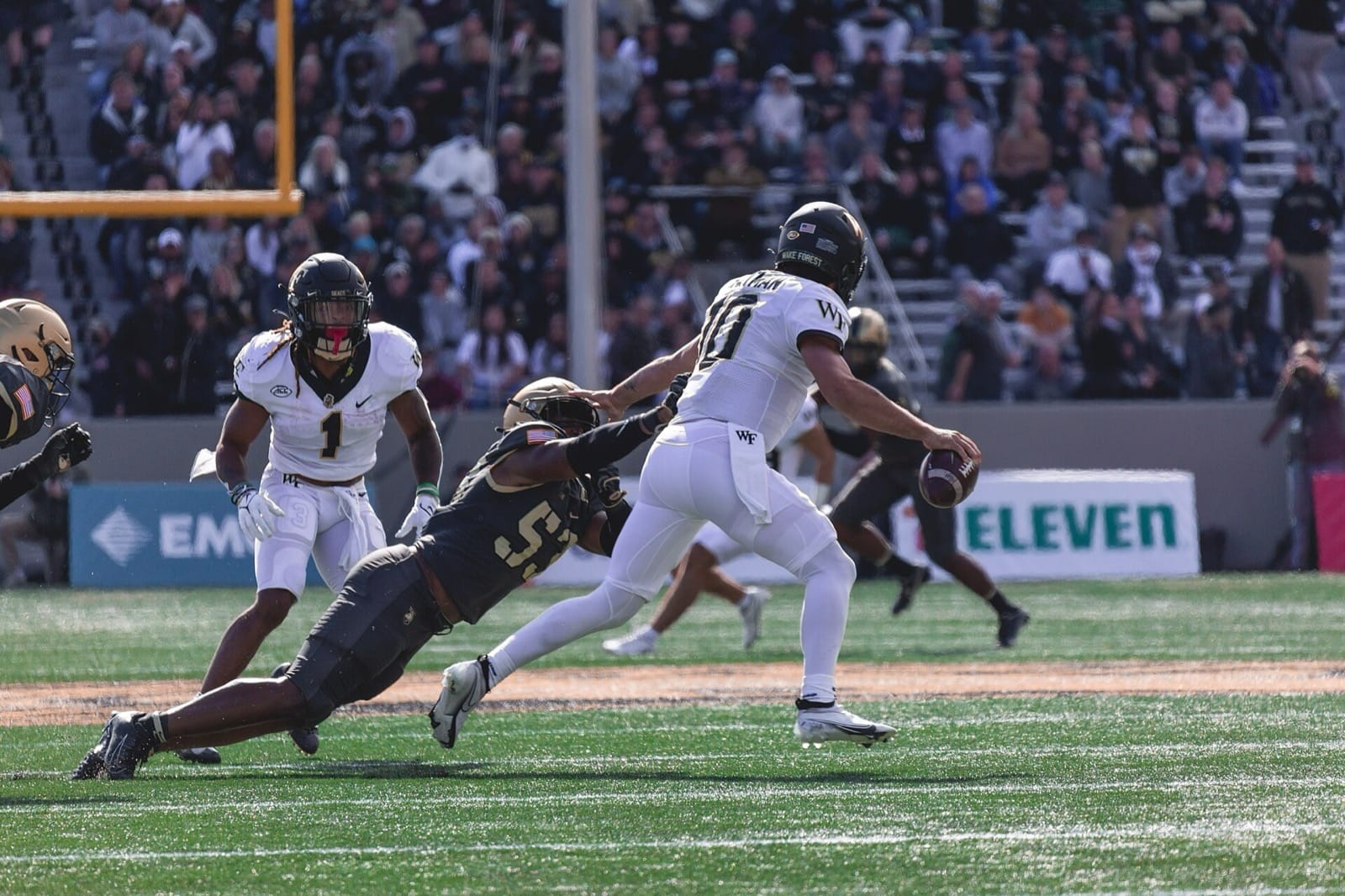
Photo: CDT Tyler Williams, U.S. Army / Public domain
Independent
Notre Dame Fighting Irish
Notre Dame teams were the Catholics in the 1800s and the Ramblers in the early 1920s, and the press used worse names than that. There is no single documented origin for "Fighting Irish." Theories: Northwestern fans chanting "Kill the Fighting Irish" in 1899; a 1909 halftime speech at Michigan, which Notre Dame itself calls legend; the press coining it for the team's fighting spirit, which Notre Dame calls the most generally accepted explanation; and the Union Army's Irish Brigade, whose chaplain later became Notre Dame's president. In 1927, university president Rev. Matthew Walsh made "Fighting Irish" official, partly to replace the more insulting names. Lou Holtz's story tying it to a 1924 fight with the KKK is not supported by the record. Notre Dame uniform schedule 2026
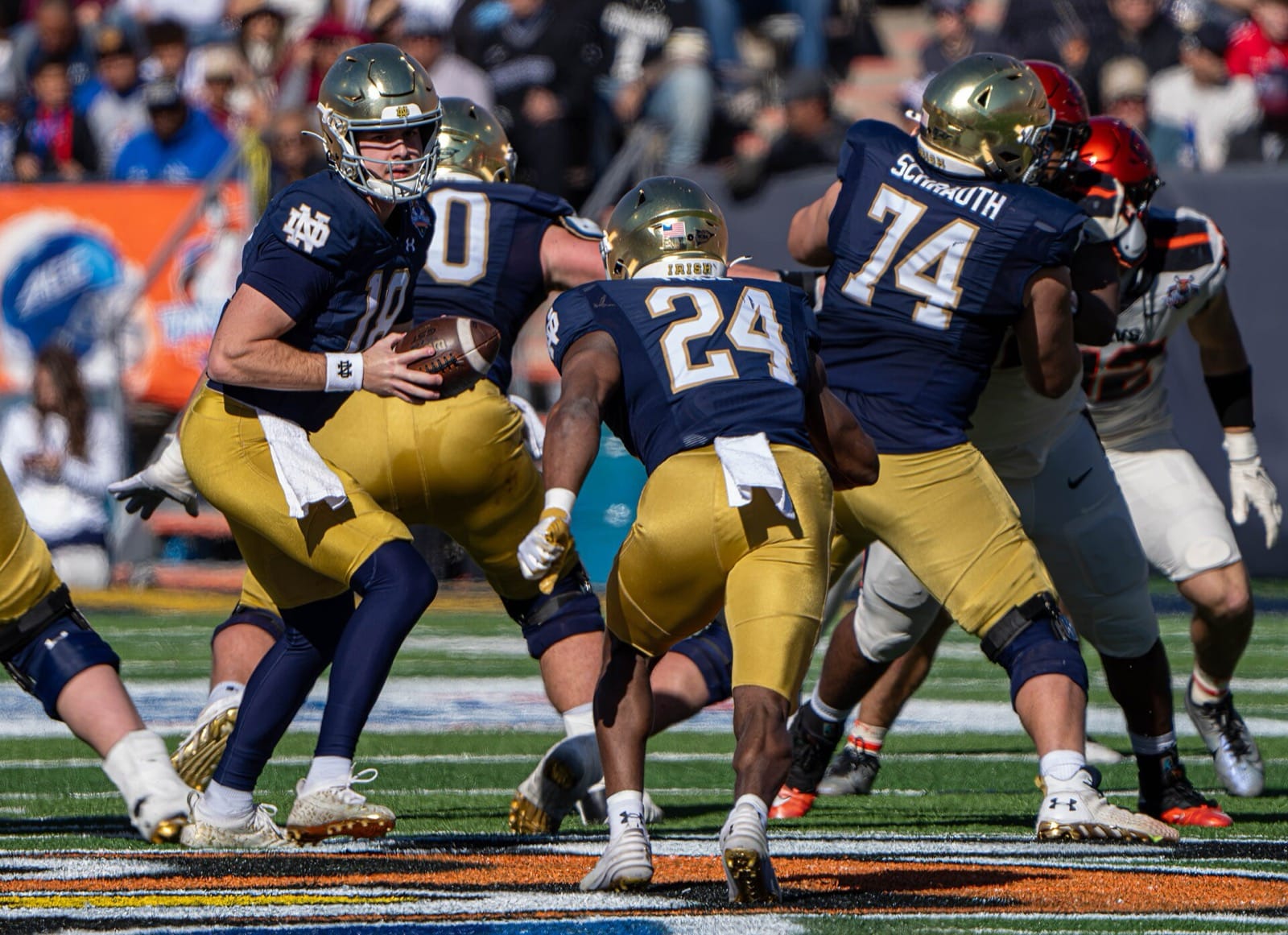
Photo: Spc. David Poleski, U.S. Army / Public domain
Frequently Asked Questions
Why are they called the Oklahoma Sooners?
A "Sooner" was someone who sneaked into the Unassigned Lands before the official start of the 1889 Land Run to claim land early, which the law prohibited. It was an insult at first. OU adopted the name in 1908, and by the 1920s it had become a point of pride.
Why is Alabama called the Crimson Tide?
Alabama credits Birmingham sportswriter Hugh Roberts, who supposedly used it for the 1907 Alabama-Auburn game, and Zipp Newman of the Birmingham News for popularizing it. Researchers have not found "Crimson Tide" in Roberts' 1907 recap, and the earliest confirmed print use is from 1914, so the exact start is uncertain.
What is a Hoosier?
Nobody knows for sure. The Indiana Historical Bureau says the best-supported theory is that it was Southern slang for a rough countryman. The earliest known written use is from 1831. Stories about "Who's here?" are considered folk tales.
What is a Hokie?
It is a made-up word. Virginia Tech student O.M. Stull invented it in 1896 for the "Old Hokie" cheer, which won a $5 contest after the school changed its name.
Why is North Carolina called the Tar Heels?
The name comes from North Carolina's tar, pitch and turpentine industry. It was used for North Carolina soldiers by 1863, probably first as an insult from other states' troops, and North Carolinians turned it into a boast.
What is a Boilermaker, and why is Purdue called that?
After Purdue beat Wabash 44-0 in 1891, a Crawfordsville newspaper called the Purdue players "Burly Boiler Makers," a jab at the engineering school's tough, ringer-looking team. Purdue kept it.
Why is Notre Dame called the Fighting Irish?
There is no single documented origin. Notre Dame says the most accepted explanation is that the press coined it for the team's fighting spirit, probably as a taunt at first. University president Rev. Matthew Walsh made it official in 1927.
Why is Stanford the Cardinal and not the Cardinals?
Because it is the color, not the bird. Stanford dropped its Indian mascot in 1972 and used "Cardinals" for the color until Nov. 17, 1981, when President Donald Kennedy made it the singular "Cardinal."
What is a Jayhawk?
It is a mythical bird. "Jayhawker" was a name for free-state fighters in 1850s Kansas, and KU students adopted the bird in the 1880s. Where the word came from is disputed; one theory says it combines the blue jay and the sparrow hawk.
Why is Ohio State called the Buckeyes?
Ohio is the Buckeye State, named for the Ohio buckeye tree, whose nut looks like a deer's eye. Ohio State made "Buckeyes" its official nickname in 1950.
Why is Duke called the Blue Devils?
Student editors started using it in 1922 for the French Chasseurs Alpins, World War I mountain troops in blue uniforms known as "les Diables Bleus." The school was still Trinity College at the time.
What is a Nittany Lion?
A mountain lion from Mount Nittany, next to Penn State's campus. Third baseman Joe Mason invented it on a 1904 baseball trip to Princeton to answer the Princeton Tiger.
What is a horned frog?
It is not a frog. TCU's Horned Frog is the Texas horned lizard, and the school has used the name since 1897.
Why is Michigan called the Wolverines?
Nobody knows for sure. The main theories are the 1830s Toledo War with Ohio, the fur trade, and an insult aimed at settlers.
Why is Syracuse called the Orange?
Syracuse chose orange as its color in 1890 because no other college used it alone. Its teams were the Orange or Orangemen, and in 2004 every team became the Syracuse Orange.
Why is Texas called the Longhorns?
In 1903 the editor of the student paper told its sports reporter to call the teams "Longhorns" in every story until the name stuck. By 1907 the Athletic Council had recognized the Longhorn.
How did the Florida Gators get their name?
In 1907, Gainesville merchant Phillip Miller and his son Austin ordered Florida pennants in Charlottesville, Va. The school had no emblem, so Austin suggested the alligator. The pennants went on sale in 1908.
Why is Iowa State called the Cyclones?
After Iowa State beat Northwestern 36-0 in 1895, the Chicago Tribune ran the headline "Struck by a Cyclone." The name stuck right away.
Which college football nicknames started as insults?
Oklahoma's Sooners, Purdue's Boilermakers and Wisconsin's Badgers all started as insults, and North Carolina's Tar Heels most likely did too.
Which college team names came from a newspaper?
Iowa State, USC, Arizona, Northwestern, Nebraska, Michigan State, Georgia and Tennessee all got their names from newspaper writers or headlines.
The Bottom Line
Pro teams pick names. College teams mostly got stuck with them, from sportswriters on deadline, students with a $5 prize on the line and rivals trying to be mean. That is why so many of them are still a little strange: a Hokie that means nothing, a Horned Frog that is a lizard, a Cardinal that is a color and a Sooner that used to mean a cheater. And it is why so many college uniforms look the way they do, from Florida's orange-and-blue gator to Minnesota's all-gold look and Syracuse's single color.
More College Football Coverage
- College football Week 8 uniforms 2026: every Top 25 look
- How networks pick prime-time games in every sport
- How every NFL team got its name
Team-name histories via each school's athletics department, university archives and libraries, state historical societies and encyclopedias (including the Encyclopedia of Oklahoma History, NCpedia, the Encyclopedia of Arkansas, the Indiana Historical Bureau and the Kansas Historical Society) and newspaper research from NCAA.com and others. Photos credited under each image. Full source list kept with this story.